
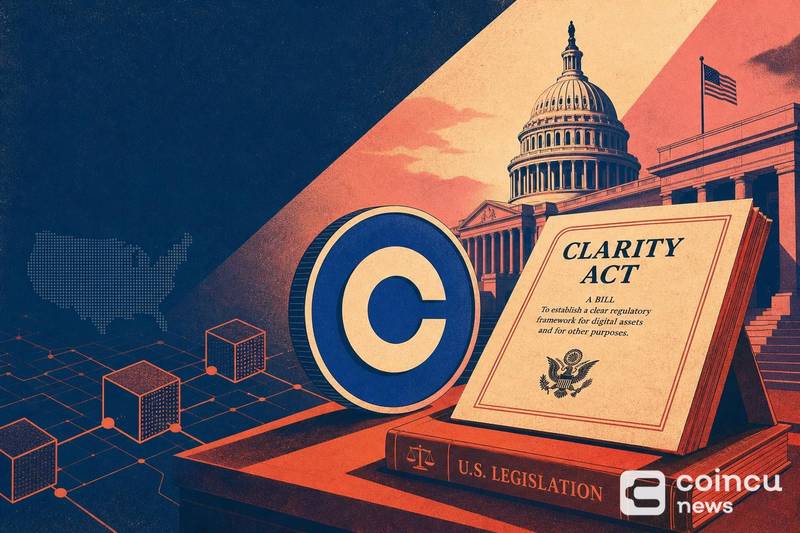

Coinbase has publicly backed the CLARITY Act, arguing that the proposed legislation would strengthen U.S. crypto regulation while reinforcing national security protections. The exchange’s advocacy positions the bill as a key piece of the evolving American digital asset policy framework.
Why Coinbase Is Backing the CLARITY Act
Coinbase has made the CLARITY Act a centerpiece of its public policy advocacy. The company framed the legislation as a path toward responsible innovation, describing the current moment as a landmark opportunity for the United States to embrace crypto with clear rules.
The exchange’s position treats the CLARITY Act as a regulatory story, not a market story. Coinbase is not arguing for deregulation but for structured oversight that distinguishes digital assets by function, giving both the industry and regulators clearer boundaries.

This builds on earlier efforts from the company. Coinbase’s Chief Legal Officer has previously indicated that the CLARITY Act is near agreement on stablecoin earnings, suggesting active negotiation between lawmakers and industry stakeholders on specific provisions.
How the CLARITY Act Frames Stronger U.S. Crypto Regulation
The Senate Banking Committee has described the CLARITY Act as legislation that protects Main Street, unleashes responsible innovation, and cracks down on fraud and money laundering. That framing positions the bill as tightening enforcement rather than loosening rules.
“Stronger regulation” in this context means regulatory clarity, not necessarily stricter oversight. The distinction matters. Clarity reduces ambiguity about which agency oversees which assets, while stricter oversight implies more burdensome compliance without resolving jurisdictional confusion.
Coinbase’s Faryar Shirzad, the company’s Chief Policy Officer, has been vocal about the legislation on social media, reinforcing the company’s view that clear rules benefit both consumers and compliant businesses.

The push for regulatory clarity aligns with broader momentum in Washington. U.S. senators have urged swift action on crypto laws, and the CFTC has separately signaled openness to new rules for crypto perpetuals, suggesting a wider appetite for structured digital asset regulation.
Why Coinbase Connects Crypto Policy to National Security
The national security framing is a deliberate rhetorical choice. By linking the CLARITY Act to security protections, Coinbase elevates the policy conversation beyond financial regulation into territory that commands bipartisan attention in Congress.
Anti-money laundering enforcement and sanctions compliance are the most direct connections between crypto policy and national security. The Senate Banking Committee’s own summary of the bill explicitly references cracking down on money laundering, which bridges the gap between financial oversight and security concerns.
This language raises the political stakes. Legislators who might be indifferent to crypto-specific regulation are more likely to engage when national security is part of the argument. Coinbase is effectively broadening the coalition of potential supporters beyond crypto-friendly lawmakers.
It is important to separate corporate messaging from verified legislative outcomes. Coinbase’s claim that the CLARITY Act strengthens national security protections reflects the company’s advocacy position. Whether the bill’s actual provisions deliver on that promise depends on the final text and its implementation.
What This Means for the U.S. Crypto Policy Narrative
Coinbase’s public stance signals that major U.S. exchanges are shifting from defensive postures to proactive policy engagement. Rather than reacting to enforcement actions, the company is attempting to shape legislation before it reaches a vote.
This matters for the broader industry. When the largest publicly traded U.S. exchange backs a specific bill, it creates a reference point for other companies, builders, and investors evaluating the regulatory landscape. Coinbase has gone further, predicting that crypto will reach mainstream adoption by 2026 through key innovations paired with regulatory progress.
The policy clarity theme remains central to U.S. crypto coverage because uncertainty itself has been a market force. Companies have relocated, delayed product launches, or avoided the U.S. market entirely due to unclear rules. The CLARITY Act, if passed, would directly address that dynamic.
For exchanges, DeFi builders, and institutional investors, the trajectory of this legislation will influence strategic decisions about U.S. market participation in the months ahead.
FAQ About Coinbase and the CLARITY Act
What did Coinbase say about the CLARITY Act?
Coinbase publicly endorsed the CLARITY Act, stating it would strengthen U.S. crypto regulation and national security protections. The company has framed the bill as a landmark opportunity for responsible innovation in the digital asset space.
Why is the CLARITY Act linked to U.S. crypto regulation?
The bill aims to provide regulatory clarity for digital assets, defining which agencies oversee which types of tokens. The Senate Banking Committee has described it as legislation that protects consumers while cracking down on fraud and money laundering.
Why are national security protections part of the discussion?
Anti-money laundering and sanctions compliance connect crypto regulation to national security. Coinbase and congressional supporters have framed the CLARITY Act as strengthening these protections, which broadens the bill’s political appeal beyond crypto-specific policy circles.
What is the current status of the CLARITY Act?
The bill has been introduced and is under discussion in Congress. Coinbase’s CEO has engaged directly with the White House on crypto policy, and the company’s legal team has indicated progress on specific provisions including stablecoin-related terms.
Disclaimer: This article is for informational purposes only and does not constitute financial or investment advice. Cryptocurrency and digital asset markets carry significant risk. Always do your own research before making decisions.

