
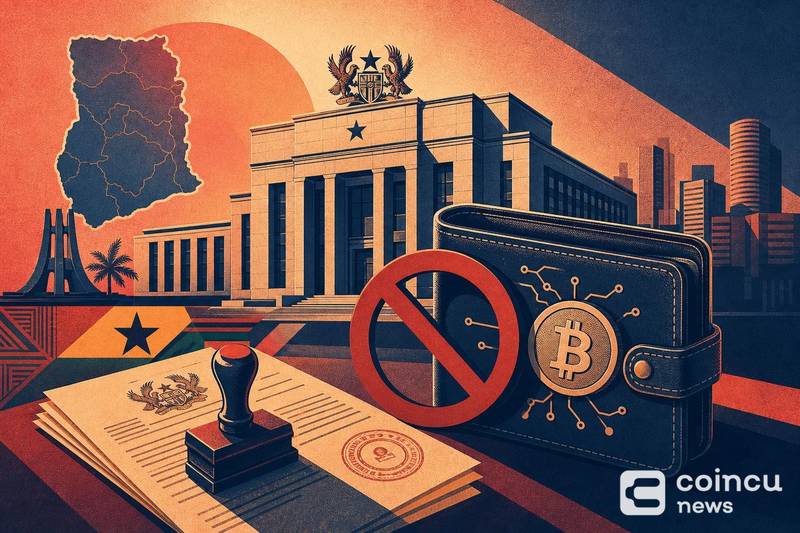

Ghana’s central bank has directed banks and payment service providers to immediately stop facilitating unauthorized foreign-currency digital wallet services linked to crypto platforms, marking a firm regulatory move to reassert control over how digital asset services interact with the country’s formal banking system.
Bank of Ghana Moves Against Unauthorized Crypto-Linked Wallet Services
The Bank of Ghana issued a directive ordering all banks, payment service providers, and regulated financial institutions to cease supporting unauthorized foreign-currency digital wallet services. The central bank’s notice on unauthorized foreign exchange transactions targets services operating outside the country’s licensing framework.
The affected wallet services are those connected to crypto platforms rather than locally licensed banking infrastructure. By ordering regulated institutions to cut ties with these services, the central bank is effectively severing the bridge between Ghana’s formal financial system and unapproved digital asset operators.

The directive applies broadly across banks and payment firms supervised by the Bank of Ghana. It does not appear to outlaw crypto ownership or peer-to-peer activity outright, but instead focuses on the regulated institutions that enable access to these wallet services.
Why The Central Bank Is Targeting These Services
The Bank of Ghana has separately issued a public notice on unauthorized advertising of virtual asset and stablecoin products, signaling that the regulator views unlicensed crypto-adjacent services as a growing compliance concern within the banking sector.
Unauthorized wallet services that handle foreign-currency transactions create gaps in the supervisory chain. When banks or payment providers support these products, they risk facilitating fund flows that fall outside standard anti-money laundering and foreign exchange controls.
The central bank’s intervention appears aimed at ensuring that any digital wallet service touching Ghana’s regulated financial rails operates under proper licensing. Consumer protection is also a likely factor, as users of unauthorized services have limited recourse if funds are lost or frozen.

What The Order Means For Banks, Payment Firms, And Users
Bank Compliance Teams Face Immediate Review
Banks will need to audit their existing integrations and partner relationships to identify any connections to the affected wallet services. Settlement flows tied to unauthorized crypto-linked platforms must be terminated under the directive.
The compliance burden is significant given how rapidly crypto-adjacent payment services have expanded across African markets. As institutional crypto products like spot Bitcoin ETFs continue to reshape global digital asset infrastructure, regulators in developing markets face pressure to define which services are permitted within their banking systems.
Payment Providers Under Pressure
Licensed payment service providers that have served as intermediaries for crypto platform wallet funding or withdrawals face direct pressure to halt those channels. The Bank of Ghana has also issued a broader notice to banks, payment service providers, and the general public reinforcing its expectations around compliance with authorized-only services.
Users May Lose Familiar Access Points
Ghanaian users who have relied on bank-linked pathways to fund or withdraw from crypto platform wallets in foreign currencies could see those channels shut down. This does not necessarily block all forms of crypto activity, but it removes the most convenient fiat on-ramps running through the formal banking system.
The restriction comes as major exchanges continue expanding token pair offerings globally, highlighting the contrast between growing crypto market access internationally and tightening controls in Ghana’s regulated banking sector.
What This Signals For Crypto Access In Ghana
The directive suggests Ghana is tightening enforcement specifically around the intersection of crypto platforms and regulated payment infrastructure. Regulators globally have often focused first on fiat on-ramps and banking connections when formal crypto licensing frameworks are still being developed.
This is not a blanket ban on cryptocurrency in Ghana. The order targets the support role that banks and payment providers play in enabling unauthorized wallet services. Crypto platforms themselves are not the direct subject of the directive, though their ability to serve Ghanaian users through formal financial channels is now significantly constrained.
The move mirrors a pattern seen in other jurisdictions where central banks prioritize controlling banking system exposure to crypto before establishing comprehensive digital asset regulation. With the blockchain developer ecosystem continuing to grow, the question for Ghana is whether this enforcement posture will evolve into a formal licensing framework that allows compliant operators back into the banking system.
Platforms operating in Ghana will likely need to either seek formal authorization from the Bank of Ghana or find alternative methods to serve local users that do not rely on regulated financial intermediaries.
FAQ
Has Ghana banned crypto?
No. The Bank of Ghana’s directive orders banks and payment firms to stop supporting unauthorized foreign-currency wallet services linked to crypto platforms. It does not prohibit crypto ownership or all forms of crypto trading.
Which institutions are affected?
All banks, payment service providers, and regulated financial institutions supervised by the Bank of Ghana must comply with the directive.
What should users and platforms watch for next?
Users should monitor whether their bank or payment provider restricts access to crypto-linked wallet funding. Platforms serving Ghana may need to pursue formal licensing or restructure how they offer services in the country.
Disclaimer: This article is for informational purposes only and does not constitute financial or investment advice. Cryptocurrency and digital asset markets carry significant risk. Always do your own research before making decisions.

