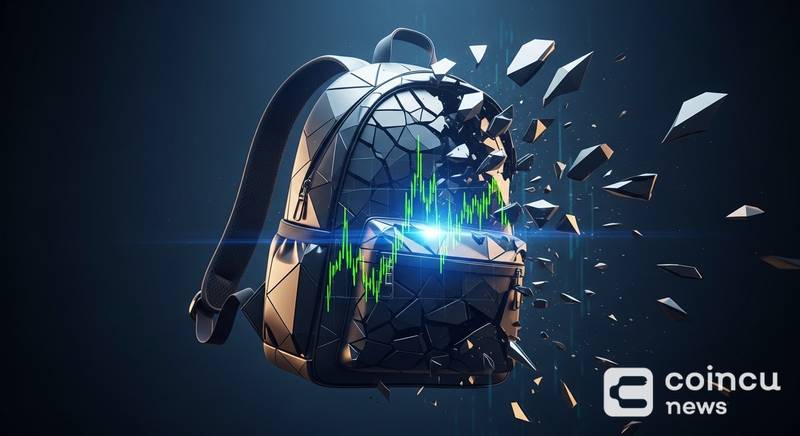

Backpack exchange has publicly denied any insider involvement in attempts to manipulate the price of its BP token on Polymarket, the decentralized prediction market platform. The clarification comes amid growing community scrutiny over suspicious trading activity targeting BP-related markets, with Backpack stating unequivocally that the traders behind the manipulation attempts have no affiliation with the project’s team.
Backpack’s Denial: What the Statement Actually Says
Backpack addressed the allegations directly, confirming that individuals attempting to manipulate BP token pricing on Polymarket are “not insiders of the team.” The statement was issued through the project’s official channels in response to community speculation that coordinated trading activity on Polymarket prediction markets could be linked to Backpack team members or affiliates.
Official Clarification · Backpack
0 Insiders Involved
Backpack confirmed that traders attempting to move the BP price on Polymarket are not members or insiders of the Backpack team, distancing the project from any coordinated manipulation allegations.
The denial is notable for its directness. Rather than issuing a vague statement about market integrity, Backpack specifically addressed the insider allegation, drawing a clear line between the project’s team and the external traders flagged for suspicious behavior.
The timing of the clarification matters. Community discussion about potential insider manipulation had been building across social media platforms, and Backpack chose to respond before the narrative could harden into accepted fact. This mirrors a pattern seen across crypto projects where early, direct denial tends to be more effective than delayed corporate responses.
The Manipulation Activity That Triggered the Response
The controversy centers on unusual trading patterns observed in BP token prediction markets on Polymarket. Traders appeared to be placing coordinated bets designed to influence the perceived price trajectory of BP, raising questions about whether those behind the activity had privileged information about Backpack’s plans.
Platform Context · Polymarket
$1B+ Lifetime Volume
Polymarket is the world’s largest decentralized prediction market, processing over $1 billion in cumulative trades. Its high liquidity makes BP outcome markets an attractive, and visible, venue for coordinated price manipulation attempts.
Polymarket operates as a decentralized prediction market where users can bet on the outcomes of real-world events, including cryptocurrency price milestones, token launches, and project developments. Unlike spot exchange manipulation, which directly moves a token’s price, prediction market manipulation works by distorting perceived probabilities, potentially influencing trader sentiment and behavior on actual exchanges.
This distinction is critical. A trader manipulating BP odds on Polymarket is not directly moving BP’s spot price but is potentially shaping how other market participants interpret BP’s prospects. If a prediction market shows inflated odds for a BP price target, spot traders may act on that signal, creating a feedback loop between the prediction market and actual exchanges.
The specific mechanics of the flagged activity, whether it involved concentrated large bets, wash trading between wallets, or coordinated timing of positions, have not been fully detailed in public disclosures. What prompted Backpack’s response was the community’s leap from “manipulation exists” to “insiders are behind it.”
Why the Insider Question Matters for BP Holders
The distinction between external manipulation and insider manipulation is not semantic. It carries fundamentally different implications for BP token holders and anyone evaluating the project’s trustworthiness.
External manipulation, while concerning, suggests opportunistic traders exploiting a liquid prediction market. This is a market structure problem, not a governance problem. It happens across crypto markets regularly and reflects the open nature of decentralized platforms rather than a failure of a specific project’s integrity.
Insider manipulation would signal something far more damaging: that team members with knowledge of upcoming announcements, token unlocks, or strategic decisions were using that information to profit on prediction markets. This would undermine trust in the project’s governance and raise serious legal questions, particularly as Polymarket has recently updated its rules to address insider trading concerns more directly.
Backpack’s clarification attempts to close that second, more damaging interpretation. By stating explicitly that no insiders are involved, the project is putting its credibility on the line with a verifiable denial, one that could be disproven if wallet analysis or other evidence later ties the manipulative trades to team-affiliated addresses.
For traders tracking the broader crypto market, this incident is unfolding against a backdrop of shifting institutional dynamics. BlackRock’s projection of $500 million in annual crypto revenue within five years underscores how mainstream the space has become, and with that scale comes heightened scrutiny on market integrity across all platforms.
Polymarket’s Growing Manipulation Problem
The BP incident is not occurring in isolation. Polymarket has faced increasing scrutiny over manipulation risks as the platform’s volume and visibility have grown. The platform’s open, permissionless design, the same feature that makes it valuable as a decentralized prediction market, also makes it vulnerable to coordinated trading strategies.
Prediction markets create a unique manipulation vector. Unlike spot exchanges, where manipulation requires moving actual token prices, prediction markets can be influenced by strategically placing bets that shift perceived probabilities. These distorted probabilities then get cited by media, shared on social platforms, and interpreted by retail traders as signals, creating real market impact from synthetic positions.
The feedback loop risk is particularly acute for newer tokens like BP, where liquidity may be thinner on both the prediction market and spot exchange side. A relatively small amount of capital deployed on Polymarket can create outsized movements in perceived probability, which in turn may influence spot trading decisions by retail participants who treat prediction market odds as market intelligence.
Both Polymarket and competitor Kalshi have recently moved to implement stronger insider trading curbs, signaling that the platforms themselves recognize the growing risk. These rule changes reflect broader regulatory pressure and platform-level acknowledgment that prediction market integrity directly affects the crypto projects whose tokens are traded on these platforms.
The regulatory environment continues to evolve around these questions. With the Federal Reserve focused on inflation progress before considering rate cuts, broader financial market conditions remain tight, and regulators across jurisdictions have shown increased willingness to scrutinize crypto market practices that blur the line between speculation and manipulation.
What Comes Next for Backpack and BP
Backpack’s statement, while direct, leaves several questions open. The project has not announced any specific follow-up measures such as on-chain audits of team wallets, formalized trading restrictions for insiders, or engagement with Polymarket to investigate the flagged activity.
Whether the clarification is sufficient will depend largely on what happens next. If the manipulation activity continues and no further transparency measures emerge, community skepticism may return regardless of the denial. Conversely, if Backpack follows the statement with concrete actions, such as publishing team wallet addresses for public monitoring or implementing verifiable trading lockup periods for insiders, the denial would carry significantly more weight.
BP token holders should monitor several specific indicators in the coming days and weeks. On-chain wallet analysis tools can track whether the addresses flagged for manipulation activity show any connections to known Backpack-affiliated wallets. Polymarket’s own response, whether the platform flags or restricts the activity in BP markets, will also be informative.
The growing intersection between prediction markets and token ecosystems represents a new frontier for market integrity in crypto, one that projects like Backpack are now navigating in real time. The incident also highlights the broader maturation of the space, as seen in the growing institutional engagement with crypto assets through vehicles like spot ETFs, where market integrity standards are far more established.
For now, Backpack’s position is clear: the manipulation exists, but it is not coming from inside the house. The burden of proof has shifted to the community and on-chain investigators to either validate that claim or challenge it with evidence. In a market built on transparency and verifiability, the data trail, not the statement, will ultimately determine whether this chapter ends here or becomes a larger story.
Disclaimer: This article is for informational purposes only and does not constitute financial or investment advice. Cryptocurrency and digital asset markets carry significant risk. Always do your own research before making decisions.