
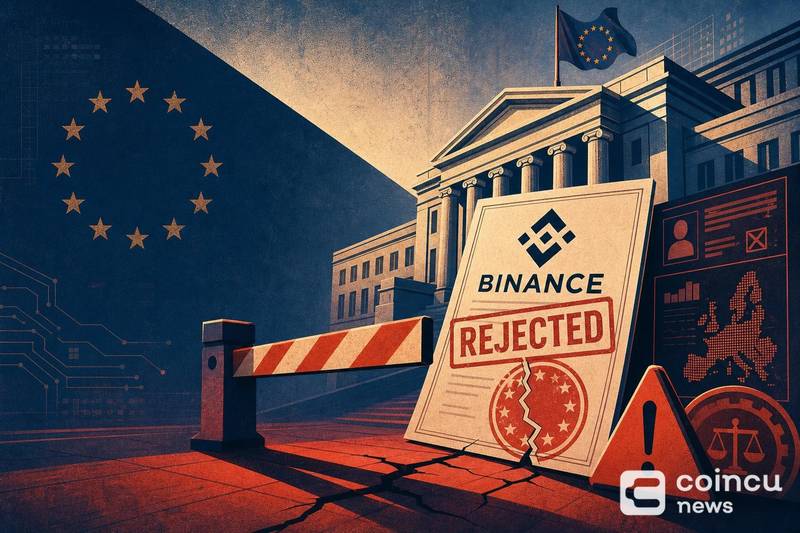
Binance’s application for a crypto license in Greece under the EU’s Markets in Crypto-Assets (MiCA) framework faces an uncertain path, raising questions about how the world’s largest exchange by trading volume will qualify to serve users across the European Union.
The exchange filed for a MiCA-compliant license in Greece in January 2026, marking a significant step in its effort to establish a regulated presence within the EU. The application, if approved, would allow Binance to operate as a licensed crypto-asset service provider under the bloc’s unified regulatory framework.
Why Binance Chose Greece as Its EU Licensing Gateway
Greece’s selection was not arbitrary. Binance CEO Richard Teng has publicly addressed the reasoning behind the choice, explaining why Greece was strategically chosen over other EU member states for its MiCA license bid.

Under MiCA, a license granted in one EU member state can serve as a gateway for offering services across the entire bloc. This passporting mechanism means that the Greek application is not simply about accessing the Greek market; it is about establishing a legal foundation for EU-wide operations.
The distinction between a local approval and a broader European service narrative is critical. A Greek license would position Binance alongside competitors that have already secured MiCA authorizations through ESMA’s regulatory process, potentially leveling the playing field for EU market access.
Rejection Risk: What Is Actually Known
It is important to distinguish between confirmed regulatory action and the possibility of rejection. As of now, no public statement from Greek authorities or ESMA confirms that the application has been formally rejected.
However, the application process under MiCA involves rigorous compliance checks. National competent authorities evaluate applicant exchanges on governance standards, capital requirements, custody arrangements, and anti-money laundering controls. Any shortfall in these areas could delay or derail an application.

Binance has faced regulatory friction in multiple jurisdictions globally, which adds scrutiny to any new licensing effort. The Greek filing arrives at a time when EU regulators are actively building out their oversight infrastructure under MiCA, with ESMA maintaining a public register of authorized crypto-asset service providers.
How a Greek Decision Shapes Binance’s EU Positioning
A licensing setback in Greece would not merely close one national market. Because Binance has positioned the Greek application as its primary EU entry point, a rejection or prolonged delay would force the exchange to seek authorization elsewhere, restarting a potentially lengthy process in another member state.
Cross-border service qualification is the larger concern. Without a MiCA license from any EU jurisdiction, Binance would face growing difficulty justifying its service availability to European users, particularly as competitors secure their own authorizations. The regulatory environment has been shifting rapidly, with initiatives like Tether’s partnership with DMCC on blockchain regulation in neighboring regions illustrating how compliance strategies are evolving globally.
The exchange’s compliance narrative in Europe hinges on demonstrating that it can meet the same standards applied to traditional financial service providers. MiCA was designed to create that equivalence, and any failure to clear its requirements would signal a gap between Binance’s global operations and EU regulatory expectations.
What This Means for Users and Market Perception
For users in or connected to the EU market, the immediate operational impact remains limited. Binance continues to serve users in jurisdictions where it holds valid registrations or operates under transitional arrangements.
However, regulatory uncertainty can affect confidence. Institutional partners and counterparties often factor licensing status into their risk assessments when deciding whether to integrate with or route through an exchange. As the broader crypto market continues to evolve, with major acquisitions like Ripple’s stake in Flutterwave reshaping industry partnerships, the licensing question carries weight beyond retail users.
No services have been suspended, and the application process remains ongoing. The concern is forward-looking: whether Binance can convert its Greek filing into the regulatory credential it needs before competitive and compliance pressures narrow its options. The growing interest in projects offering high-throughput blockchain infrastructure underscores how quickly the competitive landscape is shifting for centralized exchanges.
FAQ: Binance Greece License and EU Compliance
Has Binance’s Greek license application been rejected?
No. As of the latest available information, the application filed in January 2026 remains under review. No Greek authority or EU regulator has publicly confirmed a rejection.
Does one Greek decision determine EU-wide service access?
Not on its own, but it matters significantly. Under MiCA’s passporting framework, a license from any single EU member state can enable cross-border service provision. If Greece rejects the application, Binance would need to pursue authorization in another member state to access the EU market.
What should readers watch next?
Key indicators include any formal communication from the Hellenic Capital Market Commission, updates to ESMA’s public register of authorized crypto-asset service providers, and whether Binance files parallel applications in other EU jurisdictions as a contingency measure.
Disclaimer: This article is for informational purposes only and does not constitute financial or investment advice. Cryptocurrency and digital asset markets carry significant risk. Always do your own research before making decisions.

