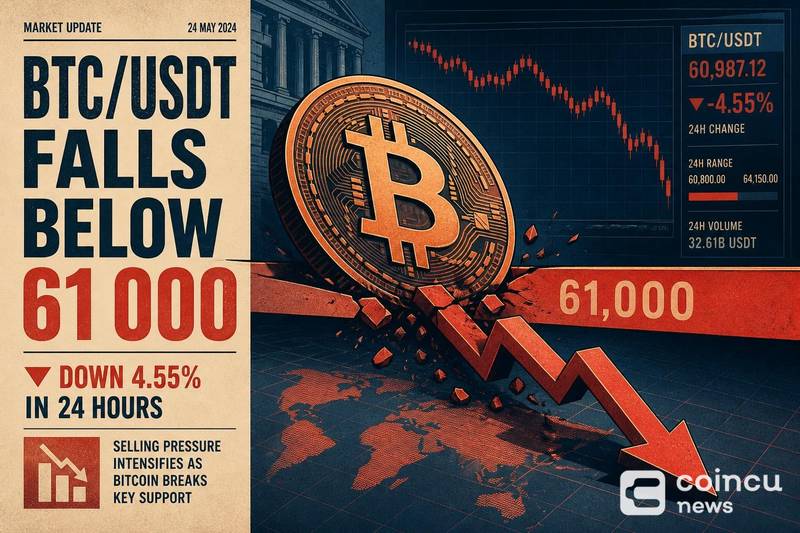

BTC/USDT fell below 61,000 after a 4.55% decline over 24 hours, marking a sharp intraday move that pushed the leading cryptocurrency pair through a closely watched price threshold.
The drop below 61,000 represents a notable break of a round-number level that had served as a reference point for short-term traders. The 4.55% daily decline is a pair-specific move on the BTC/USDT market, reflecting selling pressure against Tether rather than a broader protocol-level event for Bitcoin.
Why the 61,000 Level Draws Trader Attention
Round-number price levels tend to concentrate market activity. Orders cluster at these thresholds because traders use them as mental anchors for setting stop-losses, take-profit targets, and entry points.

A sustained break below 61,000 can shift short-term sentiment from neutral to cautious. When a visible support level gives way, it often triggers a wave of stop-loss orders that accelerate the move lower.
Psychological Support and Resistance
The 61,000 mark functioned as a psychological floor. Its breakdown means the next round-number level below becomes the new focus for traders scanning for stabilization zones.
Whether BTC/USDT reclaims 61,000 quickly or continues to trade below it will shape sentiment heading into the next trading sessions. A failure to reclaim typically invites further selling, while a swift recovery can signal that the dip attracted buyers.
What Traders May Watch After the 4.55% Drop
A 4.55% decline in a single 24-hour window is elevated by recent standards. Moves of this magnitude tend to increase volatility in the sessions that follow, as both momentum sellers and dip buyers react to the new price range.

The immediate question is whether BTC/USDT holds above any nearby support or whether follow-through selling materializes. The Fear and Greed Index is one sentiment gauge traders often reference during sharp declines to assess whether the market has reached extreme fear territory.
Volume is the key variable. If the decline occurred on rising volume, it suggests stronger conviction behind the selling. Thin-volume drops, by contrast, are more prone to reversal.
How Bitcoin’s Move Ripples Across Crypto Markets
Bitcoin frequently acts as a bellwether for the broader cryptocurrency market. When BTC/USDT posts a sharp daily loss, altcoin pairs often follow with equal or greater percentage declines, as risk appetite contracts across the sector.
This dynamic means the BTC drop may have implications beyond the single trading pair. Projects across the ecosystem, from those focused on AI-driven blockchain infrastructure to those pursuing stablecoin expansion in regulated markets, operate in an environment where Bitcoin’s price trajectory sets the broader market tone.
A notable BTC decline can reset short-term expectations across major assets, even when the underlying fundamentals of individual projects remain unchanged. Market participants watching for key breakout levels in other tokens may find those setups delayed by a shift in overall sentiment.
FAQ About BTC/USDT Falling Below 61,000
What does BTC/USDT mean?
BTC/USDT is a trading pair that represents the price of Bitcoin (BTC) quoted in Tether (USDT), a stablecoin pegged to the U.S. dollar. It is one of the most liquid trading pairs on major cryptocurrency exchanges.
Is a 4.55% drop in 24 hours significant for Bitcoin?
A 4.55% single-day decline is a meaningful move. While Bitcoin has historically experienced larger daily swings during extreme volatility events, a drop of this size is above the average daily range and signals elevated selling pressure in the short term.
What should traders monitor after a break below 61,000?
Key factors include whether BTC/USDT reclaims the 61,000 level in subsequent sessions, trading volume accompanying the move, and broader market conditions including altcoin performance. A reclaim would suggest the dip was temporary, while continued trading below 61,000 could indicate further downside risk.
Disclaimer: This article is for informational purposes only and does not constitute financial or investment advice. Cryptocurrency and digital asset markets carry significant risk. Always do your own research before making decisions.