
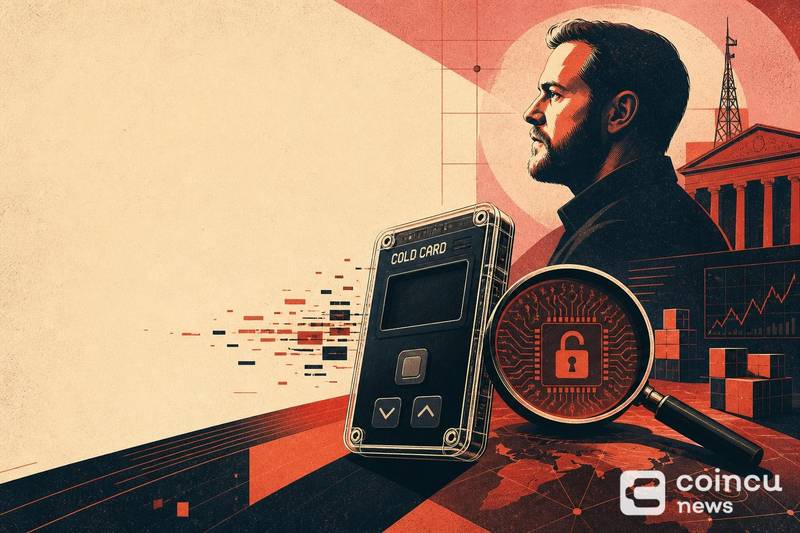

The Coldcard hack is being framed less as a one-off product problem than as a warning for Bitcoin self-custody standards, after CoinDesk reported that Cory Klippsten sees the incident as a trigger for a broader security overhaul. The local brief confirms that framing, but not every technical or financial detail behind the exploit.
What the current reporting actually confirms
CoinDesk’s August 5 report is the only directly named source in the brief that ties the phrase “self-custody security overhaul” to Cory Klippsten, while TechCrunch’s August 4 coverage and Fortune’s August 3 report show the incident had already widened into a broader hardware-wallet security story. Within that evidence set, the clearest confirmed point is the shift from a single wallet event to a wider review of how offline devices generate and protect recovery seeds.
What remains unclear is the exact scale of losses and the precise technical path of the exploit, because $116 million appears in Fortune’s reporting while more than $130 million appears in TechCrunch’s account. Coincu’s own earlier coverage, including potential losses from the Coldcard Bitcoin hack near $114 million, reflects the same uncertainty rather than settling it.
Why seed generation sits at the center of the issue
Coinkite’s Coldcard Mk3 seed-generation warning is the vendor document in the brief that makes wallet setup, not only wallet storage, central to the story, and NIST’s overview of random number generation describes randomness as a core requirement in cryptographic systems. In plain terms, the backup phrase is only as strong as the entropy used to create it.
NIST’s publication on entropy sources used for random bit generation explains why designers need to evaluate how unpredictable an entropy source really is, while Coinkite’s warning shows why users of affected devices need to review how their seed was generated. That connection gives the “security overhaul” angle a technical basis that goes beyond a generic hack recap, and it also lines up with Coincu’s earlier reporting on the Coldcard Mk3 seed risk warning.
Why Klippsten’s framing extends beyond one wallet line
By framing the incident as a self-custody standards problem, CoinDesk’s report pushes the discussion toward assumptions that apply across hardware wallets, not only Coldcard, while NIST’s guidance on random number generation keeps the focus on entropy quality rather than branding. Readers who want more product-specific context can compare that framing with Coincu’s coverage of how the Coldcard exploit raised questions about air-gapped Bitcoin wallet security.
What users can review now
Based on Coinkite’s official warning and NIST’s entropy guidance, the highest-confidence next steps are to check whether a device used the warned-about seed-generation path, confirm that backups came from a trusted setup, and compare any remediation steps against the vendor’s published notice. That is a narrower conclusion than declaring all self-custody unsafe, but it is the one the current evidence supports.
FAQ: Coldcard hack, seed security, and self-custody risk
What is confirmed right now? CoinDesk’s August 5 report confirms the headline framing that Cory Klippsten sees the incident as a reason to revisit self-custody security standards, while TechCrunch and Fortune confirm that major outlets are treating it as a large hardware-wallet security event.
Is every Coldcard user known to be affected? The brief does not establish that, and Coinkite’s published warning is the clearest evidence in the source set that user impact depends on the device and the seed-generation method that was used. Broader claims about all users would go beyond the current record.
Does this weaken the case for Bitcoin self-custody? NIST’s random-number guidance and its publication on entropy sources support a narrower conclusion: self-custody still depends on strong cryptographic randomness, but the standards around seed creation and verification may deserve closer scrutiny after this incident.
Disclaimer: This article is for informational purposes only and does not constitute financial or investment advice. Cryptocurrency and digital asset markets carry significant risk. Always do your own research before making decisions.