
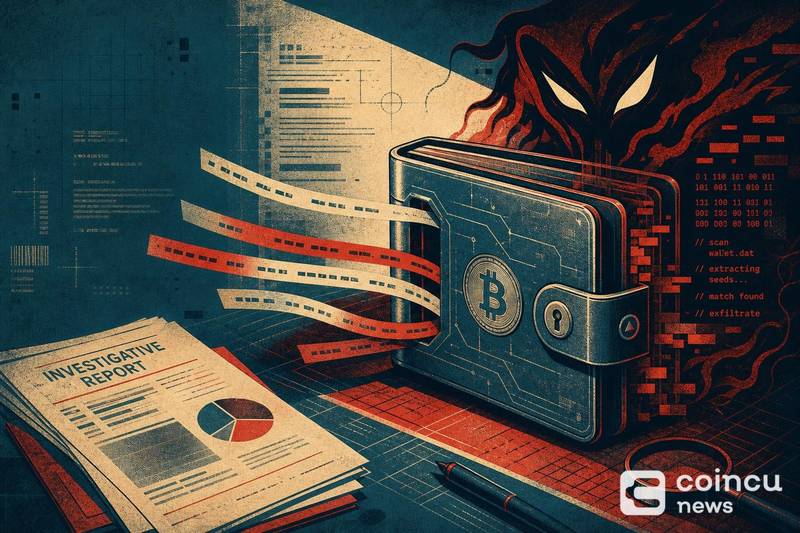

A malware framework known as OkoBot has been reported to target cryptocurrency wallet mnemonic phrases, the recovery seed words that grant full control over self-custodied crypto holdings. This account is based on a single security report, and key details about scope and impact remain unconfirmed.
The finding comes from a write-up on Kaspersky’s Securelist research blog, which identifies OkoBot as a framework built to go after cryptocurrency wallets. This article relies on that report and on partial verification, so every assertion below should be read as what the report describes rather than as independently confirmed incident data.
A mnemonic phrase, also called a seed phrase or recovery phrase, is the ordered list of words a wallet generates so a user can restore access to funds on any device. It is the master key to a self-custodied wallet.

The report frames OkoBot’s focus on those recovery phrases as the core threat. Details such as the number of victims, the specific wallet brands affected, the geographic spread of any campaign, and confirmed theft outcomes are not established in the available evidence and are not claimed here.
Why seed phrase theft outranks ordinary credential theft
A stolen exchange password or browser login typically compromises one account, and many of those can be reset or protected by two-factor authentication. A mnemonic phrase cannot be reset, because it is the recovery layer itself.
Anyone who obtains a valid recovery phrase can reconstruct the entire wallet on their own device and move the assets, without needing the original device or app password. That is why a framework aimed at seed phrases, as OkoBot is described in the Securelist report, represents a higher-severity category than routine credential theft.
The exposure also extends across applications. Because the same phrase can restore a wallet in multiple compatible apps, a single leaked phrase can put every account derived from it at risk. The same tension between usability and key safety runs through wallet tooling generally, including projects like the Tether Wallet Development Kit’s browser testing platform.

What users and security teams should watch for
The report describes OkoBot as a malware framework with cryptocurrency wallet targeting, which places the risk at the endpoint level rather than on-chain. In practical terms, that means the device where a wallet is used, and where a phrase might be typed, viewed, or stored, is the surface to protect.
Because the available evidence does not include validated victim counts or a campaign timeline, the responsible framing is watchpoints rather than a definitive detection guide. General hygiene still applies: never enter a recovery phrase into a website or app prompt you did not initiate, keep backups offline rather than in files or screenshots, and treat any unexpected request for a seed phrase as hostile.
The theme is familiar to readers who followed the Trusted Volumes exploit and its partial fund return, where control of keys and contracts determined who could move assets.
What remains unclear after the initial report
The current evidence base is thin. There are no corroborating reports, expert quotes, or confirmed incident figures available beyond the primary Securelist write-up, and the competitor scan for this story was incomplete.
Open questions include the true scope of any OkoBot campaign, which wallet software is affected, the regions involved, and whether any confirmed thefts have occurred. There is no local evidence for market impact or institutional spillover, so none is asserted here.
The next signals worth watching are follow-up disclosures from security vendors and any indicators of compromise published alongside them. Broader cybersecurity coverage of crypto-focused malware is tracked by outlets such as BleepingComputer.
FAQ: OkoBot malware and crypto wallet recovery phrases
What is OkoBot? Per the Securelist report, OkoBot is a malware framework described as targeting cryptocurrency wallets, with a focus on mnemonic recovery phrases. Details on its reach and victims are not confirmed.
Why do mnemonic phrases matter? A recovery phrase is the master key to a self-custodied wallet. Anyone holding it can restore the wallet elsewhere and move the funds, which is why phrase theft is more dangerous than a stolen password.
What should I do if I suspect exposure? If you believe a seed phrase may be compromised, move assets to a newly generated wallet with a fresh, never-exposed phrase, and treat the old one as permanently unsafe.
Disclaimer: This article is for informational purposes only and does not constitute financial or investment advice. Cryptocurrency and digital asset markets carry significant risk. Always do your own research before making decisions.