
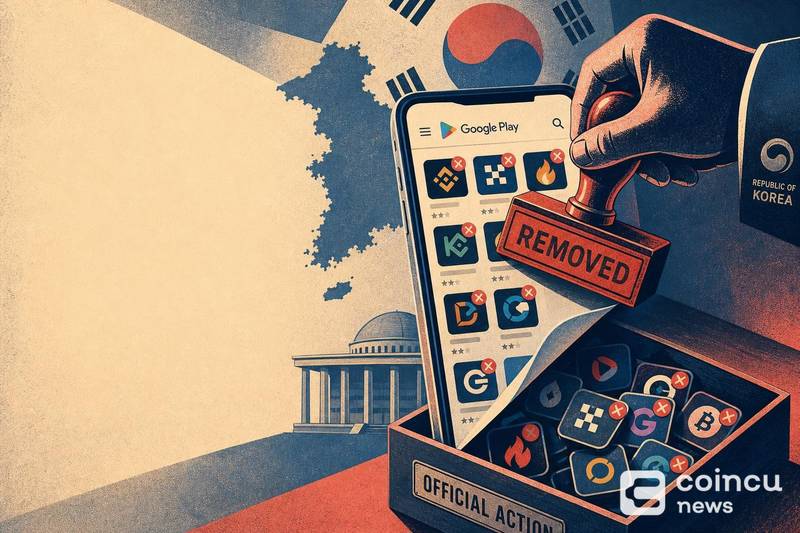

At least 29 overseas crypto exchanges have reportedly been removed from South Korea’s Google Play Store, cutting off Android users in the country from downloading or updating those exchange apps as regulators tighten enforcement against unregistered virtual asset service providers.
What the Google Play Removal Actually Confirms
The reported action targets the availability of at least 29 overseas crypto exchange apps on South Korea’s Google Play Store, according to reporting from The Block. The story centers on app-store access, not a blanket ban on crypto trading in the country.
What Remains Unspecified
The headline confirms the scale of the removals but not the full list of affected exchanges, the exact effective date, or whether every removal stems from a single regulatory directive. Given the partial verification status of the available reporting, those details remain open rather than established.
Why South Korea and App-Store Rules Sit at the Center
South Korea requires virtual asset service providers to register with financial authorities before operating in the country, and the Financial Services Commission has publicly indexed material tied to Google Play and virtual assets, per the FSC’s own records. That registration requirement is what makes overseas exchange distribution a compliance question.
App stores also enforce their own distribution policies. Google Play maintains developer program rules that can restrict apps in specific markets, as set out in its developer policy documentation.
Why Unregistered Exchange Access Becomes a Target
Overseas exchanges that have not registered locally can fall outside the country’s supervisory framework, which is what makes their app distribution an enforcement pressure point rather than their tokens or pricing. The reported removals are consistent with that compliance-and-distribution framing rather than any market-driven event.
What the Removals Mean for Users and Exchanges
For Android users in South Korea, removal from Google Play directly affects app discovery, new installations, and access to updates. Existing installed apps and web-based access are a separate question from store availability, and the reporting does not establish that trading services themselves were shut down.

What Existing Users May Experience
Users who already installed an affected app may retain it on their device, but losing store distribution typically ends future updates and new sign-ups through that channel. This is an access and operations issue, not a confirmed change to trading volumes.
Why Mobile Distribution Loss Matters to Operators
Losing a major Android storefront removes a primary acquisition and update path for exchange operators in one of Asia’s active markets. South Korea’s local trading activity has already been under pressure, with exchange volume reported to have fallen sharply year over year.
How This Fits South Korea’s Broader Enforcement Pattern
The move follows earlier reporting that Google Play blocked access to 17 unregistered exchanges in South Korea, as summarized in a Cointelegraph report. The larger figure now reported suggests a widening of that same enforcement approach.
Repeat actions against unregistered exchange access shape local market structure by pushing users toward domestically registered platforms. The country has previously extended market-oversight tools into crypto-adjacent areas, including when the Korea Exchange activated trading safeguards.
FAQ
Does this affect iOS or other app stores? The available reporting concerns South Korea’s Google Play Store. Whether Apple’s App Store or other platforms are part of the same action is not established in the cited sources and remains an open question.
Can existing users still access exchange services? Store removal affects downloads and updates, but the reporting does not confirm that trading services were fully cut off. Previously installed apps and non-store access channels are a separate matter.
What could regulators or app stores do next? Given the pattern of escalating enforcement, further removals or additional registration pressure are possible, though no specific next step is confirmed in the cited sources.
Disclaimer: This article is for informational purposes only and does not constitute financial or investment advice. Cryptocurrency and digital asset markets carry significant risk. Always do your own research before making decisions.