
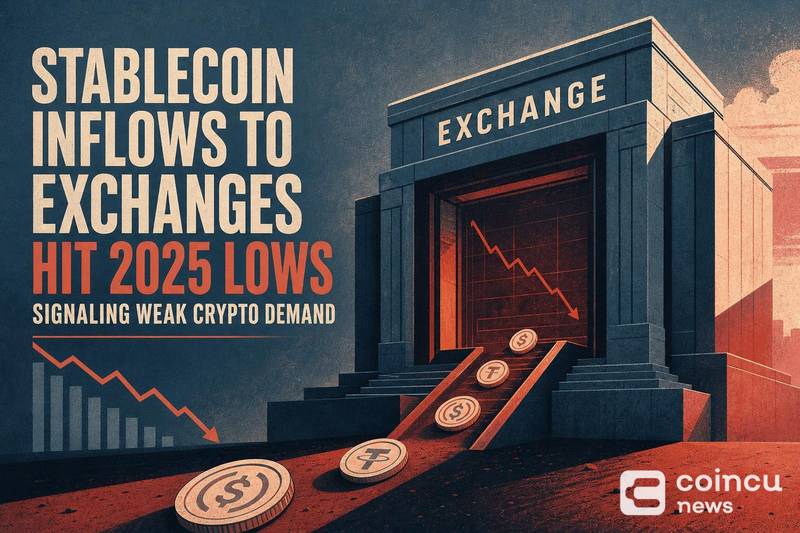

Stablecoin inflows to exchanges have fallen to their lowest level since 2025, an analyst observation that points to weak market demand and limited investor interest as fresh capital available for buying thins out.
The decline was flagged in a CryptoQuant analysis describing stablecoin inflows hitting an 18-month low. Exchange-bound stablecoin flows are widely tracked as a proxy for deployable buying power, because dollars-pegged tokens are typically moved onto trading venues before they are used to purchase spot assets or posted as derivatives collateral.
A stablecoin inflow, in this context, refers to tokens such as USDT or USDC being transferred into exchange wallets. A sustained drop in that activity signals that less new capital is arriving at the point where it could be converted into risk assets. On its own, the metric suggests weak demand rather than confirming any particular price direction.

Why Exchange Stablecoin Inflows Are Read as a Demand Gauge
Stablecoins act as the on-ramp for most exchange trading, so deposits onto platforms are often the first step ahead of a spot purchase or a leveraged position. When those deposits slow, it can reflect reduced readiness among participants to buy risk assets.
The signal measures potential rather than realized buying. Capital sitting in exchange wallets is not the same as executed orders, which is why lower inflows describe intent and readiness, not confirmed activity.
The metric is most useful when paired with broader sentiment and liquidity conditions. Read in isolation it can mislead, which is why the CryptoQuant framing ties the trend back to conditions for Bitcoin rather than treating it as a standalone verdict, a point echoed in a companion explainer on what the 18-month low means for Bitcoin.
What Muted Flows May Say About Investor Sentiment
The core interpretation attached to the trend is straightforward: weak demand and a lack of investor interest. A drop in exchange inflows can indicate hesitation to deploy capital aggressively while conditions remain uncertain.

Reduced stablecoin movement often aligns with wait-and-see behavior, where holders keep dry powder off-exchange rather than positioning for immediate purchases. That points to caution and sidelined capital more than outright capitulation.
Absent inflows do not mean permanent disengagement. Capital parked in stablecoins can return quickly, so the reading is muted participation, not a definitive bearish signal. The dynamic mirrors earlier observations that stablecoin outflows have weakened buying pressure even as coins move onto exchanges.
How Traders Could Read the Signal
For traders, exchange stablecoin inflows help indicate whether fresh sidelined capital is entering the market. Thin inflows may limit upside follow-through if buying pressure stays weak, even when other catalysts move price.
A reversal in inflows would be the clearest thing to watch, as a pickup in deposits could mark renewed participation. Price can still rally or fall on external catalysts regardless of flow data, so the metric is one input rather than a forecast.
The broader liquidity backdrop matters too, with the pace of stablecoin issuance itself slowing after stablecoin supply topped $300 billion. Cautious flow data has also coincided with subdued readings on gauges like the Crypto Fear & Greed Index in extreme fear territory.
FAQ
Are low stablecoin inflows bearish? Not by themselves. They point to weak demand and cautious sentiment, but the signal describes buying readiness rather than confirming a price direction.
Why do investors move stablecoins to exchanges? To convert them into spot assets or to post them as collateral for derivatives, which is why deposits are treated as a measure of deployable buying power.
What would show demand is returning? A sustained reversal in exchange inflows, indicating sidelined capital is being moved back onto trading venues.
Disclaimer: This article is for informational purposes only and does not constitute financial or investment advice. Cryptocurrency and digital asset markets carry significant risk. Always do your own research before making decisions.