
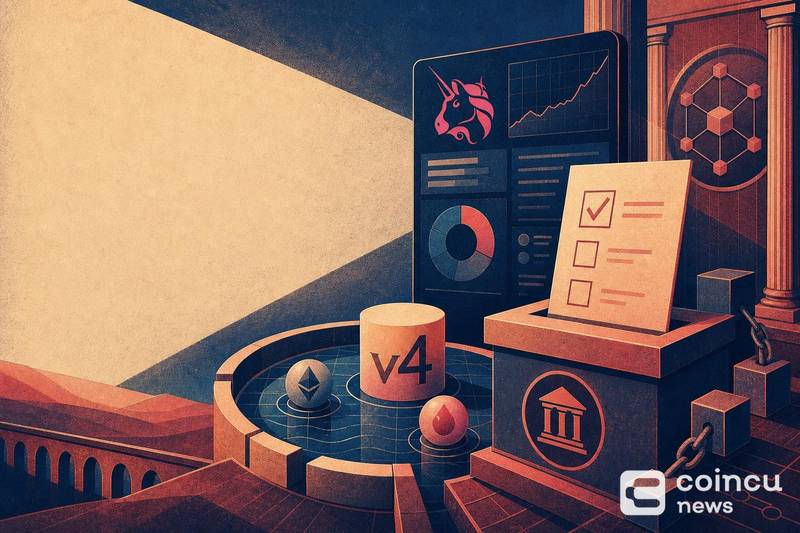

Uniswap Labs has proposed enabling protocol fees for Uniswap v4 pools, with a Snapshot vote launched on July 7 to gauge token-holder sentiment on the measure. If approved, the change would introduce a protocol-level fee layer on top of existing liquidity provider fees, marking a significant step in how the decentralized exchange captures value from its newest deployment.
What the v4 protocol fee proposal covers
The proposal, posted as a temperature check on the Uniswap governance forum, asks the community to consider activating protocol fees specifically for Uniswap v4 pools. This is distinct from the swap fees that liquidity providers already earn; protocol fees would route a portion of trading activity to the protocol itself.
Pool fees compensate LPs for providing liquidity. Protocol fees, by contrast, are collected at the protocol level and can be directed toward the Uniswap treasury or other governance-determined uses. The proposal does not activate fees unilaterally; it initiates a governance process that requires community approval before any parameters take effect.
The distinction matters because Uniswap v4 introduced a modular pool architecture with hooks, making fee configuration more flexible than prior versions. Enabling protocol fees within this framework would allow governance to set fee parameters on a per-pool or global basis, depending on the final implementation details.
Why the July 7 Snapshot vote matters
The Snapshot vote launched on July 7 serves as an off-chain signaling mechanism. Snapshot allows UNI token holders to vote without incurring gas costs, providing a low-friction way to measure community sentiment before committing to on-chain governance actions.
This vote is a temperature check, not a binding on-chain proposal. It sits early in Uniswap’s multi-stage governance pipeline. A successful Snapshot vote would signal broad token-holder support and likely lead to a formal on-chain governance proposal with specific fee parameters and implementation details.
The governance process matters because protocol fee activation affects every participant in the Uniswap v4 ecosystem. Moving from signaling to implementation requires additional votes, technical review, and parameter decisions that the community has not yet debated in full.

How protocol fees could affect LPs and traders
For liquidity providers, protocol fees introduce a new variable into yield calculations. If a portion of swap fees is redirected to the protocol, LP returns on a given pool would decrease relative to a scenario without protocol fees, all else being equal. The magnitude depends entirely on the fee rate governance selects.
For traders, protocol fees could marginally increase the cost of swaps on v4 pools. Whether this drives volume to competing venues depends on the fee level and how it compares to alternatives. Uniswap’s deep liquidity on major pairs has historically kept it competitive even as fee structures evolved across versions.
Actual impact remains speculative until governance finalizes the parameters. The proposal itself does not specify exact fee percentages, leaving those details to subsequent governance stages. This is similar to how Aave DAO has navigated proposals around protocol-level asset control, where initial governance checks precede detailed parameter discussions.
Protocol fees and Uniswap’s broader monetization strategy
Enabling protocol fees for v4 pools represents a direct path toward protocol-level revenue generation. Uniswap has historically directed all swap fees to liquidity providers, with the protocol itself not capturing direct trading revenue. This proposal would change that dynamic for v4.
The timing aligns with broader industry conversations about DeFi protocol sustainability. As protocols mature, governance communities increasingly debate how to fund ongoing development, security audits, and ecosystem growth without relying solely on token emissions or venture funding.
For UNI token holders, protocol fee activation could create a direct link between trading volume and protocol treasury growth. Standard Chartered has projected long-term upside for UNI partly based on the potential for value accrual mechanisms like protocol fees, though any price implications remain dependent on execution and market conditions.
The proposal also reflects how Uniswap v4’s hook-based architecture opens new design possibilities. Hooks allow individual pools to customize behavior, and protocol fees layered on top of this system could be implemented with granularity that earlier versions did not support.
What comes next after the Snapshot vote
Are protocol fees already active on Uniswap v4?
No. The Snapshot vote is a preliminary signaling step. Protocol fees are not live on any v4 pools. Activation requires the full governance process to complete, including an on-chain vote with binding authority.
Who would be affected if fees are approved?
Liquidity providers on v4 pools would see a portion of swap fees redirected to the protocol. Traders would experience marginally higher costs on affected pools. UNI token holders would gain indirect exposure to protocol revenue through the treasury.
What governance steps remain?
After the Snapshot temperature check, a successful signal would typically lead to a formal Request for Comment period, followed by an on-chain governance proposal specifying exact fee parameters. The on-chain vote requires quorum and majority support from UNI holders to pass.
When could fees go live?
No timeline has been set for implementation. The governance pipeline, from temperature check through on-chain execution, typically takes several weeks to months depending on community debate and technical preparation.
Readers tracking DeFi governance developments can follow the discussion thread on the Uniswap governance forum for updates as the proposal advances through its next stages.
Disclaimer: This article is for informational purposes only and does not constitute financial or investment advice. Cryptocurrency and digital asset markets carry significant risk. Always do your own research before making decisions.

