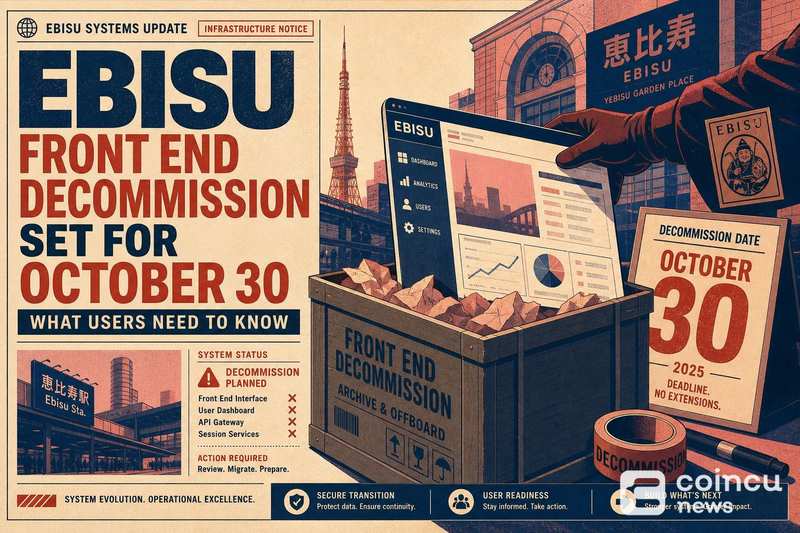

Stablecoin protocol Ebisu says it will decommission its front-end on October 30, an operational change that will affect how users access the platform. The available materials confirm the front-end shutdown and the date, but do not detail a reason, a migration path, or what happens to underlying protocol functions.
Ebisu is a decentralized finance stablecoin protocol, listed as an Ethereum-ecosystem project on aggregators that track its on-chain activity. The announced action is specifically a front-end decommission scheduled for October 30, not a confirmed wind-down of the protocol itself.
The distinction matters. A front-end is the website interface most users rely on for routine interactions; it is separate from the smart contracts that hold funds and execute logic. The Ebisu interface is what the decommission targets, based on the available information.

What the Front-End Shutdown Could Mean for Users
For everyday users, the practical concern is access. Once a front-end is retired, the familiar path to mint, redeem, repay, or withdraw through the website may no longer be available in its current form.
What remains unclear is whether those functions continue at the contract level after October 30. The materials do not confirm whether redemptions, withdrawals, or loan repayments stay open, so users should treat these as open questions rather than settled outcomes.
Readers who hold positions on Ebisu will want clarity on how to interact with the protocol if the website goes offline, and whether any direct-contract or alternative interface route exists. None of that is confirmed in the current evidence.
What Ebisu Has Not Yet Confirmed
The reporting on this event carries only partial verification, and several key details are absent. The reason for the decommission is not confirmed.

There is also no confirmed migration path or alternative access route for users, and no confirmed user deadline beyond the October 30 date itself. Anyone relying on the platform should watch for an official statement that fills these gaps.
Why an Access Change Matters in DeFi
Most DeFi users never touch a smart contract directly; they depend on a protocol’s front-end for routine operations. That makes a front-end decommission an access-and-operations story rather than a market-movement one.
No token price, market cap, or total value locked figures are established here, so this is not a story about a market swing. It is about how users will reach a protocol they may have funds in. Similar operational and infrastructure shifts have shaped how stablecoin platforms function, including newer entrants like Brale’s ION protocol for cross-chain stablecoin transfers.
FAQ: Ebisu Front-End Decommission on October 30
Is Ebisu shutting down entirely? Not confirmed. The available information describes a front-end decommission on October 30, not a full protocol closure. Whether underlying contracts keep operating is not stated.
What should users check before October 30? Users should look for an official Ebisu statement on redemptions, withdrawals, repayments, and any alternative way to reach the protocol if the website is retired.
What remains unconfirmed at the time of writing? The reason for the decommission, any migration path or backup interface, and whether user deadlines extend beyond October 30 are all unconfirmed in the current evidence.
Disclaimer: This article is for informational purposes only and does not constitute financial or investment advice. Cryptocurrency and digital asset markets carry significant risk. Always do your own research before making decisions.