


Lightning is the payment-first option, Spark is a Bitcoin-connected payment and asset rail, and Liquid is built for federated settlement and issued assets. Their custody, liquidity and exit models are too different for one speed or fee ranking.
Merchants should test Lightning first, while treasuries and asset issuers may prefer Liquid. Spark sits between payment and asset movement, so operator control, supported assets and withdrawals decide its fit. The practical winner is the rail with the clearest failure and recovery process.
Quick comparison: three Bitcoin settlement rails
The comparison starts with workflow, not a universal best label. Lightning uses payment channels, Spark handles payment and asset movement, and Liquid operates as a federated sidechain.

| Rail | Primary design | Best fit | Custody or settlement boundary | Reject when |
|---|---|---|---|---|
| Lightning | Payment channels | Frequent BTC payments | Channel liquidity and wallet/node operations | The user needs general smart contracts or issued assets |
| Spark | Bitcoin-connected payment and asset rail | Fast transfers and asset movement | Route operators, balance representation and exit | The route cannot prove control and recovery |
| Liquid | Federated sidechain | Asset issuance and controlled settlement | Federation, peg and redemption process | The user requires permissionless BTC execution |
This is a settlement comparison, not a Bitcoin L2 project ranking. The best Bitcoin L2 projects article includes smart-contract networks and Babylon; this page stays focused on rails that move payment or settlement value.
Lightning vs Spark vs Liquid: What’s the Difference?
1. Lightning: payment routing with native BTC
Lightning is the best first test for repeated Bitcoin payments. Its channel model avoids settling every payment directly on Bitcoin’s base layer, but it is not a general-purpose DeFi or asset-issuance network.
The review should record inbound capacity, routing reliability, wallet custody, channel liquidity, fees and channel recovery. The Lightning Network explains the category, while Coincu’s Wavelength coverage shows how adjacent payment products fit around it.
Lightning’s main trade-off is liquidity management. Senders need outbound capacity, while merchants need inbound capacity and a way to hold or convert BTC. Hosted wallets shift channel responsibility to a provider; self-managed nodes require funding, rebalancing, monitoring and recovery.

Test an unavailable route, an expired payment, a provider outage and a channel close during congestion. Record the error, on-chain recovery path and cost of rebalancing. A merchant needs clear payment success, settlement asset, accounting and refund records before choosing Lightning.
Pros
- Uses native BTC for the payment flow rather than an issued or synthetic representation.
- Fits repeated small payments when inbound and outbound liquidity are already available.
- Has a broad ecosystem of wallets, routing services and operational tooling.
- Can reduce base-layer settlement overhead when liquidity is positioned near the users.
Cons
- Payment success depends on route liquidity, channel state and routing quality.
- Hosted wallets add provider dependency and may hide important custody or recovery steps.
- Self-managed operations require channel funding, rebalancing, monitoring and close procedures.
- Refunds and recovery during congestion still need a tested on-chain path.
2. Spark: payment and asset movement with a different route
Spark is a Bitcoin-connected payment and asset rail, not a synonym for Lightning. Review balance representation, supported transfers, route operators and the exit to Bitcoin. These controls matter most when Spark handles treasury balances or larger settlement instructions.
Spark’s public comparison research explains its intended role, while Coincu’s Bitcoin appchain coverage adds context. The route still needs a small-transfer test, failure test and withdrawal check.
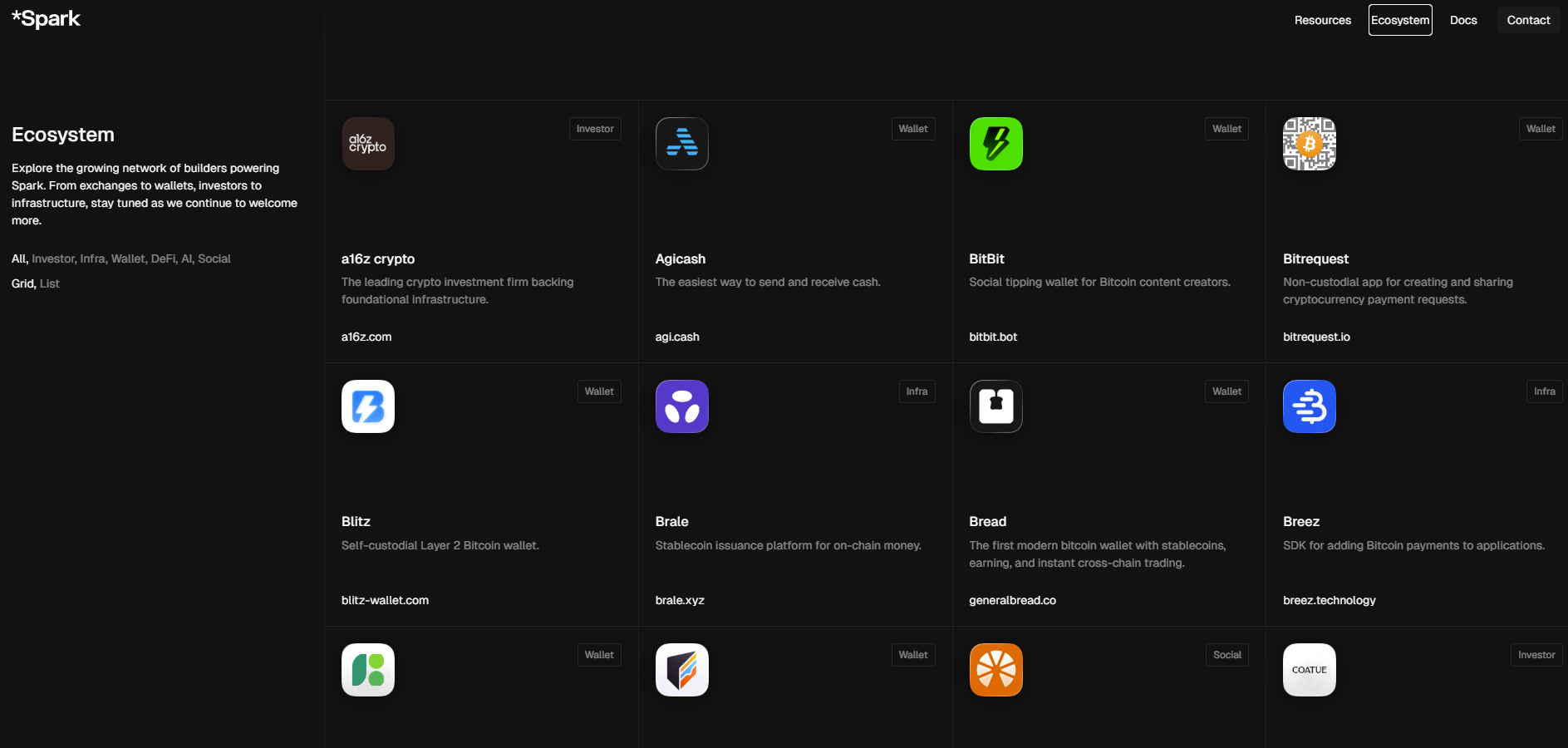
Spark requires a balance-first review. Map funding, transfer and withdrawal, then identify what is native BTC, what is an internal or issued balance, and which operator coordinates the movement. Do not describe the route as native BTC settlement if the balance claim is unclear.
The production test should include a payment, asset transfer, refund and delayed withdrawal. Record recovery without operator intervention, route-specific fees, pause or rejection authority, and transaction export. Spark may simplify the interface while concentrating control in the service layer.
Pros
- Can cover payment and asset-movement workflows in one user-facing route.
- May reduce front-end complexity for teams that do not want to operate every channel or venue.
- Provides a useful candidate for treasury workflows that need more than invoice payments.
- Makes asset transfer and withdrawal part of the same operational review.
Cons
- The balance representation must be understood before it is treated as native Bitcoin settlement.
- Operator authority and withdrawal conditions can create a concentrated recovery dependency.
- A paused or rejected transfer may leave the user waiting on service-layer intervention.
- Delayed exits can complicate treasury reconciliation and customer support.
3. Liquid: federated settlement for issued assets
Liquid is the strongest candidate for issued assets, exchange settlement and controlled capital-market transfers. Its federated model makes federation control, peg, issuance, restrictions and redemption part of the risk review. The Liquid Network explains the rail, while Coincu’s institutional coverage adds settlement context.
Liquid’s main issue is accountability around issued assets. A stablecoin or security token can transfer efficiently but remain unusable if the venue rejects it, the issuer restricts the address or redemption requires a separate broker.
The institutional test should trace a known asset between two approved counterparties: issuance or deposit, transfer, venue acceptance, reconciliation and redemption. Simulate a pause and record who can stop transfers, notify holders and prove the underlying claim remains available. Liquid fits controlled workflows better than open-ended permissionless DeFi.
Pros
- Strong fit for issued assets, exchange settlement and controlled capital-market transfers.
- Makes issuer, venue, transfer and redemption rules visible in the settlement workflow.
- Gives institutions a defined federation boundary instead of requiring every participant to operate a payment channel.
- Supports workflows where address eligibility and asset policy matter as much as confirmation time.
Cons
- Federation, peg, issuer and receiving-venue dependencies remain material.
- An asset can transfer successfully while still being difficult to redeem.
- Address-level restrictions can prevent an otherwise valid holder from moving the asset.
- A counterparty without support for the relevant asset may not accept or settle it.
The Key Differences Between Lightning, Spark, and Liquid
Lightning is more specialized than Spark. It keeps the payment model clear, but channel liquidity and wallet operations limit its use outside recurring BTC payments. Spark supports a wider asset-movement workflow, but the reader must understand the balance representation and operator role before treating it as a settlement equivalent.
Spark is more flexible than Liquid for payment-oriented movement, while Liquid has the clearer institutional settlement boundary. Spark’s main review is control over balances and withdrawals; Liquid’s is federation, issuer eligibility and redemption. Those are different risk questions, not different scores on one scale.
Lightning and Liquid sit at opposite ends of the comparison. Lightning is optimized for native-BTC payment routing with minimal asset-policy overhead. Liquid is optimized for controlled transfers where issued-asset rules, approved venues and redemption matter more than permissionless composability. Coincu’s DeFi projects coverage provides related market context.
Conclusion
Lightning is the most direct payment-first choice, Spark is a payment and asset route that requires careful operator and withdrawal review, and Liquid is a federated settlement network suited to issued assets and controlled transfers. The correct choice is not the rail with the shortest marketing claim; it is the one whose asset representation, custody boundary and recovery process match the transaction.
FAQs
Is Lightning faster than Liquid?
They solve different problems. Lightning is designed for fast payment routing, while Liquid is a federated sidechain for settlement and issued assets. Comparing speed alone misses custody, asset and redemption differences.
Is Spark a replacement for Lightning?
No. Spark should be evaluated as a separate payment and asset rail. It may fit a workflow that needs different transfer features, but its operator, balance and withdrawal assumptions must be checked independently.
Is Liquid safer than Lightning?
There is no universal answer. Lightning and Liquid expose different risks: channel and routing operations on one side, federation, peg and redemption on the other. The safer rail depends on the asset and workflow.
Which rail is best for tokenized assets?
Liquid is the first candidate to investigate when the asset needs controlled issuance and settlement. The issuer, custodian, transfer controls and redemption process still matter more than the network label.
Disclaimer: This article is for informational purposes only and does not constitute financial or investment advice. Cryptocurrency and digital asset markets carry significant risk. Always do your own research before making decisions.