Bitcoin DeFi Ecosystem Map: BTCFi Projects to Watch in 2026
Bitcoin DeFi should be evaluated by workflow: lending, liquidity, BTC representation, security extension or tokenized settlement. This article maps the projects that serve those jobs instead of repeating a generic Bitcoin L2 ranking.
The map is organized around what the user does with BTC: borrow, provide liquidity, mint or redeem a representation, extend security or hold a tokenized claim. Each route carries its own custody, oracle, issuer and exit assumptions.
The BTCFi ecosystem at a glance
This map uses application and asset categories rather than repeating the pillar’s L2 shortlist. The named entities below are discovery candidates for lending, liquidity, staking, RWA and asset representation; each requires a separate dated review before capital is committed.
| Category | Primary entities | User workflow |
|---|---|---|
| Lending | Zest, Sovryn, Avalon Labs | Borrow against BTC exposure |
| BTC liquidity | ALEX, Badger, Lombard | Swap, provide liquidity or deploy BTC |
| Bitcoin staking/security | Babylon, SatLayer | Extend BTC-denominated security |
| BTC representation | WBTC, tBTC, Lombard | Bring BTC exposure into applications |
| RWA and settlement | Securitize, Franklin Templeton, Ondo | Tokenized funds and stable-value assets |
The best Bitcoin L2 project comparison is the infrastructure page. This article stays at the application and asset layer so the two pages do not compete with the same seven profiles.
Lending and collateral: Zest, Sovryn and Avalon Labs
Zest
Zest belongs in the lending map because the important question is how BTC-related collateral becomes borrowable liquidity. Its public lending surface should be reviewed alongside the asset representation, oracle, utilization, liquidation route and withdrawal before discussing return.
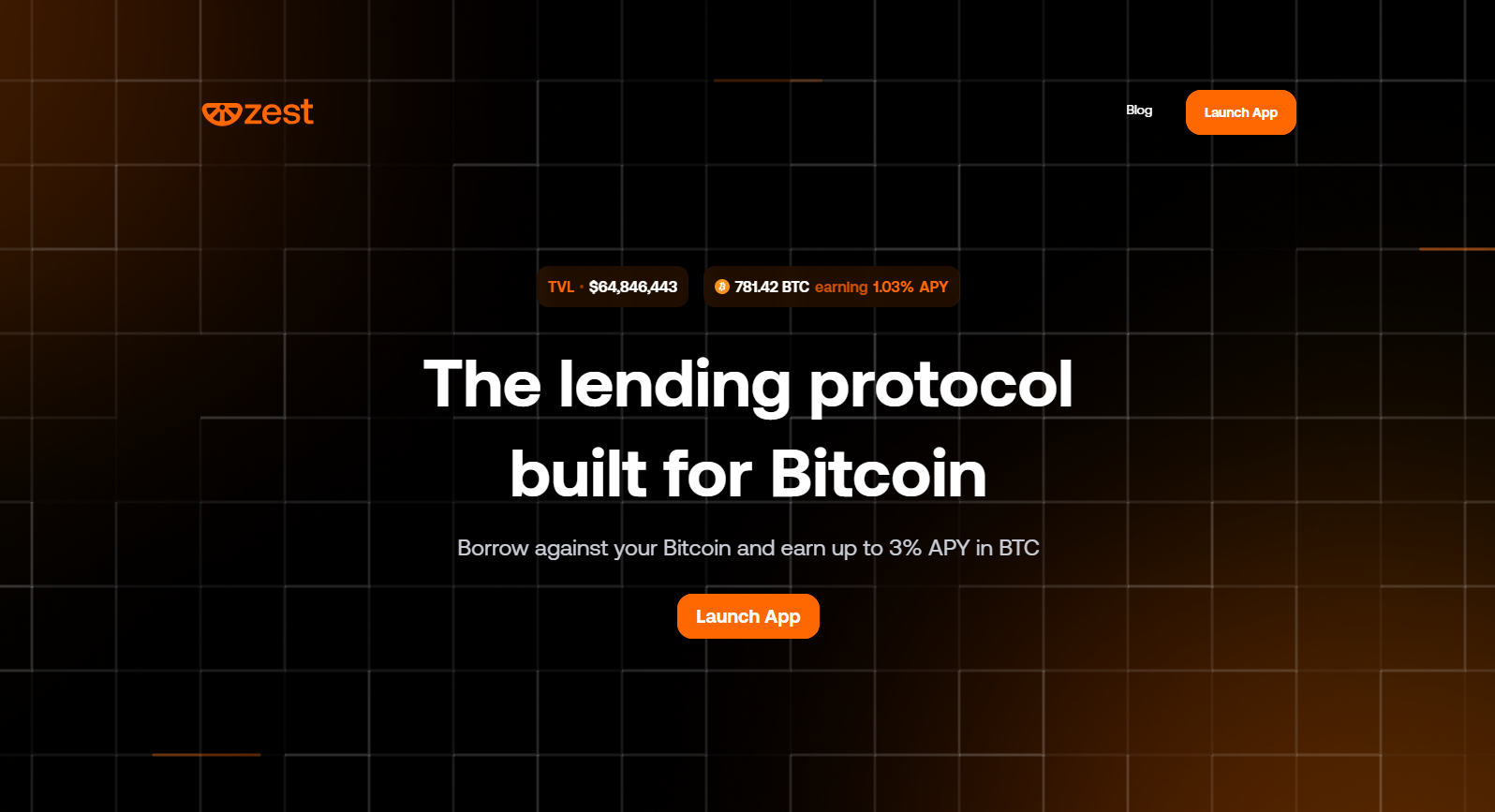
The borrower-side analysis should identify the exact collateral representation, loan asset, health-factor formula, liquidation threshold and liquidator market. A strong interface can hide a weak exit if the supplied asset is thinly traded or if the oracle values it using a deeper market that the borrower cannot actually access. The lender should separately check utilization, reserve policy and whether the advertised return comes from borrower interest or incentives.
Sovryn
Sovryn represents a Bitcoin-connected trading and lending application environment. Its public application surface should be evaluated through the borrower and liquidity workflow, not a generic Rootstock platform ranking.
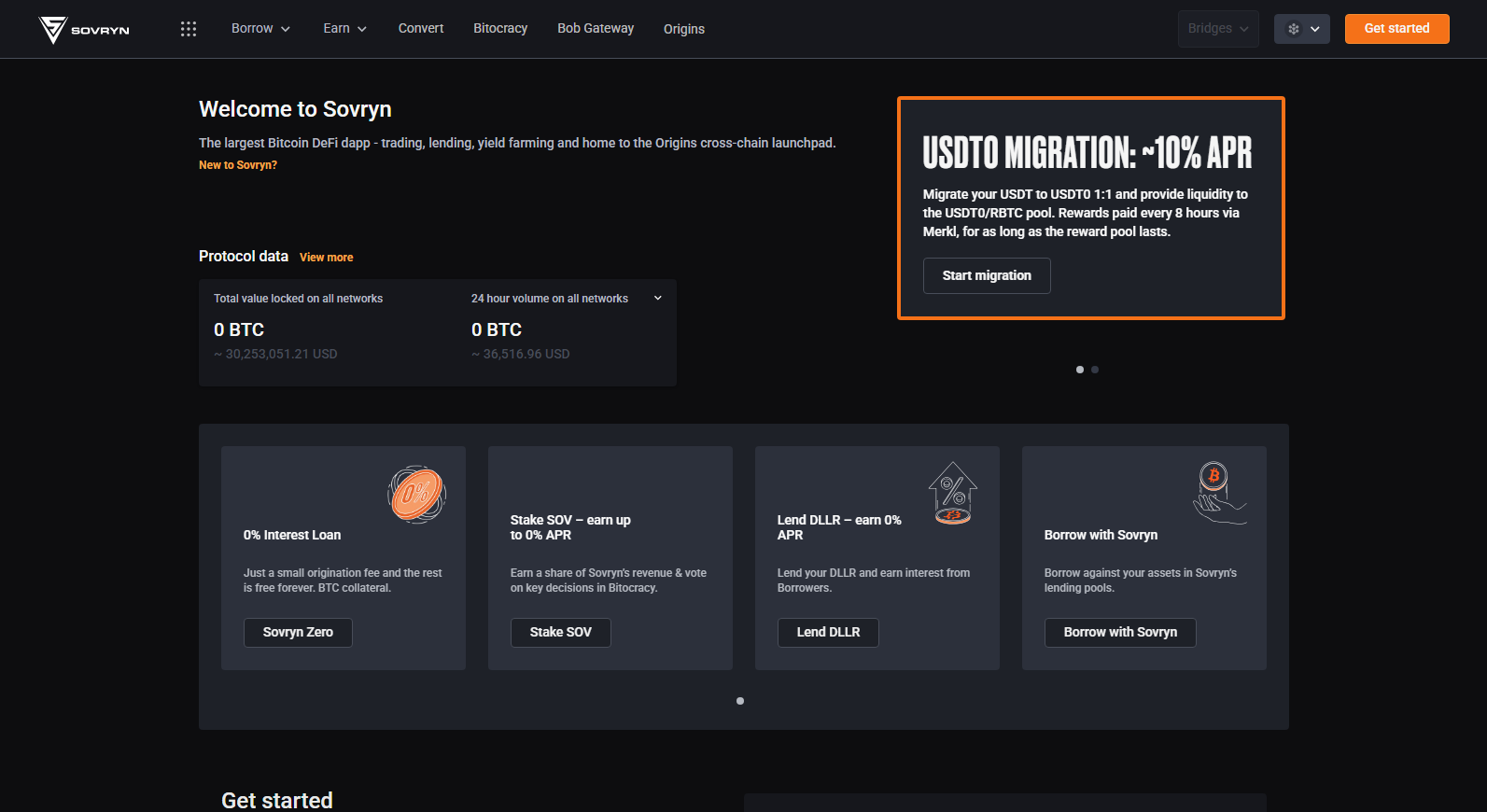
Test the collateral route, borrow asset, repayment and exit at a fixed size. The useful Sovryn test is a combined trade-and-loan route. Follow the BTC representation into the account, supply it, borrow the intended asset, execute a small swap, repay and withdraw.
At each step, record the bridge or custody dependency, gas asset, oracle source, liquidation rule and final asset. This separates a familiar EVM interface from the actual risk of the route underneath it.
Avalon Labs
Avalon Labs is a separate lending and BTC yield candidate to investigate. Its public product surface should be checked before assessing whether current markets, collateral rules, custody boundary and redemption path can be independently verified.
Do not merge its risk profile with Stacks or Rootstock simply because it handles BTC exposure. Avalon needs a higher evidence burden because the reader must first determine which product is being evaluated: lending, yield, collateralized borrowing or an asset representation.
Record the payer of any return, the lockup or withdrawal rule, the underlying BTC claim and the party able to pause or change the product. If those facts are not observable, describe Avalon as an early research candidate rather than a mature lending recommendation.
BTC liquidity and asset representation
ALEX
ALEX is a liquidity and application candidate for readers researching BTC swaps and pools. Its public trading surface should be checked against active pair depth, price impact, supported representation and withdrawal, not the ecosystem’s headline TVL.
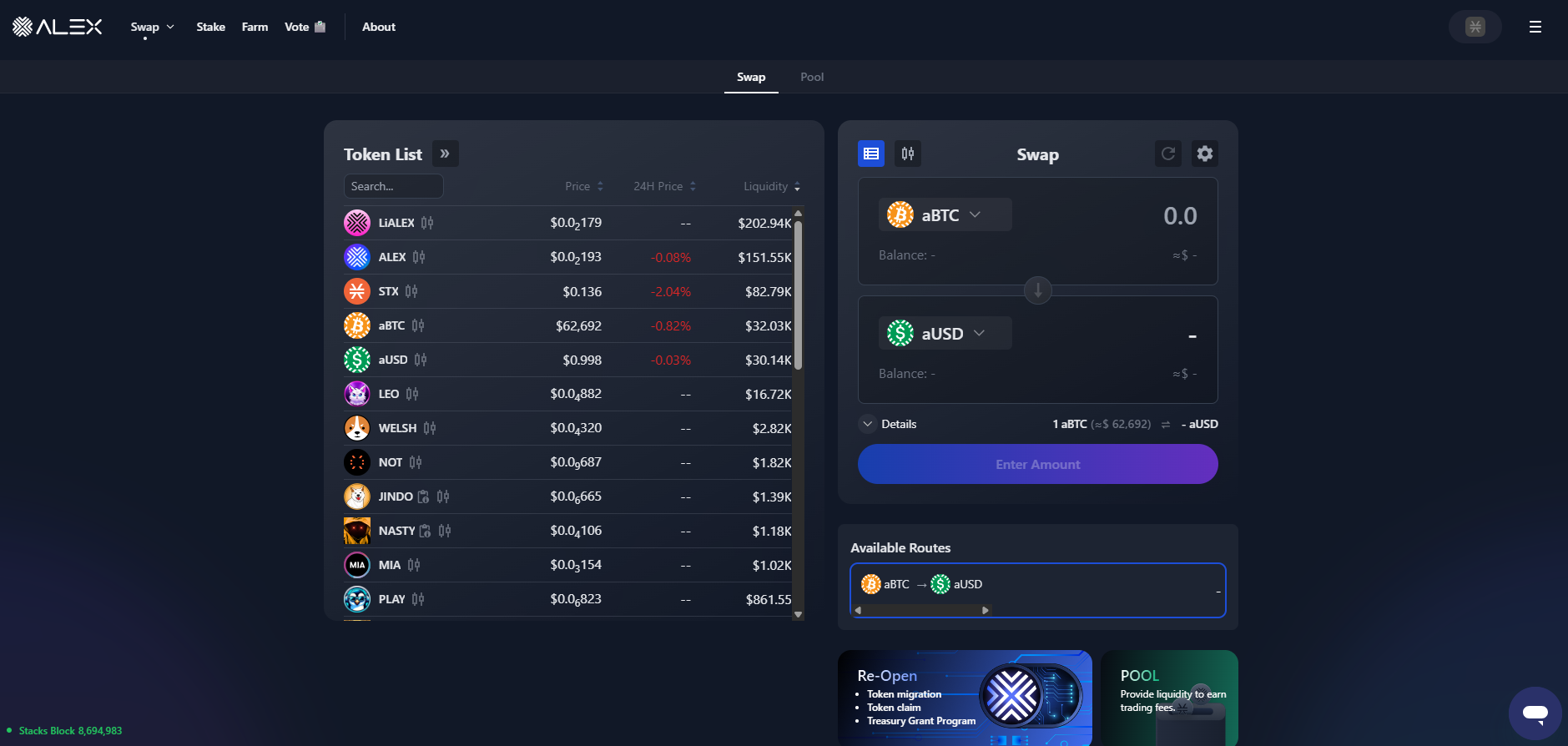
The ALEX comparison should use the reader’s intended trade size and pair rather than total ecosystem liquidity. Record the quote, realized output, pool fee, price impact, asset representation and withdrawal route.
A pool may show strong headline activity while still being unsuitable for a BTC-to-stablecoin trade if one side is concentrated or if the received asset has a weak exit.
Badger
Badger belongs in the Bitcoin asset and DeFi representation category. Its public product surface lets the map examine how BTC exposure is packaged for applications without reusing the same Stacks DEX discussion.
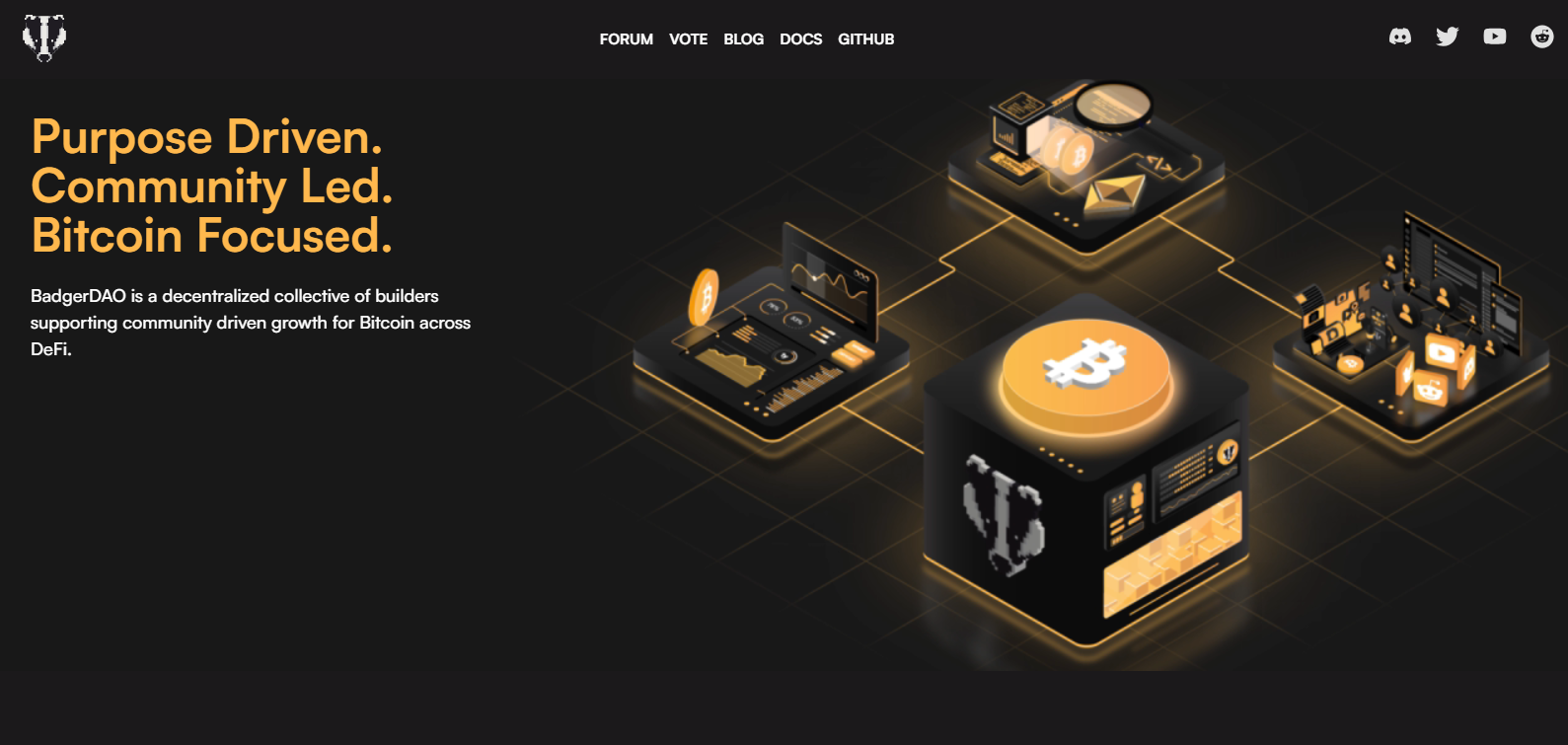
The key Badger question is what the user actually owns after entering the strategy. Separate a wrapped claim, a vault receipt, a lending position and a governance or incentive token. Then trace minting, strategy permissions, underlying custody, fees and redemption. This makes Badger useful for asset-packaging research without treating a tokenized BTC exposure as native BTC.
Lombard
Lombard is relevant to liquid BTC representation and staking-linked asset routes. Its public asset surface should be checked for minting, redemption, custody and where the asset can actually be used. A liquid token is not automatically native BTC.

For Lombard, the central workflow is mint, deploy, use and redeem. The article should name the custody boundary, supported destination applications, any eligibility or queue, the market used for secondary exit and the conditions under which the underlying BTC can be recovered.
BTC representation
WBTC
WBTC is the custody-led reference in this comparison. Its public asset surface is useful for checking how a 1:1 BTC-backed token is issued, moved across supported networks and redeemed. The practical question is not whether the token trades near BTC; it is whether the reserve, merchant access and redemption process support the user’s size and jurisdiction.
For a BTCFi user, WBTC can offer broad application compatibility, but that compatibility comes with a clear intermediary boundary. Record who can mint, who can burn, which addresses or venues are supported and how a holder exits when secondary liquidity is thin. Do not use WBTC market depth as proof that the underlying BTC can be redeemed instantly.
tBTC
tBTC is the decentralized-bridge reference in this set. Threshold’s public tBTC surface explains the route, but the article should separately test minting, signing assumptions, bridge contracts, fees, supported destination chains and redemption. Its relevant distinction is the distributed control model rather than a generic claim that the asset is “trustless.”
The user should trace one deposit from Bitcoin to the destination token and back again. Record the confirmation threshold, operator or signer dependency, failure response and the exact asset received. tBTC may reduce reliance on a single custodian, but the user still carries smart-contract, bridge and destination-liquidity risk.
Security infrastructure: Babylon and SatLayer
Babylon
Babylon belongs in the security category because its user action is staking, delegation or security provision rather than swapping or borrowing. Its public staking surface should be reviewed by identifying which external system receives the security service, what the staker locks, who operates the validator or service, how rewards are paid and what conditions govern withdrawal or slashing.
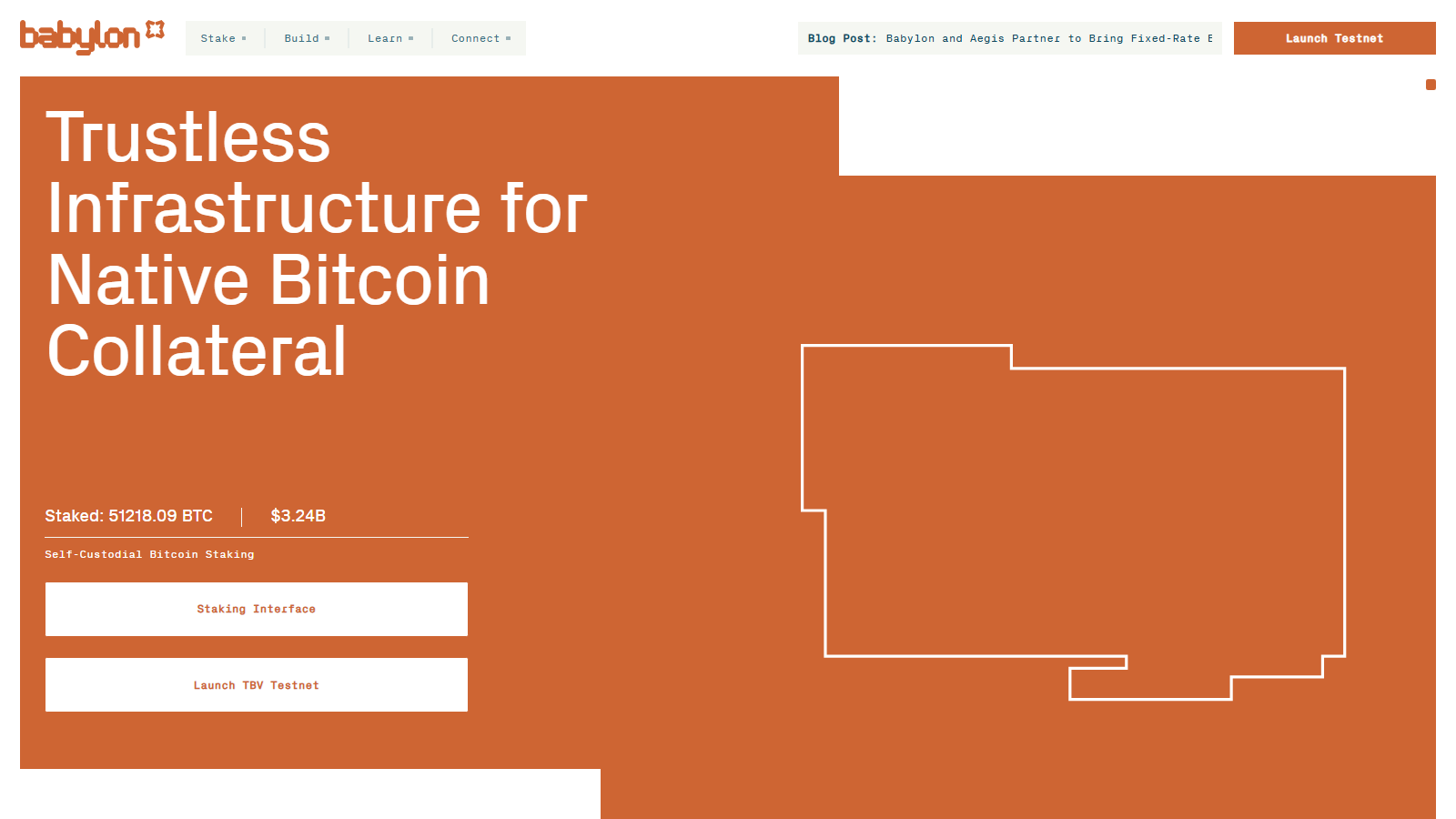
The practical distinction is capital usability. BTC committed to a security service may support another network but remain unavailable for an immediate trade or loan. A reader should therefore record the lockup, unbonding period, operator concentration and failure response separately from any advertised reward rate. Babylon can be valuable infrastructure without being a BTCFi destination.
SatLayer
SatLayer is a supporting security-service candidate, not a substitute for a lending or DEX profile. Its public security surface should be reviewed by starting with the service being secured, the operator or validator responsibilities, the BTC or BTC-linked asset used, the reward source and the conditions for withdrawal. If the service cannot explain what happens when an operator fails, the security claim is incomplete.
Tokenized assets: issuer, eligibility and redemption
Securitize
Securitize belongs in the tokenized-asset category because the key workflow is issuance and compliant ownership, not permissionless BTC lending. Its public issuance surface should be checked for investor eligibility, transfer restrictions, custody, NAV or reserve evidence, the legal claim represented by the token and the redemption process. The token contract is only one part of the product.
Franklin Templeton
Franklin Templeton is a useful institutional reference for tokenized funds because the reader needs to connect the on-chain balance to a fund structure, NAV process, transfer policy and redemption claim. Its public fund surface should be checked before describing a secondary-market price or wallet balance as access to the underlying treasury assets.
Ondo
Ondo belongs in the map as another tokenized-treasury reference with a different eligibility, custody, yield and redemption workflow to verify. Its public asset surface should be checked before stating who may hold the asset, where the return comes from, whether transfers are permissioned and whether secondary liquidity can be confused with issuer redemption.
How to validate a BTCFi project before adding it to a shortlist
The first validation step is a real user route. Start with the asset in a wallet, identify the transaction or bridge that moves it into the ecosystem, and record the representation received at the destination. Then identify one useful action: a payment, swap, collateral deposit, loan, stablecoin mint or liquidity position.
Finally, trace the withdrawal back to the original asset or an accepted redemption claim. A project that only looks impressive on a landing page should not be presented as an active BTCFi market.
The second step is evidence separation. Product pages can establish what a team says it offers, but they cannot independently prove durable demand, safe custody, deep liquidity or successful recovery after an incident.
Pair a first-party product surface with a dated public activity source and state what was not tested. This is especially important for newer ecosystems where a launch campaign can make a project appear more mature than its available applications.
| Evidence layer | What to capture | What it cannot prove alone |
|---|---|---|
| Product surface | Supported assets, features, permissions and route | Sustainable demand or safe execution |
| Activity data | Dated volume, transactions, users or pool depth | Native BTC exposure or redemption |
| Transaction test | Deposit, action, fee and withdrawal | Long-term resilience |
| Risk review | Bridge, oracle, validator, custody and upgrade controls | Future incident probability |
Use the Bitcoin DeFi TVL and liquidity comparison for data interpretation and the Bitcoin DeFi oracle and liquidation risk guide when the workflow uses collateral.
That sequence keeps ecosystem discovery useful without turning a project map into an unsupported recommendation.
Conclusion
The useful question is not which BTCFi project is universally best. It is whether a specific route lets the reader move from BTC exposure to a product, complete the intended action and exit with a clearly understood custody, oracle, issuer or validator boundary.
Zest and Sovryn deserve a lending review; ALEX and Badger deserve a liquidity or representation review; Lombard and Babylon require separate checks for asset issuance and security extension. That division makes the shortlist more actionable and prevents a high headline yield from hiding the wrong risk category.
FAQs
What is the biggest Bitcoin DeFi category?
Payments, smart-contract applications and BTC-backed lending are separate categories. The largest or most visible category can change with market conditions, so the map should begin with workflow rather than a universal size claim.
Is Bitcoin DeFi only built on Bitcoin Layer 2s?
No. BTCFi can use payment channels, sidechains, smart-contract platforms, bridges, federated systems and applications connected to Bitcoin assets. The architecture and asset representation should be named explicitly.
Which BTCFi risk is easiest to miss?
The asset route is often overlooked. A user may think they hold BTC while actually holding a wrapped, federated or synthetic claim with different redemption and counterparty risks.
Disclaimer: This article is for informational purposes only and does not constitute financial or investment advice. Cryptocurrency and digital asset markets carry significant risk. Always do your own research before making decisions.
No tags available.




- China, US Conclude Trade Talks with Focus on Cooperation
- Crypto Weekly: NYSE Backs OKX, Kraken Gets Fed Access, BTC Sells
- Court Upholds Fed’s Rejection of Custodia Bank’s Request
- Former CFO Convicted for $35M Fraudulent Crypto Investment
- DeriW Launches Edge Hour Trading Competition Platform for Derivatives Traders
- Michael Saylor Denies Bitcoin Sell-Off Amid Large BTC Transfer
- Buy Dogecoin on eToro: Step-by-Step Guide for Beginners (2024)
- Kazakhstan Explores Crypto Reserves Backed by National Funds
- JPMorgan Increases Holdings in BlackRock’s Bitcoin ETF
- Nordea Bank Introduces Bitcoin ETP Trading for Nordic Customers
- XRP Spot ETF Launches on Nasdaq Amid Market Fluctuations
- Peter Schiff Challenges Michael Saylor on MSTR’s Business Model
- Thailand Orders Worldcoin to Delete 1.2 Million Biometric Records
- UK Proposes New DeFi Tax Framework to Ease User Burden
- WLFI Under Fire: Analyst Warns Hyperliquid Could Be Next
- Ancient Ethereum Whale Moves $1.19 Billion After Decade
- BlackRock Receives Large Crypto Transfers from Coinbase
- SEC Scrutiny on ALT5 Sigma’s Leadership Disclosure Timing
- Yala Injects $5.5 Million Amid Recovery Efforts
- Radiant Capital Faces $50M Loss in Major Security Breach
- China, US Conclude Trade Talks with Focus on Cooperation
- Crypto Weekly: NYSE Backs OKX, Kraken Gets Fed Access, BTC Sells
- Court Upholds Fed’s Rejection of Custodia Bank’s Request
- Former CFO Convicted for $35M Fraudulent Crypto Investment
- DeriW Launches Edge Hour Trading Competition Platform for Derivatives Traders
- Michael Saylor Denies Bitcoin Sell-Off Amid Large BTC Transfer
- Buy Dogecoin on eToro: Step-by-Step Guide for Beginners (2024)
- Kazakhstan Explores Crypto Reserves Backed by National Funds
- JPMorgan Increases Holdings in BlackRock’s Bitcoin ETF
- Nordea Bank Introduces Bitcoin ETP Trading for Nordic Customers
- XRP Spot ETF Launches on Nasdaq Amid Market Fluctuations
- Peter Schiff Challenges Michael Saylor on MSTR’s Business Model
- Thailand Orders Worldcoin to Delete 1.2 Million Biometric Records
- UK Proposes New DeFi Tax Framework to Ease User Burden
- WLFI Under Fire: Analyst Warns Hyperliquid Could Be Next
- Ancient Ethereum Whale Moves $1.19 Billion After Decade
- BlackRock Receives Large Crypto Transfers from Coinbase
- SEC Scrutiny on ALT5 Sigma’s Leadership Disclosure Timing
- Yala Injects $5.5 Million Amid Recovery Efforts
- Radiant Capital Faces $50M Loss in Major Security Breach
- China, US Conclude Trade Talks with Focus on Cooperation
- Crypto Weekly: NYSE Backs OKX, Kraken Gets Fed Access, BTC Sells
- Court Upholds Fed’s Rejection of Custodia Bank’s Request
- Former CFO Convicted for $35M Fraudulent Crypto Investment
- DeriW Launches Edge Hour Trading Competition Platform for Derivatives Traders
- Michael Saylor Denies Bitcoin Sell-Off Amid Large BTC Transfer
- Buy Dogecoin on eToro: Step-by-Step Guide for Beginners (2024)
- Kazakhstan Explores Crypto Reserves Backed by National Funds
- JPMorgan Increases Holdings in BlackRock’s Bitcoin ETF
- Nordea Bank Introduces Bitcoin ETP Trading for Nordic Customers
- XRP Spot ETF Launches on Nasdaq Amid Market Fluctuations
- Peter Schiff Challenges Michael Saylor on MSTR’s Business Model
- Thailand Orders Worldcoin to Delete 1.2 Million Biometric Records
- UK Proposes New DeFi Tax Framework to Ease User Burden
- WLFI Under Fire: Analyst Warns Hyperliquid Could Be Next
- Ancient Ethereum Whale Moves $1.19 Billion After Decade
- BlackRock Receives Large Crypto Transfers from Coinbase
- SEC Scrutiny on ALT5 Sigma’s Leadership Disclosure Timing
- Yala Injects $5.5 Million Amid Recovery Efforts
- Radiant Capital Faces $50M Loss in Major Security Breach


Coldcard Bitcoin Exploit Losses Reach $88 Million Amid Security Fallout

Lightning vs Spark vs Liquid: Bitcoin Settlement Compared in 2026

Performa Marks One Year Live with Major Upgrade for Digital-Native SMBs
Zoomex to Attend Coinfest Asia 2026 as Gold Sponsor and Host Summer Bay Party in Bali