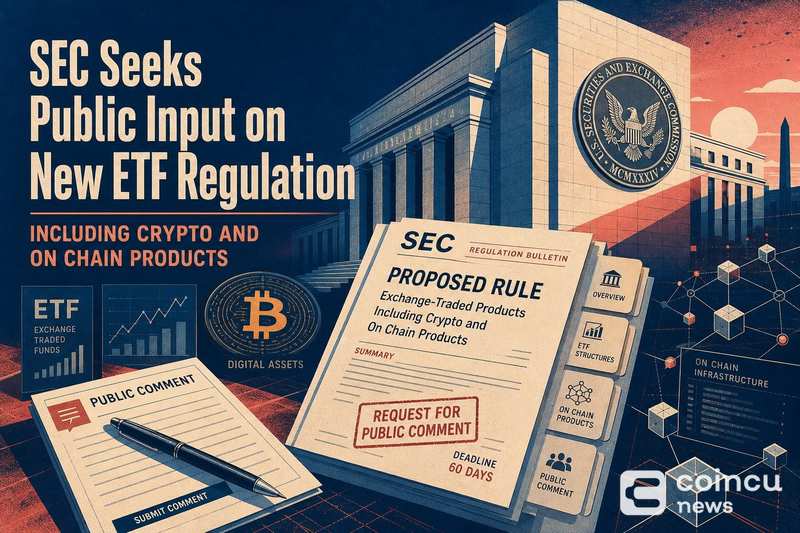

The U.S. Securities and Exchange Commission is seeking public input on how it should regulate a new wave of exchange-traded funds, including products tied to crypto assets and on-chain financial instruments. The move signals that the agency is actively weighing how novel ETF structures fit within existing securities frameworks.
SEC Chairman Paul Atkins issued a statement on novel exchange-traded funds, outlining the scope of the agency’s inquiry. The request covers ETF structures that go beyond traditional equity and fixed-income wrappers, explicitly including crypto-linked and on-chain product designs.
The public comment process invites market participants, issuers, investors, and other stakeholders to submit views on how these products should be treated under federal securities law. Written submissions can be filed through the SEC’s crypto task force input portal.

What the SEC Is Asking the Public to Comment On
The SEC’s request centers on the regulatory treatment of ETF structures that do not fit neatly into existing fund categories. These include products that hold digital assets directly, use on-chain settlement mechanisms, or provide exposure to crypto markets through novel wrapper designs.
This is a formal step in the rulemaking process. Public input periods allow the Commission to gather perspectives before drafting or revising rules. Comments received during this phase can directly influence the shape of future guidance or rulemaking proposals.
The request is notable for its breadth. Rather than focusing on a single asset class or product type, the SEC is casting a wide net across the full spectrum of novel ETF innovation. This follows the agency’s broader pattern of seeking market input on crypto asset trading regulations as it works to modernize its approach.
Why Crypto and On-Chain ETF Products Are Part of the Conversation
Crypto and on-chain products represent some of the most structurally distinct ETF proposals the SEC has encountered. Unlike conventional ETFs that hold equities or bonds through established custodians and clearinghouses, crypto ETFs raise questions about custody, valuation methodology, and market surveillance.

On-chain ETF structures add another layer of complexity. Products that settle or hold assets directly on blockchain networks operate outside traditional financial infrastructure, creating regulatory gaps that existing rules were not designed to address.
The SEC’s inclusion of these products in the public input request does not signal approval or rejection of any specific proposal. It reflects recognition that the pipeline of novel ETF filings now includes a significant number of crypto and on-chain designs, and that the agency needs a coherent regulatory framework to evaluate them.
The discussion also intersects with broader efforts by crypto industry groups petitioning the SEC for DeFi rulemaking, as decentralized finance protocols increasingly seek to create regulated investment products.
What This Could Mean for ETF Issuers and Investors
For ETF issuers, the public input process creates an opportunity to shape the rules before they are written. Firms that submit detailed comments on custody standards, disclosure requirements, and market structure considerations could influence how the SEC draws the boundaries for permissible product designs.
Investors stand to benefit from regulatory clarity. A well-defined framework would reduce uncertainty around which products can reach market and under what conditions, potentially accelerating the launch timeline for novel ETF structures that currently sit in regulatory limbo.
The SEC has also been reviewing adjacent product categories. The Block reported that the agency is examining prediction market ETFs, another novel product type that stretches existing regulatory definitions.
Comment requests of this nature do not trigger immediate rule changes. The process typically unfolds over months, with the SEC reviewing submissions, potentially holding roundtables, and then deciding whether to propose formal rulemaking. Issuers should not expect near-term approvals as a direct result of this input period.
Key Regulatory Frictions to Watch
Custody and Asset Handling
How digital assets are held, secured, and verified remains one of the most contested issues in crypto ETF regulation. Traditional ETF custody arrangements rely on qualified custodians under existing securities rules, but crypto custody introduces unique risks around private key management and blockchain-specific vulnerabilities.
Valuation and Pricing
ETFs require reliable, real-time pricing for creation and redemption. Crypto markets operate across fragmented global venues with varying liquidity, creating challenges for establishing a consistent net asset value. On-chain products that reference decentralized exchange pricing face additional scrutiny.
Market Surveillance and Manipulation
The SEC has historically cited concerns about market manipulation as a reason to delay or reject crypto ETF applications. The public input process may seek to establish what surveillance-sharing agreements and market integrity standards should apply to novel products. Similar regulatory questions are being explored internationally, with Japan’s FSA beginning its own consultation on crypto regulatory overhaul and Hong Kong opening consultation for digital asset regulation.
Disclosure Standards
Novel ETF structures may require new disclosure frameworks. Products that interact with smart contracts, on-chain protocols, or decentralized governance systems introduce risks that existing prospectus templates do not adequately cover.
What Happens Next
The public input period will run for a defined comment window, after which SEC staff will review submissions and determine next steps. Possible outcomes include formal rulemaking proposals, updated staff guidance, or additional roundtable discussions.
Market participants interested in submitting comments should monitor the SEC’s crypto task force page for submission deadlines and formatting requirements. The quality and volume of responses will likely influence whether the agency moves toward formal rulemaking or takes a more incremental approach through staff-level guidance.
Disclaimer: This article is for informational purposes only and does not constitute financial or investment advice. Cryptocurrency and digital asset markets carry significant risk. Always do your own research before making decisions.