
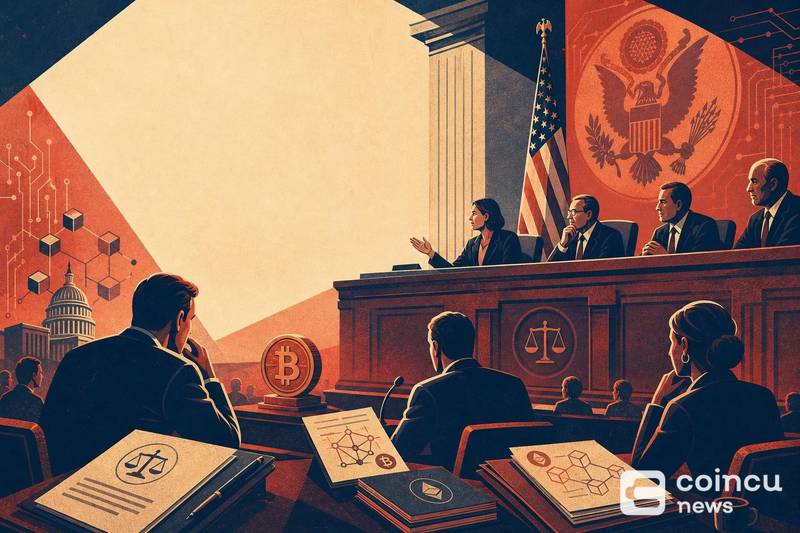

U.S. lawmakers are weighing crypto-related ethical questions on a bipartisan basis while provisions governing decentralized finance remain unsettled, keeping digital asset market structure legislation in an active negotiation phase in Congress rather than at a final vote.
The ethics discussion is unfolding alongside the broader push to define how digital assets are regulated in the United States, a debate anchored by the market structure framework that Senate Republicans have laid out in the Senate Banking Committee’s materials on the CLARITY Act. That framework has drawn attention from both parties, which is what makes the current round of talks bipartisan rather than a single-party effort.
Because verified detail on the specific ethics language remains limited at this stage, the discussion is best understood as ongoing rather than resolved. What is clear is that questions of conduct and oversight are being raised in parallel with the substantive rules for tokens and trading platforms.

What Ethical Questions Lawmakers Are Weighing
Ethics questions in digital asset policy typically center on disclosure and conflicts of interest, meaning who holds crypto assets, who profits from policy decisions, and how those interests are made public. These are distinct from the technical market rules that determine which agency regulates a given token.
Disclosure and conflict-of-interest concerns
Conflict-of-interest scrutiny has been a recurring theme in Washington’s crypto debate, including earlier efforts to tie oversight to public officials’ holdings. Senate lawmakers have previously voted on amendments aimed at crypto-related corruption, illustrating that the chamber has already tested where the ethics line should sit.
Related pressure has come from calls for tighter income reporting, such as Senator Elizabeth Warren’s push for new crypto income disclosures. Those demands frame ethics not as an abstract principle but as a question of what officials must reveal about their digital asset exposure.
How DeFi Provisions Fit Into the Negotiations
Decentralized finance, or DeFi, refers to lending, trading, and other financial services that run on smart contracts without a central intermediary. Writing rules for these systems is difficult because there is often no single company to hold accountable, which is a core reason the provisions remain contested.

Why the DeFi language stays unresolved
The DeFi provisions are being negotiated as part of the same market structure effort rather than as a separate bill, tying their fate to the wider legislation described in Ethereum’s ecosystem, where much DeFi activity is concentrated. Because DeFi challenges traditional definitions of who is a broker or an exchange, lawmakers have not settled on final text.
Industry participants have argued that clearer rules would help the sector, a view reflected in Coinbase’s position that the CLARITY Act would strengthen U.S. crypto oversight. That input keeps the DeFi question at the center of the negotiation rather than at its margins.
What This Means for the U.S. Crypto Policy Debate
Individual senators have continued to weigh in publicly as the talks proceed, including commentary from Senator Cynthia Lummis, signaling that the legislative conversation remains active rather than dormant.
For crypto firms and DeFi builders, the practical takeaway is that compliance expectations are still forming. The parallel focus on ethics and market structure also runs alongside agency-level planning, such as the SEC’s 2026 regulatory agenda, which points to a policy environment that is coordinated but not yet finalized.
FAQ
What are the crypto-related ethical issues under discussion? They broadly concern disclosure and conflicts of interest, meaning how officials reveal and manage their digital asset holdings, as distinct from the technical rules for tokens and exchanges.
Why are DeFi provisions still being negotiated? DeFi runs without a central intermediary, which complicates who can be held responsible under existing definitions, leaving lawmakers without agreed-upon final language.
Does this mean new U.S. crypto legislation is finalized? No. The discussions remain at a negotiation stage, and no final outcome has been confirmed.
Disclaimer: This article is for informational purposes only and does not constitute financial or investment advice. Cryptocurrency and digital asset markets carry significant risk. Always do your own research before making decisions.