DOJ Says It Won’t Target Developers of Decentralized Crypto Apps Without Criminal Intent
Key Points:
- DOJ confirms code creation without criminal intent will not be prosecuted as money transmission.
- Justice Department disbands its crypto enforcement team as enforcement stance shifts.
- SEC drops multiple cases against crypto firms, signaling broader regulatory change.
The U.S. Justice Department announced it will not prosecute developers who build decentralised crypto applications without criminal intent. Acting Assistant Attorney General Matthew Galeotti confirmed the change during remarks at a Wyoming crypto summit.
The department said it would move away from charging software developers under money transmitter rules. Instead, it will focus on cases involving intent to facilitate illegal activities.
Money transmitter laws apply to traditional firms such as Western Union and Venmo, which must register and conduct compliance checks. These requirements have long been a controversial issue for decentralized exchanges that often lack oversight of transactions.
This announcement signals the latest step in a broader shift of U.S. policy toward digital assets. Regulators are easing enforcement actions following years of strict oversight.
Recent Cases and Regulatory Context
The shift follows the recent conviction of Tornado Cash co-founder Roman Storm for conspiracy to operate an unlicensed money transmission business. The jury, however, could not agree on money laundering and sanctions charges, leaving parts of the case unresolved.
Critics argued that Storm had only written code for Tornado Cash, raising concerns about prosecuting developers for software creation. Anti-corruption advocates countered that mixing services enable laundering of illicit funds and therefore require regulatory scrutiny.
The Tornado Cash case highlighted the tension between innovation and compliance in decentralized finance. It also fueled debate on how far liability should extend to protocol developers.
The Justice Department under President Donald Trump has significantly changed its stance from the prior administration. Authorities have disbanded the specialized crypto enforcement team as part of this pivot.
At the same time, the U.S. Securities and Exchange Commission has dropped several lawsuits against crypto firms and executives. These actions underscore a wider recalibration of regulatory policy toward the industry.
| DISCLAIMER: The information on this website is provided as general market commentary and does not constitute investment advice. We encourage you to do your own research before investing. |

Other Posts








- China, US Conclude Trade Talks with Focus on Cooperation
- Crypto Weekly: NYSE Backs OKX, Kraken Gets Fed Access, BTC Sells
- DeriW Launches Edge Hour Trading Competition Platform for Derivatives Traders
- Court Upholds Fed’s Rejection of Custodia Bank’s Request
- Former CFO Convicted for $35M Fraudulent Crypto Investment
- Michael Saylor Denies Bitcoin Sell-Off Amid Large BTC Transfer
- Buy Dogecoin on eToro: Step-by-Step Guide for Beginners (2024)
- Kazakhstan Explores Crypto Reserves Backed by National Funds
- JPMorgan Increases Holdings in BlackRock’s Bitcoin ETF
- Nordea Bank Introduces Bitcoin ETP Trading for Nordic Customers
- XRP Spot ETF Launches on Nasdaq Amid Market Fluctuations
- Crypto Leaders Address Macro Volatility Amid Market Shifts
- Peter Schiff Challenges Michael Saylor on MSTR’s Business Model
- Thailand Orders Worldcoin to Delete 1.2 Million Biometric Records
- UK Proposes New DeFi Tax Framework to Ease User Burden
- WLFI Under Fire: Analyst Warns Hyperliquid Could Be Next
- Ancient Ethereum Whale Moves $1.19 Billion After Decade
- BlackRock Receives Large Crypto Transfers from Coinbase
- SEC Scrutiny on ALT5 Sigma’s Leadership Disclosure Timing
- MoonPay Gains Trust License for Crypto Operations in New York
- China, US Conclude Trade Talks with Focus on Cooperation
- Crypto Weekly: NYSE Backs OKX, Kraken Gets Fed Access, BTC Sells
- DeriW Launches Edge Hour Trading Competition Platform for Derivatives Traders
- Court Upholds Fed’s Rejection of Custodia Bank’s Request
- Former CFO Convicted for $35M Fraudulent Crypto Investment
- Michael Saylor Denies Bitcoin Sell-Off Amid Large BTC Transfer
- Buy Dogecoin on eToro: Step-by-Step Guide for Beginners (2024)
- Kazakhstan Explores Crypto Reserves Backed by National Funds
- JPMorgan Increases Holdings in BlackRock’s Bitcoin ETF
- Nordea Bank Introduces Bitcoin ETP Trading for Nordic Customers
- XRP Spot ETF Launches on Nasdaq Amid Market Fluctuations
- Crypto Leaders Address Macro Volatility Amid Market Shifts
- Peter Schiff Challenges Michael Saylor on MSTR’s Business Model
- Thailand Orders Worldcoin to Delete 1.2 Million Biometric Records
- UK Proposes New DeFi Tax Framework to Ease User Burden
- WLFI Under Fire: Analyst Warns Hyperliquid Could Be Next
- Ancient Ethereum Whale Moves $1.19 Billion After Decade
- BlackRock Receives Large Crypto Transfers from Coinbase
- SEC Scrutiny on ALT5 Sigma’s Leadership Disclosure Timing
- MoonPay Gains Trust License for Crypto Operations in New York
- China, US Conclude Trade Talks with Focus on Cooperation
- Crypto Weekly: NYSE Backs OKX, Kraken Gets Fed Access, BTC Sells
- DeriW Launches Edge Hour Trading Competition Platform for Derivatives Traders
- Court Upholds Fed’s Rejection of Custodia Bank’s Request
- Former CFO Convicted for $35M Fraudulent Crypto Investment
- Michael Saylor Denies Bitcoin Sell-Off Amid Large BTC Transfer
- Buy Dogecoin on eToro: Step-by-Step Guide for Beginners (2024)
- Kazakhstan Explores Crypto Reserves Backed by National Funds
- JPMorgan Increases Holdings in BlackRock’s Bitcoin ETF
- Nordea Bank Introduces Bitcoin ETP Trading for Nordic Customers
- XRP Spot ETF Launches on Nasdaq Amid Market Fluctuations
- Crypto Leaders Address Macro Volatility Amid Market Shifts
- Peter Schiff Challenges Michael Saylor on MSTR’s Business Model
- Thailand Orders Worldcoin to Delete 1.2 Million Biometric Records
- UK Proposes New DeFi Tax Framework to Ease User Burden
- WLFI Under Fire: Analyst Warns Hyperliquid Could Be Next
- Ancient Ethereum Whale Moves $1.19 Billion After Decade
- BlackRock Receives Large Crypto Transfers from Coinbase
- SEC Scrutiny on ALT5 Sigma’s Leadership Disclosure Timing
- MoonPay Gains Trust License for Crypto Operations in New York

Kraken to List Bittensor Subnet Alpha Token: What Is Confirmed

Ukraine Transfers $8.3M in Seized USDT to State Management for First Time

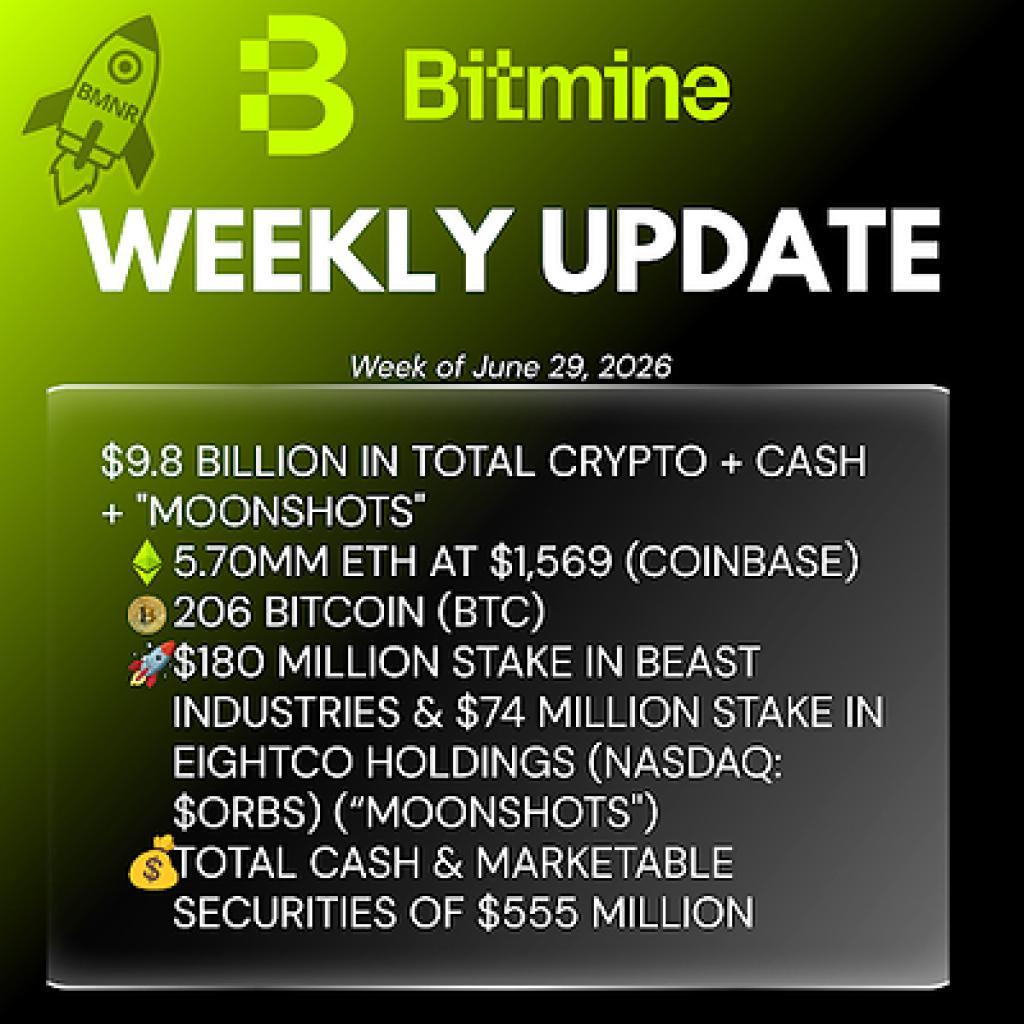
Bitmine Immersion Technologies (BMNR) Announces ETH Holdings Reach 5.70 Million Tokens, and Total Crypto and Total Cash Holdings of $9.8 Billion

Toss Brings 30 Million Users Into the AI Data Economy in Partnership With Poseidon