- IMF warns USD-stablecoins may risk monetary sovereignty for weak currencies.
- Stablecoins ease shift from local currencies.
- Potentially increase monetary control loss.
The International Monetary Fund warned on December 5th that U.S. dollar-backed stablecoins may undermine monetary sovereignty in weaker economies by facilitating currency substitution.
Such stablecoins could reinforce U.S. dollar dominance, challenging central banks’ control over capital flows and potentially destabilizing local monetary systems in vulnerable regions.
IMF: USD Stablecoins Threaten Monetary Sovereignty
USD-backed stablecoins, especially in cross-border transactions, could erode local currencies, the IMF warns. Economies with weak monetary controls might see a preference for these digital assets over traditional money. Economists from the monetary authority emphasize transformations in currency use can undermine local sovereignty. “U.S. dollar‑backed stablecoins could accelerate currency substitution in countries with weak currencies, thereby undermining local monetary sovereignty and central banks’ control over capital flows,” according to the IMF. Severe economic effects are expected, with stablecoins possibly reducing traditional banking systems’ effectiveness, as users favor lower-friction digital transactions. The IMF stresses that dominant dollar-backed stablecoins could trigger complex shifts in capital flows, requiring careful international cooperation and regulation. According to IMF documents, minimizing risks involves implementing effective safeguards against financial stability threats.
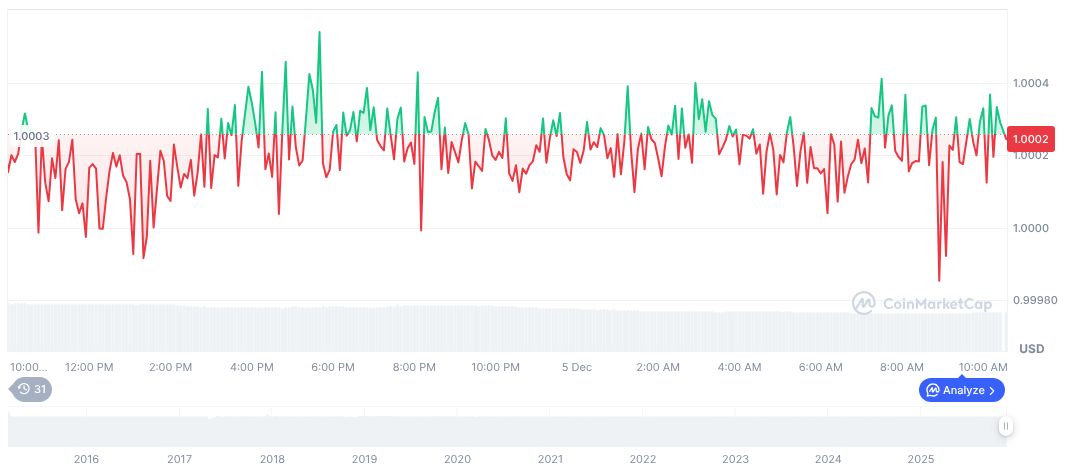
Data from CoinMarketCap shows Tether USDt (USDT) maintains a stable $1.00 price, with a market cap of 185.57 billion, making up 5.97% of the total market. 24-hour volume at $88.97 billion indicates high usage, despite an 18.72% drop. In the last three months, the coin’s price stability reflects fixed valuation. Coincu analysts indicate enhanced financial stability risks may arise as stablecoins grow in use. Regulatory challenges remain significant, as conventional scope declines against decentralized trends, sparking extensive discourse on future global economy structures.
According to the IMF, the implications of these shifts could be profound, leading to potential instability in local economies that rely heavily on their own currencies.
Tether and the Future of Financial Stability
Did you know? During past dollarization waves, high-inflation countries often switched to USD for savings. Now, stablecoins offer a digital parallel, likely quickening this shift.
Data from CoinMarketCap shows Tether USDt (USDT) maintains a stable $1.00 price, with a market cap of 185.57 billion, making up 5.97% of the total market. 24-hour volume at $88.97 billion indicates high usage, despite an 18.72% drop.
Coincu analysts indicate enhanced financial stability risks may arise as stablecoins grow in use. Regulatory challenges remain significant, as conventional scope declines against decentralized trends, sparking extensive discourse on future global economy structures.
| DISCLAIMER: The information on this website is provided as general market commentary and does not constitute investment advice. We encourage you to do your own research before investing. |
No tags available.


Other Posts








- China, US Conclude Trade Talks with Focus on Cooperation
- Crypto Weekly: NYSE Backs OKX, Kraken Gets Fed Access, BTC Sells
- DeriW Launches Edge Hour Trading Competition Platform for Derivatives Traders
- Court Upholds Fed’s Rejection of Custodia Bank’s Request
- Former CFO Convicted for $35M Fraudulent Crypto Investment
- Michael Saylor Denies Bitcoin Sell-Off Amid Large BTC Transfer
- Buy Dogecoin on eToro: Step-by-Step Guide for Beginners (2024)
- Kazakhstan Explores Crypto Reserves Backed by National Funds
- JPMorgan Increases Holdings in BlackRock’s Bitcoin ETF
- Nordea Bank Introduces Bitcoin ETP Trading for Nordic Customers
- XRP Spot ETF Launches on Nasdaq Amid Market Fluctuations
- Crypto Leaders Address Macro Volatility Amid Market Shifts
- Peter Schiff Challenges Michael Saylor on MSTR’s Business Model
- Thailand Orders Worldcoin to Delete 1.2 Million Biometric Records
- UK Proposes New DeFi Tax Framework to Ease User Burden
- WLFI Under Fire: Analyst Warns Hyperliquid Could Be Next
- Ancient Ethereum Whale Moves $1.19 Billion After Decade
- BlackRock Receives Large Crypto Transfers from Coinbase
- SEC Scrutiny on ALT5 Sigma’s Leadership Disclosure Timing
- MoonPay Gains Trust License for Crypto Operations in New York
- China, US Conclude Trade Talks with Focus on Cooperation
- Crypto Weekly: NYSE Backs OKX, Kraken Gets Fed Access, BTC Sells
- DeriW Launches Edge Hour Trading Competition Platform for Derivatives Traders
- Court Upholds Fed’s Rejection of Custodia Bank’s Request
- Former CFO Convicted for $35M Fraudulent Crypto Investment
- Michael Saylor Denies Bitcoin Sell-Off Amid Large BTC Transfer
- Buy Dogecoin on eToro: Step-by-Step Guide for Beginners (2024)
- Kazakhstan Explores Crypto Reserves Backed by National Funds
- JPMorgan Increases Holdings in BlackRock’s Bitcoin ETF
- Nordea Bank Introduces Bitcoin ETP Trading for Nordic Customers
- XRP Spot ETF Launches on Nasdaq Amid Market Fluctuations
- Crypto Leaders Address Macro Volatility Amid Market Shifts
- Peter Schiff Challenges Michael Saylor on MSTR’s Business Model
- Thailand Orders Worldcoin to Delete 1.2 Million Biometric Records
- UK Proposes New DeFi Tax Framework to Ease User Burden
- WLFI Under Fire: Analyst Warns Hyperliquid Could Be Next
- Ancient Ethereum Whale Moves $1.19 Billion After Decade
- BlackRock Receives Large Crypto Transfers from Coinbase
- SEC Scrutiny on ALT5 Sigma’s Leadership Disclosure Timing
- MoonPay Gains Trust License for Crypto Operations in New York
- China, US Conclude Trade Talks with Focus on Cooperation
- Crypto Weekly: NYSE Backs OKX, Kraken Gets Fed Access, BTC Sells
- DeriW Launches Edge Hour Trading Competition Platform for Derivatives Traders
- Court Upholds Fed’s Rejection of Custodia Bank’s Request
- Former CFO Convicted for $35M Fraudulent Crypto Investment
- Michael Saylor Denies Bitcoin Sell-Off Amid Large BTC Transfer
- Buy Dogecoin on eToro: Step-by-Step Guide for Beginners (2024)
- Kazakhstan Explores Crypto Reserves Backed by National Funds
- JPMorgan Increases Holdings in BlackRock’s Bitcoin ETF
- Nordea Bank Introduces Bitcoin ETP Trading for Nordic Customers
- XRP Spot ETF Launches on Nasdaq Amid Market Fluctuations
- Crypto Leaders Address Macro Volatility Amid Market Shifts
- Peter Schiff Challenges Michael Saylor on MSTR’s Business Model
- Thailand Orders Worldcoin to Delete 1.2 Million Biometric Records
- UK Proposes New DeFi Tax Framework to Ease User Burden
- WLFI Under Fire: Analyst Warns Hyperliquid Could Be Next
- Ancient Ethereum Whale Moves $1.19 Billion After Decade
- BlackRock Receives Large Crypto Transfers from Coinbase
- SEC Scrutiny on ALT5 Sigma’s Leadership Disclosure Timing
- MoonPay Gains Trust License for Crypto Operations in New York



Binance Withdraws Greek MiCA License Application, What It Means

Sui News: Cumberland, Fluid, and SwissBorg Join Institutional Coalition on Hashi Ahead of July Global Testnet

Bitcoin Suisse Receives MiCAR License and Launches European Expansion