Key Insights:
- Russia plans full crypto regulation by 2026, with penalties for illegal intermediaries from 2027.
- Non-qualified investors face annual limits and testing to trade select liquid cryptocurrencies.
- Crypto payments are banned domestically, but foreign transactions are allowed with tax service notification.

The Bank of Russia has released a draft framework for cryptocurrency regulation and submitted it to the government for review. The plan sets out a timeline to build a full legal system for crypto use in the country. The legal structure is expected to be completed by July 1, 2026. By July 1, 2027, penalties for illegal crypto brokerage and intermediary services are expected to take effect, similar to the laws used against illegal banking.
The framework sets different rules for qualified and non-qualified investors. Both groups will be allowed to buy and sell crypto, but the process and limits will vary.
Rules for Investors Based on Qualification
Non-qualified investors will only be allowed to buy a select group of liquid cryptocurrencies. The list of eligible tokens will be defined by law. These investors must pass a test and will be limited to 300,000 rubles in crypto purchases per year. All transactions must go through a single licensed provider.
Qualified investors will be allowed to access more digital assets. They can buy any cryptocurrency, except those that hide transaction data, such as anonymous tokens. They must also pass a test before being allowed to trade.
The Bank of Russia stated that digital currencies are not supported by any government and carry added risks. “Investors should be aware that they are fully responsible for any losses,” the central bank said.
Domestic Use Blocked, Exchanges to Remain Licensed
While crypto can be bought and sold, it cannot be used for payments inside Russia. Transactions must go through registered brokers, trustees, and exchanges that already hold licenses. Specialized rules will be introduced for depositories and crypto exchangers working in the space.
Russian residents will also be allowed to buy digital assets abroad using foreign accounts. They will also be permitted to send crypto assets abroad through Russian financial institutions. Any such activity must be reported to the tax authority.
Digital Asset Markets to Open for Foreign Investment
The proposal also includes changes to the digital financial asset (DFA) market. Circulation of DFAs and digital rights will be allowed on public networks. This would let Russian companies raise funds from outside the country. Investors would be able to access these assets under conditions equal to those of regular cryptocurrencies.
The Bank of Russia aims to build a clear legal path for crypto assets and plans to treat unauthorized crypto brokers under the same laws that apply to illegal banking.
| DISCLAIMER: The information on this website is provided as general market commentary and does not constitute investment advice. We encourage you to do your own research before investing. |

Other Posts







- China, US Conclude Trade Talks with Focus on Cooperation
- Crypto Weekly: NYSE Backs OKX, Kraken Gets Fed Access, BTC Sells
- Court Upholds Fed’s Rejection of Custodia Bank’s Request
- Former CFO Convicted for $35M Fraudulent Crypto Investment
- DeriW Launches Edge Hour Trading Competition Platform for Derivatives Traders
- Michael Saylor Denies Bitcoin Sell-Off Amid Large BTC Transfer
- Buy Dogecoin on eToro: Step-by-Step Guide for Beginners (2024)
- Kazakhstan Explores Crypto Reserves Backed by National Funds
- JPMorgan Increases Holdings in BlackRock’s Bitcoin ETF
- Nordea Bank Introduces Bitcoin ETP Trading for Nordic Customers
- XRP Spot ETF Launches on Nasdaq Amid Market Fluctuations
- Peter Schiff Challenges Michael Saylor on MSTR’s Business Model
- Thailand Orders Worldcoin to Delete 1.2 Million Biometric Records
- UK Proposes New DeFi Tax Framework to Ease User Burden
- WLFI Under Fire: Analyst Warns Hyperliquid Could Be Next
- Ancient Ethereum Whale Moves $1.19 Billion After Decade
- BlackRock Receives Large Crypto Transfers from Coinbase
- SEC Scrutiny on ALT5 Sigma’s Leadership Disclosure Timing
- Yala Injects $5.5 Million Amid Recovery Efforts
- Radiant Capital Faces $50M Loss in Major Security Breach
- China, US Conclude Trade Talks with Focus on Cooperation
- Crypto Weekly: NYSE Backs OKX, Kraken Gets Fed Access, BTC Sells
- Court Upholds Fed’s Rejection of Custodia Bank’s Request
- Former CFO Convicted for $35M Fraudulent Crypto Investment
- DeriW Launches Edge Hour Trading Competition Platform for Derivatives Traders
- Michael Saylor Denies Bitcoin Sell-Off Amid Large BTC Transfer
- Buy Dogecoin on eToro: Step-by-Step Guide for Beginners (2024)
- Kazakhstan Explores Crypto Reserves Backed by National Funds
- JPMorgan Increases Holdings in BlackRock’s Bitcoin ETF
- Nordea Bank Introduces Bitcoin ETP Trading for Nordic Customers
- XRP Spot ETF Launches on Nasdaq Amid Market Fluctuations
- Peter Schiff Challenges Michael Saylor on MSTR’s Business Model
- Thailand Orders Worldcoin to Delete 1.2 Million Biometric Records
- UK Proposes New DeFi Tax Framework to Ease User Burden
- WLFI Under Fire: Analyst Warns Hyperliquid Could Be Next
- Ancient Ethereum Whale Moves $1.19 Billion After Decade
- BlackRock Receives Large Crypto Transfers from Coinbase
- SEC Scrutiny on ALT5 Sigma’s Leadership Disclosure Timing
- Yala Injects $5.5 Million Amid Recovery Efforts
- Radiant Capital Faces $50M Loss in Major Security Breach
- China, US Conclude Trade Talks with Focus on Cooperation
- Crypto Weekly: NYSE Backs OKX, Kraken Gets Fed Access, BTC Sells
- Court Upholds Fed’s Rejection of Custodia Bank’s Request
- Former CFO Convicted for $35M Fraudulent Crypto Investment
- DeriW Launches Edge Hour Trading Competition Platform for Derivatives Traders
- Michael Saylor Denies Bitcoin Sell-Off Amid Large BTC Transfer
- Buy Dogecoin on eToro: Step-by-Step Guide for Beginners (2024)
- Kazakhstan Explores Crypto Reserves Backed by National Funds
- JPMorgan Increases Holdings in BlackRock’s Bitcoin ETF
- Nordea Bank Introduces Bitcoin ETP Trading for Nordic Customers
- XRP Spot ETF Launches on Nasdaq Amid Market Fluctuations
- Peter Schiff Challenges Michael Saylor on MSTR’s Business Model
- Thailand Orders Worldcoin to Delete 1.2 Million Biometric Records
- UK Proposes New DeFi Tax Framework to Ease User Burden
- WLFI Under Fire: Analyst Warns Hyperliquid Could Be Next
- Ancient Ethereum Whale Moves $1.19 Billion After Decade
- BlackRock Receives Large Crypto Transfers from Coinbase
- SEC Scrutiny on ALT5 Sigma’s Leadership Disclosure Timing
- Yala Injects $5.5 Million Amid Recovery Efforts
- Radiant Capital Faces $50M Loss in Major Security Breach



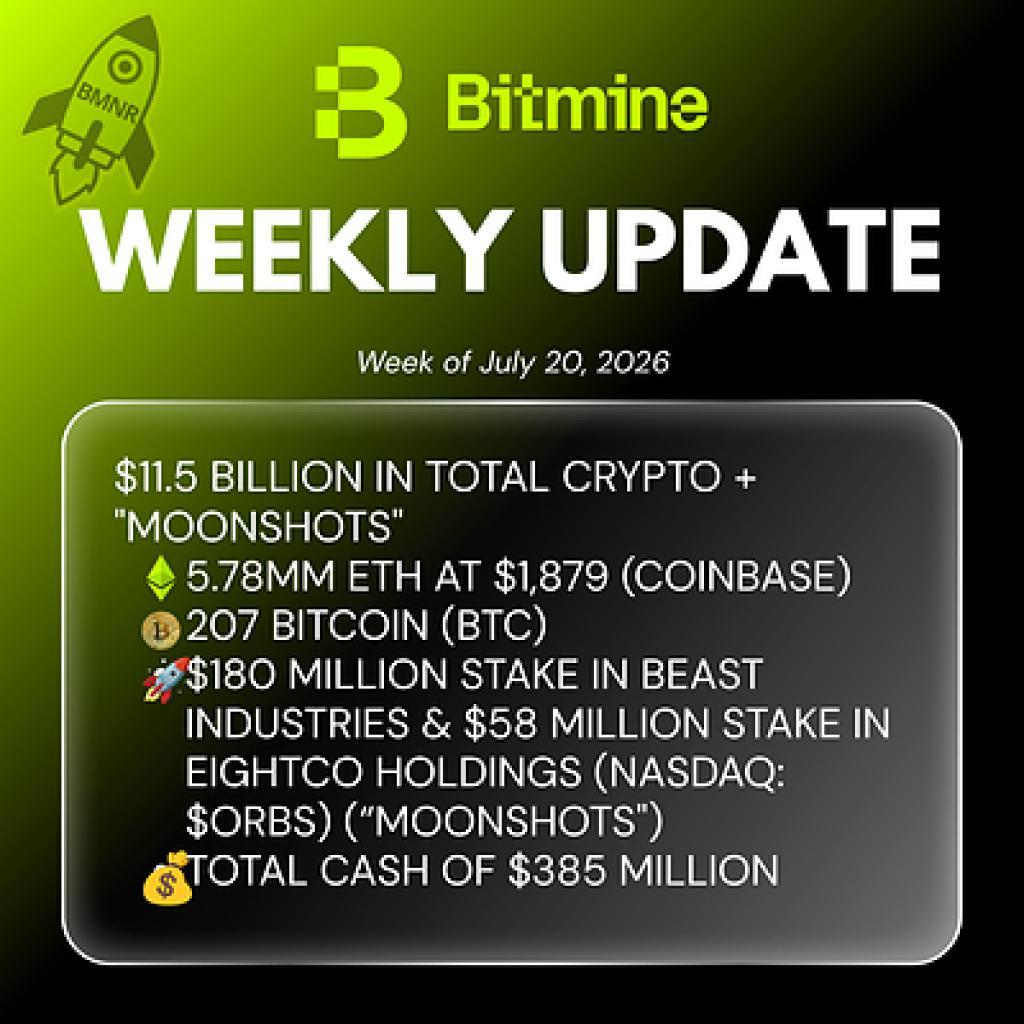
Bitmine Immersion Technologies (BMNR) Announces ETH Holdings Reach 5.78 Million Tokens, and Total Crypto and Total Cash Holdings of $11.5 Billion

GLOBAL MEDIA PROCUREMENT: THE 500-YEAR YIXING ZISHA TEAPOTS PARADIGM