- Morgan Stanley predicts “jobless productivity boom” with inflation effects.
- A potential shift in Federal Reserve’s rate cut strategy.
- Investors anticipate a 72% likelihood of rate changes.
Morgan Stanley’s recent analysis indicates a potential ‘jobless productivity boom’ in the U.S., leading to anticipated Federal Reserve rate cuts, with implications for the economy’s inflation dynamics.
The forecast highlights potential shifts in monetary policy and investor sentiment amid enhanced productivity, driven by AI advancements, which could influence broader economic trends and financial strategies.
Fed Rate Predictions Clash with Investor Sentiments
The anticipated rate cuts by the Federal Reserve next year contrast with its official stance of one rate reduction by 2026. This outlook contrasts with investors’ expectations, highlighting differing perspectives on monetary policy adjustments.
While officials predict only one rate cut by 2026, investors speculate a 72% chance of a decrease by the year’s end. Market sentiment emphasizes skepticism over official forecasts. The CME FedWatch data highlights expectations for more aggressive cuts.
Did you know? The anticipated “jobless productivity boom” by Morgan Stanley echoes similar economic outlooks seen before major technological advancements, potentially heralding enhanced efficiency across sectors.
Market Insights and Bitcoin Performance
Did you know? The anticipated “jobless productivity boom” by Morgan Stanley echoes similar economic outlooks seen before major technological advancements, potentially heralding enhanced efficiency across sectors.
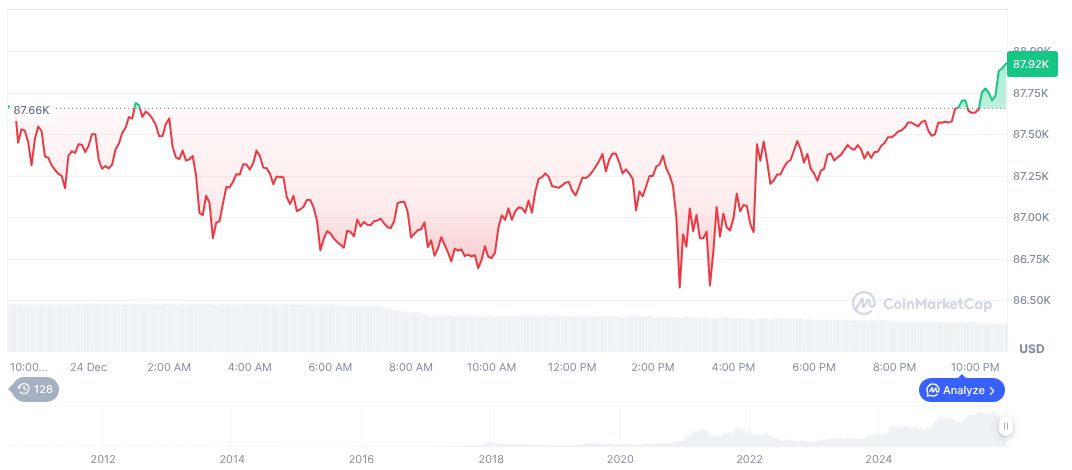
Bitcoin (BTC) currently trades at $87,418.71 with a market cap surpassing $1.74 trillion. Its 24-hour trading volume has decreased by 33.59%, standing at $21.72 billion. Per CoinMarketCap, BTC’s price exhibited fluctuations over recent months, including a 22.16% dip over 60 days.
The Coincu research team emphasizes historical data’s importance in understanding regulatory and financial trends. AI’s impact on productivity could reshape economic paradigms, urging policymakers to anticipate technological shifts in guiding future decisions.
| DISCLAIMER: The information on this website is provided as general market commentary and does not constitute investment advice. We encourage you to do your own research before investing. |

No tags available.


Other Posts









- Amplify 2024: Ohio’s Premier Blockchain Summit
- Polymarket Announces U.S. Beta Relaunch Amid Market Buzz
- China, US Conclude Trade Talks with Focus on Cooperation
- Crypto Weekly: NYSE Backs OKX, Kraken Gets Fed Access, BTC Sells
- CELO holds as Celo reviews Opera 160M token claim
- Michael Saylor Denies Bitcoin Sell-Off Amid Large BTC Transfer
- Court Upholds Fed’s Rejection of Custodia Bank’s Request
- EU Opens Antitrust Probe Into Deutsche Boerse and Nasdaq Derivatives Dealings
- Kazakhstan Explores Crypto Reserves Backed by National Funds
- JPMorgan Increases Holdings in BlackRock’s Bitcoin ETF
- Nordea Bank Introduces Bitcoin ETP Trading for Nordic Customers
- XRP Spot ETF Launches on Nasdaq Amid Market Fluctuations
- JPMorgan Chase Launches 24/7 Digital Deposit Token for Clients
- Crypto Leaders Address Macro Volatility Amid Market Shifts
- Former CFO Convicted for $35M Fraudulent Crypto Investment
- DeriW Launches Edge Hour Trading Competition Platform for Derivatives Traders
- Peter Schiff Challenges Michael Saylor on MSTR’s Business Model
- Thailand Orders Worldcoin to Delete 1.2 Million Biometric Records
- UK Proposes New DeFi Tax Framework to Ease User Burden
- U.S. Treasury Proposes New Tax Relief Regulations
- Amplify 2024: Ohio’s Premier Blockchain Summit
- Polymarket Announces U.S. Beta Relaunch Amid Market Buzz
- China, US Conclude Trade Talks with Focus on Cooperation
- Crypto Weekly: NYSE Backs OKX, Kraken Gets Fed Access, BTC Sells
- CELO holds as Celo reviews Opera 160M token claim
- Michael Saylor Denies Bitcoin Sell-Off Amid Large BTC Transfer
- Court Upholds Fed’s Rejection of Custodia Bank’s Request
- EU Opens Antitrust Probe Into Deutsche Boerse and Nasdaq Derivatives Dealings
- Kazakhstan Explores Crypto Reserves Backed by National Funds
- JPMorgan Increases Holdings in BlackRock’s Bitcoin ETF
- Nordea Bank Introduces Bitcoin ETP Trading for Nordic Customers
- XRP Spot ETF Launches on Nasdaq Amid Market Fluctuations
- JPMorgan Chase Launches 24/7 Digital Deposit Token for Clients
- Crypto Leaders Address Macro Volatility Amid Market Shifts
- Former CFO Convicted for $35M Fraudulent Crypto Investment
- DeriW Launches Edge Hour Trading Competition Platform for Derivatives Traders
- Peter Schiff Challenges Michael Saylor on MSTR’s Business Model
- Thailand Orders Worldcoin to Delete 1.2 Million Biometric Records
- UK Proposes New DeFi Tax Framework to Ease User Burden
- U.S. Treasury Proposes New Tax Relief Regulations
- Amplify 2024: Ohio’s Premier Blockchain Summit
- Polymarket Announces U.S. Beta Relaunch Amid Market Buzz
- China, US Conclude Trade Talks with Focus on Cooperation
- Crypto Weekly: NYSE Backs OKX, Kraken Gets Fed Access, BTC Sells
- CELO holds as Celo reviews Opera 160M token claim
- Michael Saylor Denies Bitcoin Sell-Off Amid Large BTC Transfer
- Court Upholds Fed’s Rejection of Custodia Bank’s Request
- EU Opens Antitrust Probe Into Deutsche Boerse and Nasdaq Derivatives Dealings
- Kazakhstan Explores Crypto Reserves Backed by National Funds
- JPMorgan Increases Holdings in BlackRock’s Bitcoin ETF
- Nordea Bank Introduces Bitcoin ETP Trading for Nordic Customers
- XRP Spot ETF Launches on Nasdaq Amid Market Fluctuations
- JPMorgan Chase Launches 24/7 Digital Deposit Token for Clients
- Crypto Leaders Address Macro Volatility Amid Market Shifts
- Former CFO Convicted for $35M Fraudulent Crypto Investment
- DeriW Launches Edge Hour Trading Competition Platform for Derivatives Traders
- Peter Schiff Challenges Michael Saylor on MSTR’s Business Model
- Thailand Orders Worldcoin to Delete 1.2 Million Biometric Records
- UK Proposes New DeFi Tax Framework to Ease User Burden
- U.S. Treasury Proposes New Tax Relief Regulations
Latest

Crypto Liquidations Hit $59.82M in 24 Hours as Shorts Lead Losses

Crypto Liquidations Reach $49.02M in 24 Hours as Shorts Lead Losses

Jack Dorsey’s Block to Launch Free Bitcoin Faucet After 16 Years








Press Release

MEXC Announces USD1 Launchpool Event with 1,500,000 WLFI Prize Pool

Manhattan Private Credit Launches Network to Connect Investors With Private Credit Markets as Bank Lending Continues to Contract