- Federal Reserve Governor Milan advocates for 150 basis point cut.
- Markets expect dovish policy impact on BTC and ETH.
- Inflation concern seen as “noise,” calls for policy easing.
Federal Reserve Governor Stephen Miran emphasized that a 150 basis point rate cut is necessary, asserting inflation concerns are overstated, in a statement on January 15, 2026.
Miran’s assertion aligns with market sentiments, influencing lower borrowing costs and potentially impacting risk assets like BTC and ETH, though no specific crypto impacts are confirmed.
Impact on Crypto and Economic Repercussions Expected
Coincu’s research team points to potential economic adjustments, regulatory reviews, and increased market volatility. The current environment may lead to granted financial flexibility, affecting both investment groups and decentralized assets, reflecting in needed technology adaptation strategies across the sector.
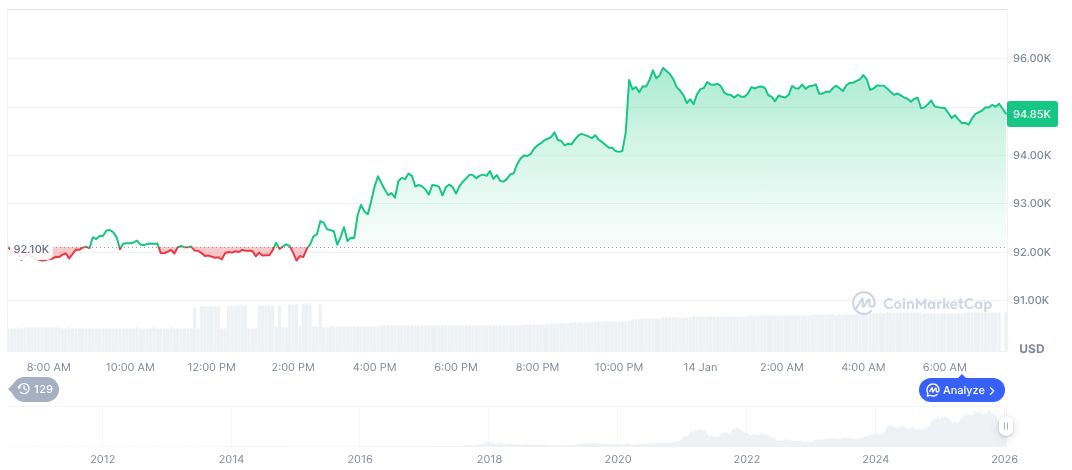
According to CoinMarketCap, Bitcoin’s current price stands at $97,226.29. The market cap is at $1.94 trillion with a 58.90% dominance. BTC’s 24-hour trading volume reached $62.30 billion, marking a 4.36% price increase in the last day. The circulating supply is nearing its max supply of 21 million.
Federal Reserve officials have expressed divided opinions on rate cuts. Richmond Fed President Tom Barkin noted rates are within neutral estimates, while Philadelphia Fed President Anna Paulson supports “modest adjustments.” Miran emphasized policy easing on Bloomberg Television.
Market Response and Future Implications
Did you know? The Federal Reserve last enacted a 75 basis point cut in 2025. Such actions historically boost assets like BTC and ETH, which are sensitive to rate changes.
According to CoinMarketCap, Bitcoin’s current price stands at $97,226.29. The market cap is at $1.94 trillion with a 58.90% dominance. BTC’s 24-hour trading volume reached $62.30 billion, marking a 4.36% price increase in the last day. The circulating supply is nearing its max supply of 21 million.
Coincu’s research team points to potential economic adjustments, regulatory reviews, and increased market volatility. The current environment may lead to granted financial flexibility, affecting both investment groups and decentralized assets, reflecting in needed technology adaptation strategies across the sector.
| DISCLAIMER: The information on this website is provided as general market commentary and does not constitute investment advice. We encourage you to do your own research before investing. |
No tags available.


Other Posts








- China, US Conclude Trade Talks with Focus on Cooperation
- Crypto Weekly: NYSE Backs OKX, Kraken Gets Fed Access, BTC Sells
- Court Upholds Fed’s Rejection of Custodia Bank’s Request
- Former CFO Convicted for $35M Fraudulent Crypto Investment
- DeriW Launches Edge Hour Trading Competition Platform for Derivatives Traders
- Michael Saylor Denies Bitcoin Sell-Off Amid Large BTC Transfer
- Buy Dogecoin on eToro: Step-by-Step Guide for Beginners (2024)
- Kazakhstan Explores Crypto Reserves Backed by National Funds
- JPMorgan Increases Holdings in BlackRock’s Bitcoin ETF
- Nordea Bank Introduces Bitcoin ETP Trading for Nordic Customers
- XRP Spot ETF Launches on Nasdaq Amid Market Fluctuations
- Peter Schiff Challenges Michael Saylor on MSTR’s Business Model
- Thailand Orders Worldcoin to Delete 1.2 Million Biometric Records
- UK Proposes New DeFi Tax Framework to Ease User Burden
- WLFI Under Fire: Analyst Warns Hyperliquid Could Be Next
- Ancient Ethereum Whale Moves $1.19 Billion After Decade
- BlackRock Receives Large Crypto Transfers from Coinbase
- SEC Scrutiny on ALT5 Sigma’s Leadership Disclosure Timing
- Yala Injects $5.5 Million Amid Recovery Efforts
- Radiant Capital Faces $50M Loss in Major Security Breach
- China, US Conclude Trade Talks with Focus on Cooperation
- Crypto Weekly: NYSE Backs OKX, Kraken Gets Fed Access, BTC Sells
- Court Upholds Fed’s Rejection of Custodia Bank’s Request
- Former CFO Convicted for $35M Fraudulent Crypto Investment
- DeriW Launches Edge Hour Trading Competition Platform for Derivatives Traders
- Michael Saylor Denies Bitcoin Sell-Off Amid Large BTC Transfer
- Buy Dogecoin on eToro: Step-by-Step Guide for Beginners (2024)
- Kazakhstan Explores Crypto Reserves Backed by National Funds
- JPMorgan Increases Holdings in BlackRock’s Bitcoin ETF
- Nordea Bank Introduces Bitcoin ETP Trading for Nordic Customers
- XRP Spot ETF Launches on Nasdaq Amid Market Fluctuations
- Peter Schiff Challenges Michael Saylor on MSTR’s Business Model
- Thailand Orders Worldcoin to Delete 1.2 Million Biometric Records
- UK Proposes New DeFi Tax Framework to Ease User Burden
- WLFI Under Fire: Analyst Warns Hyperliquid Could Be Next
- Ancient Ethereum Whale Moves $1.19 Billion After Decade
- BlackRock Receives Large Crypto Transfers from Coinbase
- SEC Scrutiny on ALT5 Sigma’s Leadership Disclosure Timing
- Yala Injects $5.5 Million Amid Recovery Efforts
- Radiant Capital Faces $50M Loss in Major Security Breach
- China, US Conclude Trade Talks with Focus on Cooperation
- Crypto Weekly: NYSE Backs OKX, Kraken Gets Fed Access, BTC Sells
- Court Upholds Fed’s Rejection of Custodia Bank’s Request
- Former CFO Convicted for $35M Fraudulent Crypto Investment
- DeriW Launches Edge Hour Trading Competition Platform for Derivatives Traders
- Michael Saylor Denies Bitcoin Sell-Off Amid Large BTC Transfer
- Buy Dogecoin on eToro: Step-by-Step Guide for Beginners (2024)
- Kazakhstan Explores Crypto Reserves Backed by National Funds
- JPMorgan Increases Holdings in BlackRock’s Bitcoin ETF
- Nordea Bank Introduces Bitcoin ETP Trading for Nordic Customers
- XRP Spot ETF Launches on Nasdaq Amid Market Fluctuations
- Peter Schiff Challenges Michael Saylor on MSTR’s Business Model
- Thailand Orders Worldcoin to Delete 1.2 Million Biometric Records
- UK Proposes New DeFi Tax Framework to Ease User Burden
- WLFI Under Fire: Analyst Warns Hyperliquid Could Be Next
- Ancient Ethereum Whale Moves $1.19 Billion After Decade
- BlackRock Receives Large Crypto Transfers from Coinbase
- SEC Scrutiny on ALT5 Sigma’s Leadership Disclosure Timing
- Yala Injects $5.5 Million Amid Recovery Efforts
- Radiant Capital Faces $50M Loss in Major Security Breach

U.S. sanctions two more Iranian crypto exchanges amid enforcement push

Bybit Sues North Korea and Lazarus Group Over $1.5B Hack, Secures Asset Freeze

Bitcoin Rises Above $65,000 After Weaker-Than-Expected U.S. Jobs Data

Spindex’s Real-Time Data Pipeline Surpasses 150 Million Tracked Gaming Events

Carbon Launches TradFi-Native On-Chain Derivatives Venue With 950+ Markets in One Account