- US senators reconvene for stalled crypto market bill discussions.
- Industry calls highlight willingness to advance proposal.
- Contention over bill drafts heightens amid legislative postponements.
Democratic senators in the U.S. reconvened with crypto industry representatives to discuss the market structure bill after a Senate vote delay, showing intent to progress legislation.
The delay highlights ongoing legislative challenges amidst privacy concerns and opposition from key industry players, potentially affecting crypto market regulations and innovation.
Senate Aims to Review Crypto Market Bill by Month-End
Democratic senators reengaged in dialogue with crypto industry representatives concerning the market structure bill following a sudden legislative delay. Reports indicate that the Senate Agriculture Committee aims for a review hearing by month-end, reflecting ongoing commitment.
The bill tackles pivotal issues such as CFTC and SEC oversight, stoking concern among stakeholders. The scheduled hearing on January 27 faces potential postponement amid ongoing industry and legislative criticisms.
Notable market players like Coinbase withdrew support, highlighting privacy concerns and the bill’s restrictive nature on DeFi and stablecoins. Brian Armstrong, Coinbase’s CEO, asserted, “We’d rather have no bill than a bad bill.”
Regulatory Clarity Could Steady Crypto Markets Despite Delays
Did you know? In the past, significant delays in legislative processes often resulted in heightened volatility across crypto markets, mirroring current circumstances.
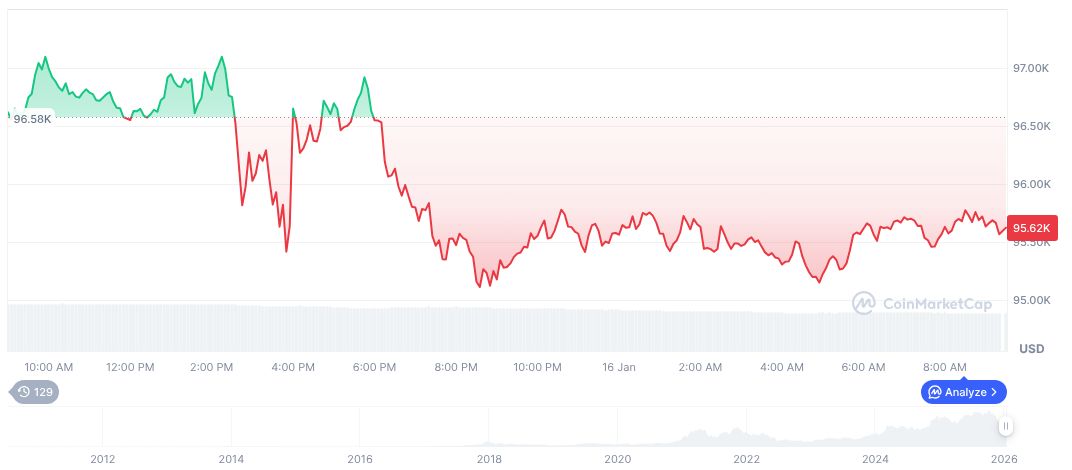
According to CoinMarketCap, Bitcoin (BTC) currently trades at $95,229.26 with a market cap of $1.90 trillion and dominance of 59.02%. It’s noted for a 7-day price increase of 5.22% but experienced an 11.20% decline in the past 90 days.
Coincu’s analysis suggests that increased regulatory clarity could stabilize the market by reducing uncertainty, potentially aiding technological advancement and attracting further institutional interest. The evolving legislative landscape requires continuous industry adaptation to emerging regulatory norms.
| DISCLAIMER: The information on this website is provided as general market commentary and does not constitute investment advice. We encourage you to do your own research before investing. |
No tags available.


Other Posts








- China, US Conclude Trade Talks with Focus on Cooperation
- Crypto Weekly: NYSE Backs OKX, Kraken Gets Fed Access, BTC Sells
- Court Upholds Fed’s Rejection of Custodia Bank’s Request
- Former CFO Convicted for $35M Fraudulent Crypto Investment
- DeriW Launches Edge Hour Trading Competition Platform for Derivatives Traders
- Michael Saylor Denies Bitcoin Sell-Off Amid Large BTC Transfer
- Buy Dogecoin on eToro: Step-by-Step Guide for Beginners (2024)
- Kazakhstan Explores Crypto Reserves Backed by National Funds
- JPMorgan Increases Holdings in BlackRock’s Bitcoin ETF
- Nordea Bank Introduces Bitcoin ETP Trading for Nordic Customers
- XRP Spot ETF Launches on Nasdaq Amid Market Fluctuations
- Peter Schiff Challenges Michael Saylor on MSTR’s Business Model
- Thailand Orders Worldcoin to Delete 1.2 Million Biometric Records
- UK Proposes New DeFi Tax Framework to Ease User Burden
- WLFI Under Fire: Analyst Warns Hyperliquid Could Be Next
- Ancient Ethereum Whale Moves $1.19 Billion After Decade
- BlackRock Receives Large Crypto Transfers from Coinbase
- SEC Scrutiny on ALT5 Sigma’s Leadership Disclosure Timing
- Yala Injects $5.5 Million Amid Recovery Efforts
- Radiant Capital Faces $50M Loss in Major Security Breach
- China, US Conclude Trade Talks with Focus on Cooperation
- Crypto Weekly: NYSE Backs OKX, Kraken Gets Fed Access, BTC Sells
- Court Upholds Fed’s Rejection of Custodia Bank’s Request
- Former CFO Convicted for $35M Fraudulent Crypto Investment
- DeriW Launches Edge Hour Trading Competition Platform for Derivatives Traders
- Michael Saylor Denies Bitcoin Sell-Off Amid Large BTC Transfer
- Buy Dogecoin on eToro: Step-by-Step Guide for Beginners (2024)
- Kazakhstan Explores Crypto Reserves Backed by National Funds
- JPMorgan Increases Holdings in BlackRock’s Bitcoin ETF
- Nordea Bank Introduces Bitcoin ETP Trading for Nordic Customers
- XRP Spot ETF Launches on Nasdaq Amid Market Fluctuations
- Peter Schiff Challenges Michael Saylor on MSTR’s Business Model
- Thailand Orders Worldcoin to Delete 1.2 Million Biometric Records
- UK Proposes New DeFi Tax Framework to Ease User Burden
- WLFI Under Fire: Analyst Warns Hyperliquid Could Be Next
- Ancient Ethereum Whale Moves $1.19 Billion After Decade
- BlackRock Receives Large Crypto Transfers from Coinbase
- SEC Scrutiny on ALT5 Sigma’s Leadership Disclosure Timing
- Yala Injects $5.5 Million Amid Recovery Efforts
- Radiant Capital Faces $50M Loss in Major Security Breach
- China, US Conclude Trade Talks with Focus on Cooperation
- Crypto Weekly: NYSE Backs OKX, Kraken Gets Fed Access, BTC Sells
- Court Upholds Fed’s Rejection of Custodia Bank’s Request
- Former CFO Convicted for $35M Fraudulent Crypto Investment
- DeriW Launches Edge Hour Trading Competition Platform for Derivatives Traders
- Michael Saylor Denies Bitcoin Sell-Off Amid Large BTC Transfer
- Buy Dogecoin on eToro: Step-by-Step Guide for Beginners (2024)
- Kazakhstan Explores Crypto Reserves Backed by National Funds
- JPMorgan Increases Holdings in BlackRock’s Bitcoin ETF
- Nordea Bank Introduces Bitcoin ETP Trading for Nordic Customers
- XRP Spot ETF Launches on Nasdaq Amid Market Fluctuations
- Peter Schiff Challenges Michael Saylor on MSTR’s Business Model
- Thailand Orders Worldcoin to Delete 1.2 Million Biometric Records
- UK Proposes New DeFi Tax Framework to Ease User Burden
- WLFI Under Fire: Analyst Warns Hyperliquid Could Be Next
- Ancient Ethereum Whale Moves $1.19 Billion After Decade
- BlackRock Receives Large Crypto Transfers from Coinbase
- SEC Scrutiny on ALT5 Sigma’s Leadership Disclosure Timing
- Yala Injects $5.5 Million Amid Recovery Efforts
- Radiant Capital Faces $50M Loss in Major Security Breach

U.S. Senators Release Draft Clarity Act With Crypto Ethics Provisions for Senior Officials
Coinbase Says Users Can Instruct Agents to Buy ETH After a 5% Drop

RISEx Launches ‘Ignite’ Season 1 Points Program, Following $3B in Volume During the Early Access Phase

Zoomex X Space Recap With Fernando Llorente and the World Cup Final Panel