Colossus 2 Supercomputer Achieves 2GW Expansion Milestone
- Elon Musk’s Colossus 2 expands to nearly 2 gigawatts total capacity.
- Majority of the expansion involves over 555,000 NVIDIA GPUs.
- xAI’s move capitalizes on advanced AI computing capabilities.
Elon Musk confirmed that xAI’s Colossus 2 supercomputer, the first gigawatt-level training cluster, is now operational and set for an upgrade to 1.5 gigawatts by April 2026.
Colossus 2’s expansion boosts AI capabilities, potentially impacting NVIDIA stocks and related AI sectors, although no direct cryptocurrency market effects are observed.
Colossus 2 Achieves 2GW with 555,000 NVIDIA GPUs
Colossus 2, led by Elon Musk, achieved a benchmark expansion by acquiring a third building, dubbed “MACROHARDRR”, increasing its capacity to nearly 2 gigawatts. This included integrating more than 555,000 advanced NVIDIA GPUs.
Immediate implications involve substantial improvements in AI computing capabilities. “We are expanding Colossus to a total capacity of nearly 2 gigawatts, including the addition of 555,000 NVIDIA GPUs,” said Elon Musk, Founder & CEO of xAI. This advancement supports both xAI’s Grok AI training and the computational needs of Musk’s other ventures, potentially influencing AI-driven market sectors.
The market has recognized this milestone as a significant enhancement of AI capabilities. Notably, there have been no reported direct market impacts on cryptocurrencies, although the narrative may indirectly boost BTC and ETH due to increased AI demand.
xAI’s Expansion Fuels Tech Industry Integration
Did you know? The original Colossus launched in 2024, becoming the world’s largest AI supercomputer with 100,000 H100 GPUs, setting a precedent for rapid AI compute scaling.
As per CoinMarketCap, Bitcoin (BTC) currently trades at $95,225.38 with a market cap of $1.90 trillion. Over the past 24 hours, its value decreased by 0.20%, while it gained 5.12% over a week. Market dominance is at 58.98%.
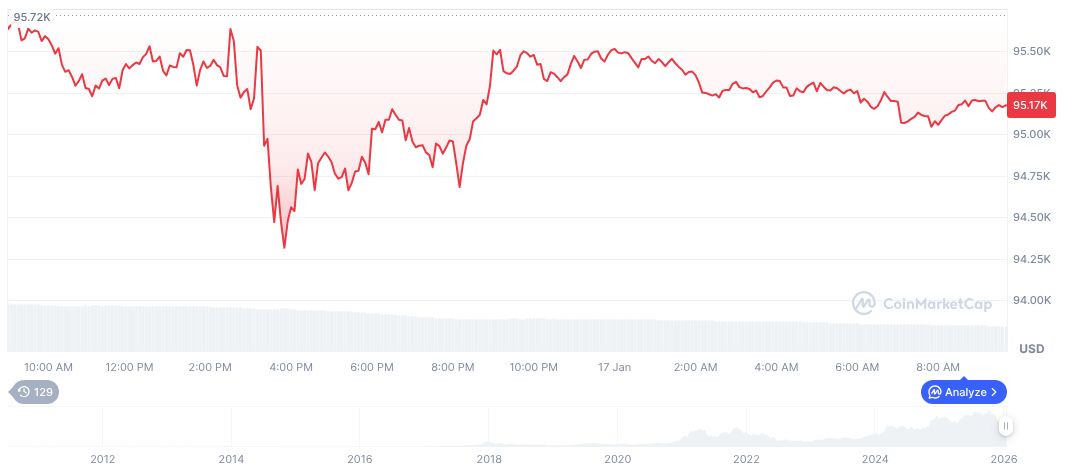
The Coincu research team highlights that this expansion could signal further vertical integrations in tech industries. xAI’s investment in self-sustaining power solutions may represent a model for future high-capacity computing expansions.
| DISCLAIMER: The information on this website is provided as general market commentary and does not constitute investment advice. We encourage you to do your own research before investing. |

No tags available.


Other Posts








- Amplify 2024: Ohio’s Premier Blockchain Summit
- Polymarket Announces U.S. Beta Relaunch Amid Market Buzz
- China, US Conclude Trade Talks with Focus on Cooperation
- Crypto Weekly: NYSE Backs OKX, Kraken Gets Fed Access, BTC Sells
- Michael Saylor Denies Bitcoin Sell-Off Amid Large BTC Transfer
- Court Upholds Fed’s Rejection of Custodia Bank’s Request
- EU Opens Antitrust Probe Into Deutsche Boerse and Nasdaq Derivatives Dealings
- Kazakhstan Explores Crypto Reserves Backed by National Funds
- Nordea Bank Introduces Bitcoin ETP Trading for Nordic Customers
- JPMorgan Increases Holdings in BlackRock’s Bitcoin ETF
- XRP Spot ETF Launches on Nasdaq Amid Market Fluctuations
- JPMorgan Chase Launches 24/7 Digital Deposit Token for Clients
- Crypto Leaders Address Macro Volatility Amid Market Shifts
- Former CFO Convicted for $35M Fraudulent Crypto Investment
- Peter Schiff Challenges Michael Saylor on MSTR’s Business Model
- U.S. Treasury Proposes New Tax Relief Regulations
- WLFI Under Fire: Analyst Warns Hyperliquid Could Be Next
- Japan to Reduce Cryptocurrency Tax to 20%
- Yala Injects $5.5 Million Amid Recovery Efforts
- HSBC to Offer Tokenized Deposits in US and UAE
- Amplify 2024: Ohio’s Premier Blockchain Summit
- Polymarket Announces U.S. Beta Relaunch Amid Market Buzz
- China, US Conclude Trade Talks with Focus on Cooperation
- Crypto Weekly: NYSE Backs OKX, Kraken Gets Fed Access, BTC Sells
- Michael Saylor Denies Bitcoin Sell-Off Amid Large BTC Transfer
- Court Upholds Fed’s Rejection of Custodia Bank’s Request
- EU Opens Antitrust Probe Into Deutsche Boerse and Nasdaq Derivatives Dealings
- Kazakhstan Explores Crypto Reserves Backed by National Funds
- Nordea Bank Introduces Bitcoin ETP Trading for Nordic Customers
- JPMorgan Increases Holdings in BlackRock’s Bitcoin ETF
- XRP Spot ETF Launches on Nasdaq Amid Market Fluctuations
- JPMorgan Chase Launches 24/7 Digital Deposit Token for Clients
- Crypto Leaders Address Macro Volatility Amid Market Shifts
- Former CFO Convicted for $35M Fraudulent Crypto Investment
- Peter Schiff Challenges Michael Saylor on MSTR’s Business Model
- U.S. Treasury Proposes New Tax Relief Regulations
- WLFI Under Fire: Analyst Warns Hyperliquid Could Be Next
- Japan to Reduce Cryptocurrency Tax to 20%
- Yala Injects $5.5 Million Amid Recovery Efforts
- HSBC to Offer Tokenized Deposits in US and UAE
- Amplify 2024: Ohio’s Premier Blockchain Summit
- Polymarket Announces U.S. Beta Relaunch Amid Market Buzz
- China, US Conclude Trade Talks with Focus on Cooperation
- Crypto Weekly: NYSE Backs OKX, Kraken Gets Fed Access, BTC Sells
- Michael Saylor Denies Bitcoin Sell-Off Amid Large BTC Transfer
- Court Upholds Fed’s Rejection of Custodia Bank’s Request
- EU Opens Antitrust Probe Into Deutsche Boerse and Nasdaq Derivatives Dealings
- Kazakhstan Explores Crypto Reserves Backed by National Funds
- Nordea Bank Introduces Bitcoin ETP Trading for Nordic Customers
- JPMorgan Increases Holdings in BlackRock’s Bitcoin ETF
- XRP Spot ETF Launches on Nasdaq Amid Market Fluctuations
- JPMorgan Chase Launches 24/7 Digital Deposit Token for Clients
- Crypto Leaders Address Macro Volatility Amid Market Shifts
- Former CFO Convicted for $35M Fraudulent Crypto Investment
- Peter Schiff Challenges Michael Saylor on MSTR’s Business Model
- U.S. Treasury Proposes New Tax Relief Regulations
- WLFI Under Fire: Analyst Warns Hyperliquid Could Be Next
- Japan to Reduce Cryptocurrency Tax to 20%
- Yala Injects $5.5 Million Amid Recovery Efforts
- HSBC to Offer Tokenized Deposits in US and UAE
Latest











Press Release

Tezos Developers and Creators Reunite at TezDev Cannes with 360° Immersive Zone and Keynote by Arthur Breitman

Playnance Launches GCoin MEXC Listing with 200,000 Holders and 2M Daily Transactions