- The main action involves updates on the FTX payout schedule.
- Next FTX distribution scheduled for March 31, 2026.
- Creditor registration deadline set for February 14, 2026.
FTX creditors must complete specific procedures by February 14 to qualify for payout distributions, scheduled for March 31, 2026, as announced by representative Sunil on the X platform.
The payout plan addresses billions in recovered assets but excludes certain jurisdictions, impacting global creditor recovery.
FTX Deadlines: Key Actions for March 2026 Payout
Sunil Kavuri’s recent update emphasizes that creditors need to adhere to stringent deadlines and requirements to secure their compensation under the new FTX payout schedule. He outlined that necessary actions involve KYC verification, submission of a W-8 BEN form, and selecting a distribution agent before the February 14, 2026, deadline.
The FTX distribution plan, under the oversight of John J. Ray III, aligns with efforts to recover significant amounts of funds for various claimant classes. This reinforces FTX’s commitment to proceeding with orderly compensations for affected users, with the next major payout set for March 31, 2026.
“A lot of claims are from jurisdictions not eligible for FTX distributions at the moment which include: Russia, China, Egypt, Nigeria, Ukraine. FTX is reviewing options.” – Sunil Kavuri, FTX Creditor Champion
Jurisdictional Barriers and Legal Implications on FTX Payouts
Did you know? In the initial 2025 payout phase, $800 million was distributed to 162,000 accounts. However, jurisdictional exclusions have left creditors from over 20 countries seeking alternatives.
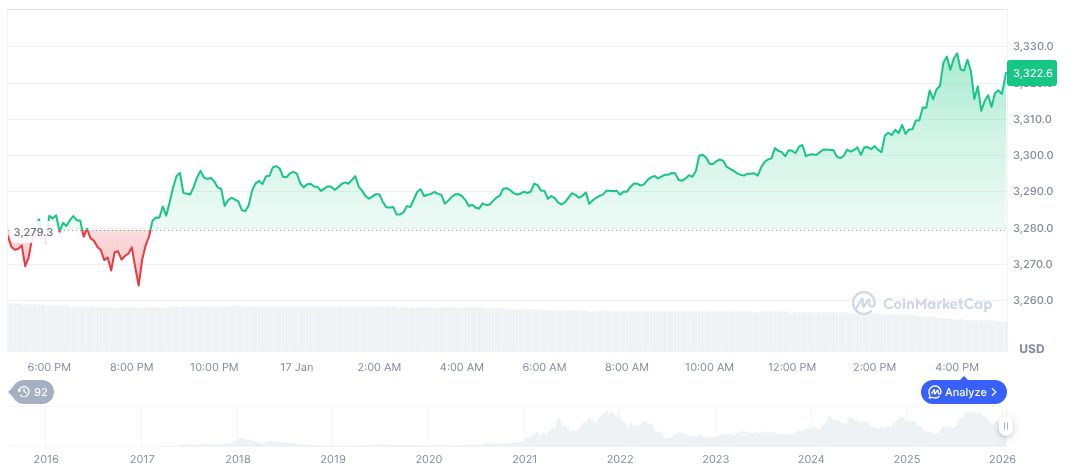
Ethereum (ETH) currently trades at $3,315.62, showcasing a 0.60% increase over 24 hours. Its market capitalization stands at formatNumber(400177754886, 2), holding a 12.38% market dominance. Over the last 30 days, ETH has increased by 18.23%, highlighting notable price volatility. Data courtesy of CoinMarketCap.
The Coincu research team suggests that FTX’s straightforward procedures might see lesser financial hurdles, though compliance with jurisdictional jurisdictions remains a barrier. Legal frameworks are being evaluated, potentially changing future payout mechanisms and ensuring smoother transactions for global creditors.
| DISCLAIMER: The information on this website is provided as general market commentary and does not constitute investment advice. We encourage you to do your own research before investing. |

No tags available.


Other Posts









- Amplify 2024: Ohio’s Premier Blockchain Summit
- Polymarket Announces U.S. Beta Relaunch Amid Market Buzz
- China, US Conclude Trade Talks with Focus on Cooperation
- Michael Saylor Denies Bitcoin Sell-Off Amid Large BTC Transfer
- Court Upholds Fed’s Rejection of Custodia Bank’s Request
- EU Opens Antitrust Probe Into Deutsche Boerse and Nasdaq Derivatives Dealings
- Kazakhstan Explores Crypto Reserves Backed by National Funds
- Nordea Bank Introduces Bitcoin ETP Trading for Nordic Customers
- JPMorgan Increases Holdings in BlackRock’s Bitcoin ETF
- XRP Spot ETF Launches on Nasdaq Amid Market Fluctuations
- JPMorgan Chase Launches 24/7 Digital Deposit Token for Clients
- Crypto Leaders Address Macro Volatility Amid Market Shifts
- Former CFO Convicted for $35M Fraudulent Crypto Investment
- Peter Schiff Challenges Michael Saylor on MSTR’s Business Model
- U.S. Treasury Proposes New Tax Relief Regulations
- Japan to Reduce Cryptocurrency Tax to 20%
- Amazon seeks to raise about $12 billion through a U.S. bond offering
- Radiant Capital Faces $50M Loss in Major Security Breach
- SEGG Media Unveils $300 Million Crypto Reserve Plan
- 21Shares Files S-1 With SEC to Launch Hyperliquid ($HYPE) ETF
- Amplify 2024: Ohio’s Premier Blockchain Summit
- Polymarket Announces U.S. Beta Relaunch Amid Market Buzz
- China, US Conclude Trade Talks with Focus on Cooperation
- Michael Saylor Denies Bitcoin Sell-Off Amid Large BTC Transfer
- Court Upholds Fed’s Rejection of Custodia Bank’s Request
- EU Opens Antitrust Probe Into Deutsche Boerse and Nasdaq Derivatives Dealings
- Kazakhstan Explores Crypto Reserves Backed by National Funds
- Nordea Bank Introduces Bitcoin ETP Trading for Nordic Customers
- JPMorgan Increases Holdings in BlackRock’s Bitcoin ETF
- XRP Spot ETF Launches on Nasdaq Amid Market Fluctuations
- JPMorgan Chase Launches 24/7 Digital Deposit Token for Clients
- Crypto Leaders Address Macro Volatility Amid Market Shifts
- Former CFO Convicted for $35M Fraudulent Crypto Investment
- Peter Schiff Challenges Michael Saylor on MSTR’s Business Model
- U.S. Treasury Proposes New Tax Relief Regulations
- Japan to Reduce Cryptocurrency Tax to 20%
- Amazon seeks to raise about $12 billion through a U.S. bond offering
- Radiant Capital Faces $50M Loss in Major Security Breach
- SEGG Media Unveils $300 Million Crypto Reserve Plan
- 21Shares Files S-1 With SEC to Launch Hyperliquid ($HYPE) ETF
- Amplify 2024: Ohio’s Premier Blockchain Summit
- Polymarket Announces U.S. Beta Relaunch Amid Market Buzz
- China, US Conclude Trade Talks with Focus on Cooperation
- Michael Saylor Denies Bitcoin Sell-Off Amid Large BTC Transfer
- Court Upholds Fed’s Rejection of Custodia Bank’s Request
- EU Opens Antitrust Probe Into Deutsche Boerse and Nasdaq Derivatives Dealings
- Kazakhstan Explores Crypto Reserves Backed by National Funds
- Nordea Bank Introduces Bitcoin ETP Trading for Nordic Customers
- JPMorgan Increases Holdings in BlackRock’s Bitcoin ETF
- XRP Spot ETF Launches on Nasdaq Amid Market Fluctuations
- JPMorgan Chase Launches 24/7 Digital Deposit Token for Clients
- Crypto Leaders Address Macro Volatility Amid Market Shifts
- Former CFO Convicted for $35M Fraudulent Crypto Investment
- Peter Schiff Challenges Michael Saylor on MSTR’s Business Model
- U.S. Treasury Proposes New Tax Relief Regulations
- Japan to Reduce Cryptocurrency Tax to 20%
- Amazon seeks to raise about $12 billion through a U.S. bond offering
- Radiant Capital Faces $50M Loss in Major Security Breach
- SEGG Media Unveils $300 Million Crypto Reserve Plan
- 21Shares Files S-1 With SEC to Launch Hyperliquid ($HYPE) ETF
Latest











Press Release


Phemex TradFi Hits $10B Monthly Volume, Advancing Cross-Market Trading Infrastructure