- Gold dropped 8% and silver fell 17% on January 30, 2026.
- Market reactions linked to Fed speculation and dollar strength.
- Historical selloffs often due to liquidity and volatility issues.
On Friday, precious metals faced significant losses as gold and silver prices plummeted sharply, causing a stir in the market.
This sudden downturn in metals highlights potential shifts in economic conditions and investor sentiment, impacting broader market stability.
Gold and Silver Prices See Historic Plunge on Fed Speculation
Volatility in metal markets sparked significant declines in spot prices. Gold fell roughly 12%, and silver experienced a more pronounced drop of up to 35%. This occurred as speculation mounted over potential Federal Reserve leadership changes, with Kevin Warsh being a possible nominee under President Trump.
The repercussions of this market event are significant, with liquidity challenges being exacerbated by intense volatility. As analyst Ole Hansen of Saxo Bank highlighted, increasing volatility fed upon itself, thinning liquidity and heightening the risk for banks and market makers who found it difficult to manage their positions.
BingX offers exclusive rewards and top-tier security for new and high-volume crypto traders.
“The problem is volatility feeding on itself. As price swings intensify, liquidity thins. Banks and market makers struggle tomanageriskandwhen their willingness to quote prices in size fades, liquidity deteriorates and volatility blows out.” — Ole Hansen, Commodities Analyst, Saxo Bank
Market Volatility Continues as Bitcoin Shows Resilience
Did you know? The gold-silver ratio reached 64 recently, hitting its highest point since December last year, reflecting renewed market stress.
Bitcoin (BTC) maintained a price of $83,963.96 with a market cap of $1.68 trillion, reflecting a 0.61% increase over the last 24 hours according to CoinMarketCap. Despite recent gains, BTC’s value has decreased by 23.93% over the past 90 days, illustrating continued market volatility.
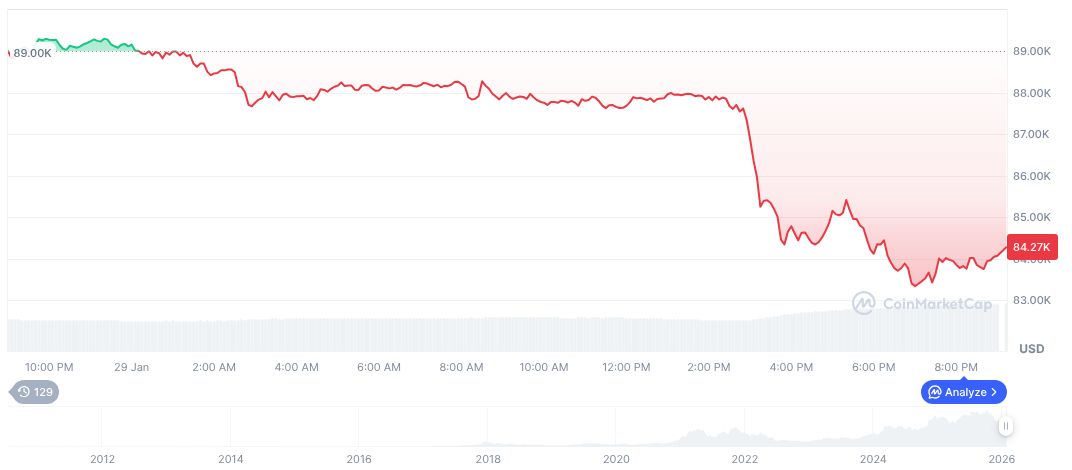
In-depth analysis by the Coincu research team suggests potential regulatory and financial impacts may emerge, especially in interest-sensitive sectors. The amplification of volatility is expected, driven by changes in global economic policies. Bold decisions by major central banks could further influence market dynamics.
| DISCLAIMER: The information on this website is provided as general market commentary and does not constitute investment advice. We encourage you to do your own research before investing. |
No tags available.


Other Posts







- China, US Conclude Trade Talks with Focus on Cooperation
- Crypto Weekly: NYSE Backs OKX, Kraken Gets Fed Access, BTC Sells
- DeriW Launches Edge Hour Trading Competition Platform for Derivatives Traders
- Court Upholds Fed’s Rejection of Custodia Bank’s Request
- Former CFO Convicted for $35M Fraudulent Crypto Investment
- Michael Saylor Denies Bitcoin Sell-Off Amid Large BTC Transfer
- Buy Dogecoin on eToro: Step-by-Step Guide for Beginners (2024)
- Kazakhstan Explores Crypto Reserves Backed by National Funds
- JPMorgan Increases Holdings in BlackRock’s Bitcoin ETF
- Nordea Bank Introduces Bitcoin ETP Trading for Nordic Customers
- XRP Spot ETF Launches on Nasdaq Amid Market Fluctuations
- Crypto Leaders Address Macro Volatility Amid Market Shifts
- Peter Schiff Challenges Michael Saylor on MSTR’s Business Model
- Thailand Orders Worldcoin to Delete 1.2 Million Biometric Records
- UK Proposes New DeFi Tax Framework to Ease User Burden
- WLFI Under Fire: Analyst Warns Hyperliquid Could Be Next
- Ancient Ethereum Whale Moves $1.19 Billion After Decade
- BlackRock Receives Large Crypto Transfers from Coinbase
- SEC Scrutiny on ALT5 Sigma’s Leadership Disclosure Timing
- MoonPay Gains Trust License for Crypto Operations in New York
- China, US Conclude Trade Talks with Focus on Cooperation
- Crypto Weekly: NYSE Backs OKX, Kraken Gets Fed Access, BTC Sells
- DeriW Launches Edge Hour Trading Competition Platform for Derivatives Traders
- Court Upholds Fed’s Rejection of Custodia Bank’s Request
- Former CFO Convicted for $35M Fraudulent Crypto Investment
- Michael Saylor Denies Bitcoin Sell-Off Amid Large BTC Transfer
- Buy Dogecoin on eToro: Step-by-Step Guide for Beginners (2024)
- Kazakhstan Explores Crypto Reserves Backed by National Funds
- JPMorgan Increases Holdings in BlackRock’s Bitcoin ETF
- Nordea Bank Introduces Bitcoin ETP Trading for Nordic Customers
- XRP Spot ETF Launches on Nasdaq Amid Market Fluctuations
- Crypto Leaders Address Macro Volatility Amid Market Shifts
- Peter Schiff Challenges Michael Saylor on MSTR’s Business Model
- Thailand Orders Worldcoin to Delete 1.2 Million Biometric Records
- UK Proposes New DeFi Tax Framework to Ease User Burden
- WLFI Under Fire: Analyst Warns Hyperliquid Could Be Next
- Ancient Ethereum Whale Moves $1.19 Billion After Decade
- BlackRock Receives Large Crypto Transfers from Coinbase
- SEC Scrutiny on ALT5 Sigma’s Leadership Disclosure Timing
- MoonPay Gains Trust License for Crypto Operations in New York
- China, US Conclude Trade Talks with Focus on Cooperation
- Crypto Weekly: NYSE Backs OKX, Kraken Gets Fed Access, BTC Sells
- DeriW Launches Edge Hour Trading Competition Platform for Derivatives Traders
- Court Upholds Fed’s Rejection of Custodia Bank’s Request
- Former CFO Convicted for $35M Fraudulent Crypto Investment
- Michael Saylor Denies Bitcoin Sell-Off Amid Large BTC Transfer
- Buy Dogecoin on eToro: Step-by-Step Guide for Beginners (2024)
- Kazakhstan Explores Crypto Reserves Backed by National Funds
- JPMorgan Increases Holdings in BlackRock’s Bitcoin ETF
- Nordea Bank Introduces Bitcoin ETP Trading for Nordic Customers
- XRP Spot ETF Launches on Nasdaq Amid Market Fluctuations
- Crypto Leaders Address Macro Volatility Amid Market Shifts
- Peter Schiff Challenges Michael Saylor on MSTR’s Business Model
- Thailand Orders Worldcoin to Delete 1.2 Million Biometric Records
- UK Proposes New DeFi Tax Framework to Ease User Burden
- WLFI Under Fire: Analyst Warns Hyperliquid Could Be Next
- Ancient Ethereum Whale Moves $1.19 Billion After Decade
- BlackRock Receives Large Crypto Transfers from Coinbase
- SEC Scrutiny on ALT5 Sigma’s Leadership Disclosure Timing
- MoonPay Gains Trust License for Crypto Operations in New York

Strategy mNAV Falls Below 1 as Bitcoin Reserve Value Overtakes Market Cap

Base Mainnet Suffers Second Outage in Two Days, Service Restored

Securitize Plans July 2 NYSE Listing Under SECZ, Targets $400M Raise

Toss Brings 30 Million Users Into the AI Data Economy in Partnership With Poseidon

The DATA Foundation Launches to Tackle AI’s Multi-Billion Dollar Training Data Bottleneck