Gold price plunge today: why gold fell $200, silver 10%
Gold and silver slumped sharply, with spot gold dropping about $200 intraday and silver down roughly 10%. The immediate catalyst was a stronger U.S. labor print that tempered hopes for early rate cuts.A robust jobs reading typically tightens financial conditions by lifting U.S. dollar and Treasury yields expectations. That dynamic pressures dollar-denominated commodities. Positioning and leverage then amplified the initial move as liquidity thinned.Analysts also flagged a crowded build-up in bullish bets after a powerful multi-month rally. When stops and margin thresholds were breached, forced selling cascaded across futures and spot venues, deepening the drawdown.Silver’s dual role as an industrial and precious metal added sensitivity. Its thinner liquidity relative to gold can turn orderly pullbacks into abrupt air pockets when volatility spikes.
Why the gold price crash matters for investors and markets
Sharp metals moves can reverberate through portfolios holding bullion, miners, or commodity-linked funds. Cross-asset volatility also tends to rise when macro assumptions about rates or growth are challenged.According to Meyka, the sell-off followed a stronger-than-expected U.S. jobs report that cooled expectations for near-term federal reserve rate cuts. That repricing lifted the policy path implied by markets and weighed on haven demand.Analysts emphasized that microstructure, not just macro, drove the slide. As Luigi de Bellis, Head of Research at Equita, said, “This was a liquidity event, forced sales via margin calls and stop-loss cascades in crowded long trades.”Spillovers can hit equities tied to metals and broad indexes during risk-off rotations. Investopedia reported that major stock benchmarks fell as investors reassessed economic data and earnings, illustrating how commodity shocks can intersect with equity sentiment.
How U.S. dollar strength moved DXY, GLD, and metals intraday
Gold and silver often trade inversely to the U.S. Dollar Index (DXY). When labor data strengthen the greenback, the translation effect raises the implicit price of metals for non-dollar buyers, pressuring spot quotes.Market commentary linked the sell-off to U.S. dollar strength, a known headwind when measured by DXY. Traders also monitor SPDR Gold Shares (GLD) during stress episodes to gauge intraday sentiment spillovers from futures to ETFs.At the time of this writing, LiveMint reported spot gold near $5,080 per ounce and spot silver around $82.2 during Asian trading. As historical context, the London Bullion Market Association confirmed a record spot gold fix near $4,612 per ounce in early january 2026.These reference points illustrate how swiftly conditions can pivot from record highs to abrupt corrections. The path ahead will likely hinge on how rate expectations, the dollar, and positioning evolve.
Near-term outlook after the gold and silver price crash
Short-term volatility typically remains elevated after cascade events. If rates stay higher for longer and the dollar remains firm, rallies may fade faster until positioning resets.Should data soften or the Federal Reserve signal greater confidence in disinflation progress, the policy path could ease. That would usually support non-yielding assets, though timing and magnitude remain uncertain.
Signals to watch: DXY, Fed tone, jobs/CPI, GLD flows
DXY remains the cleanest real-time gauge of dollar headwinds for metals. The Federal Reserve’s tone on inflation, growth, and financial conditions will shape rate expectations.Upcoming jobs and CPI releases may re-anchor the policy outlook. Observers also track GLD shares outstanding and daily flow patterns for signs of renewed allocation, or persistent redemptions, into and out of gold exposure.
Market structure: positioning, margin stress, silver’s higher sensitivity
Overbought conditions and crowded longs can exacerbate downside via stop-loss triggers and margin calls. Thin liquidity magnifies gap risk during stress.Silver’s industrial demand tie-in and lower depth versus gold increase its beta in both directions. Morningstar Australia has noted that such overextension leaves the complex vulnerable to sharp mean reversion.
FAQ about gold price crash
What triggered the silver price plunge, fundamentals or a leverage/liquidity squeeze?
Both. Strong macro data pressured metals, then crowded longs, margin calls, and thin liquidity turned orderly selling into a rapid, amplified decline.
How did the stronger U.S. jobs report and hawkish Fed expectations impact gold and silver?
The data cooled rate-cut hopes, firmed the dollar, and raised real-rate expectations, undermining non-yielding assets like gold and silver and accelerating de-risking.
| DISCLAIMER: The information on this website is provided as general market commentary and does not constitute investment advice. We encourage you to do your own research before investing. |


Other Posts








- China, US Conclude Trade Talks with Focus on Cooperation
- Crypto Weekly: NYSE Backs OKX, Kraken Gets Fed Access, BTC Sells
- Court Upholds Fed’s Rejection of Custodia Bank’s Request
- Former CFO Convicted for $35M Fraudulent Crypto Investment
- DeriW Launches Edge Hour Trading Competition Platform for Derivatives Traders
- Michael Saylor Denies Bitcoin Sell-Off Amid Large BTC Transfer
- Buy Dogecoin on eToro: Step-by-Step Guide for Beginners (2024)
- Kazakhstan Explores Crypto Reserves Backed by National Funds
- JPMorgan Increases Holdings in BlackRock’s Bitcoin ETF
- Nordea Bank Introduces Bitcoin ETP Trading for Nordic Customers
- XRP Spot ETF Launches on Nasdaq Amid Market Fluctuations
- Peter Schiff Challenges Michael Saylor on MSTR’s Business Model
- Thailand Orders Worldcoin to Delete 1.2 Million Biometric Records
- UK Proposes New DeFi Tax Framework to Ease User Burden
- WLFI Under Fire: Analyst Warns Hyperliquid Could Be Next
- Ancient Ethereum Whale Moves $1.19 Billion After Decade
- BlackRock Receives Large Crypto Transfers from Coinbase
- SEC Scrutiny on ALT5 Sigma’s Leadership Disclosure Timing
- Yala Injects $5.5 Million Amid Recovery Efforts
- Radiant Capital Faces $50M Loss in Major Security Breach
- China, US Conclude Trade Talks with Focus on Cooperation
- Crypto Weekly: NYSE Backs OKX, Kraken Gets Fed Access, BTC Sells
- Court Upholds Fed’s Rejection of Custodia Bank’s Request
- Former CFO Convicted for $35M Fraudulent Crypto Investment
- DeriW Launches Edge Hour Trading Competition Platform for Derivatives Traders
- Michael Saylor Denies Bitcoin Sell-Off Amid Large BTC Transfer
- Buy Dogecoin on eToro: Step-by-Step Guide for Beginners (2024)
- Kazakhstan Explores Crypto Reserves Backed by National Funds
- JPMorgan Increases Holdings in BlackRock’s Bitcoin ETF
- Nordea Bank Introduces Bitcoin ETP Trading for Nordic Customers
- XRP Spot ETF Launches on Nasdaq Amid Market Fluctuations
- Peter Schiff Challenges Michael Saylor on MSTR’s Business Model
- Thailand Orders Worldcoin to Delete 1.2 Million Biometric Records
- UK Proposes New DeFi Tax Framework to Ease User Burden
- WLFI Under Fire: Analyst Warns Hyperliquid Could Be Next
- Ancient Ethereum Whale Moves $1.19 Billion After Decade
- BlackRock Receives Large Crypto Transfers from Coinbase
- SEC Scrutiny on ALT5 Sigma’s Leadership Disclosure Timing
- Yala Injects $5.5 Million Amid Recovery Efforts
- Radiant Capital Faces $50M Loss in Major Security Breach
- China, US Conclude Trade Talks with Focus on Cooperation
- Crypto Weekly: NYSE Backs OKX, Kraken Gets Fed Access, BTC Sells
- Court Upholds Fed’s Rejection of Custodia Bank’s Request
- Former CFO Convicted for $35M Fraudulent Crypto Investment
- DeriW Launches Edge Hour Trading Competition Platform for Derivatives Traders
- Michael Saylor Denies Bitcoin Sell-Off Amid Large BTC Transfer
- Buy Dogecoin on eToro: Step-by-Step Guide for Beginners (2024)
- Kazakhstan Explores Crypto Reserves Backed by National Funds
- JPMorgan Increases Holdings in BlackRock’s Bitcoin ETF
- Nordea Bank Introduces Bitcoin ETP Trading for Nordic Customers
- XRP Spot ETF Launches on Nasdaq Amid Market Fluctuations
- Peter Schiff Challenges Michael Saylor on MSTR’s Business Model
- Thailand Orders Worldcoin to Delete 1.2 Million Biometric Records
- UK Proposes New DeFi Tax Framework to Ease User Burden
- WLFI Under Fire: Analyst Warns Hyperliquid Could Be Next
- Ancient Ethereum Whale Moves $1.19 Billion After Decade
- BlackRock Receives Large Crypto Transfers from Coinbase
- SEC Scrutiny on ALT5 Sigma’s Leadership Disclosure Timing
- Yala Injects $5.5 Million Amid Recovery Efforts
- Radiant Capital Faces $50M Loss in Major Security Breach

Former FBI Agent Charged With Stealing Nearly $1 Million in Crypto

Coldcard Exploit Raises Questions About Air-Gapped Bitcoin Wallet Security

BlackRock Launches Tokenized Money Market Funds on Solana, Ethereum
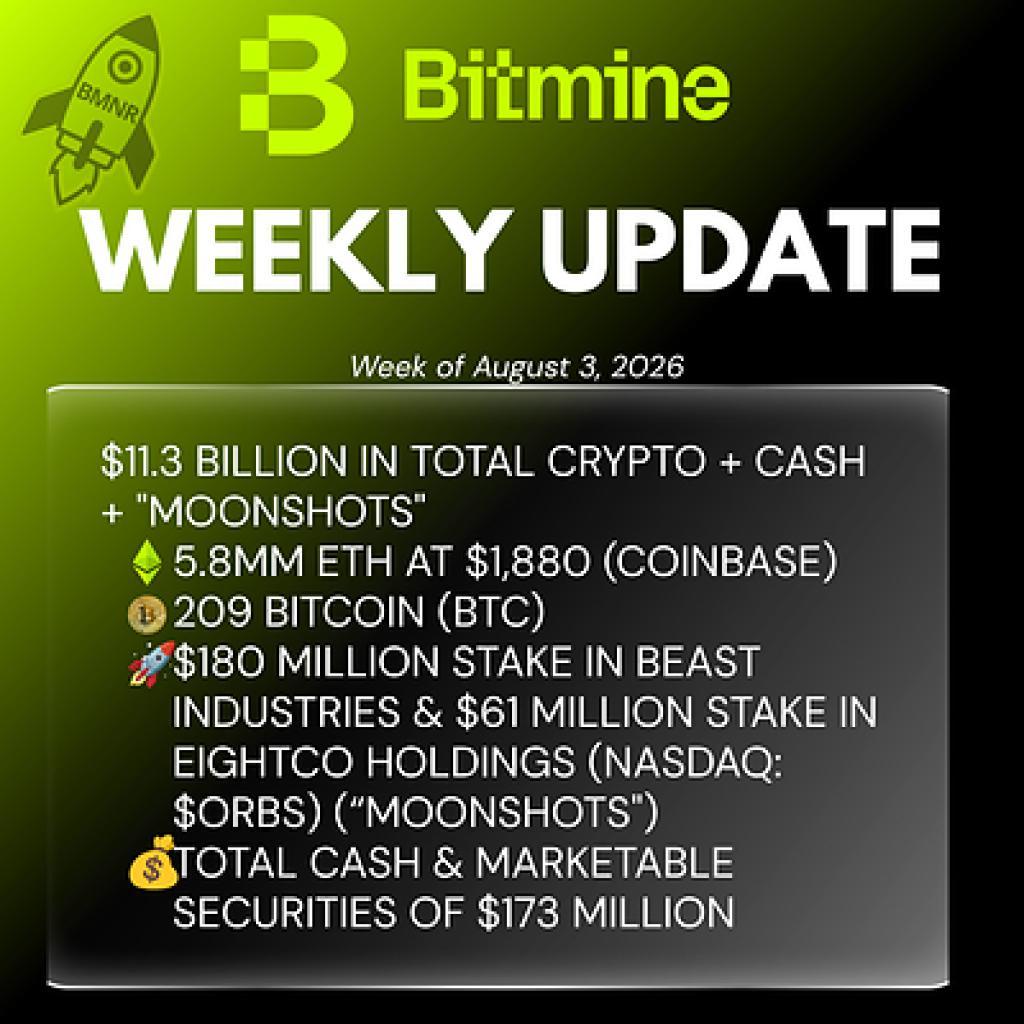
Bitmine Immersion Technologies (BMNR) Announces ETH Holdings Reach 5.8 Million Tokens, and Total Crypto and Total Cash Holdings of $11.3 Billion

Performa Marks One Year Live with Major Upgrade for Digital-Native SMBs