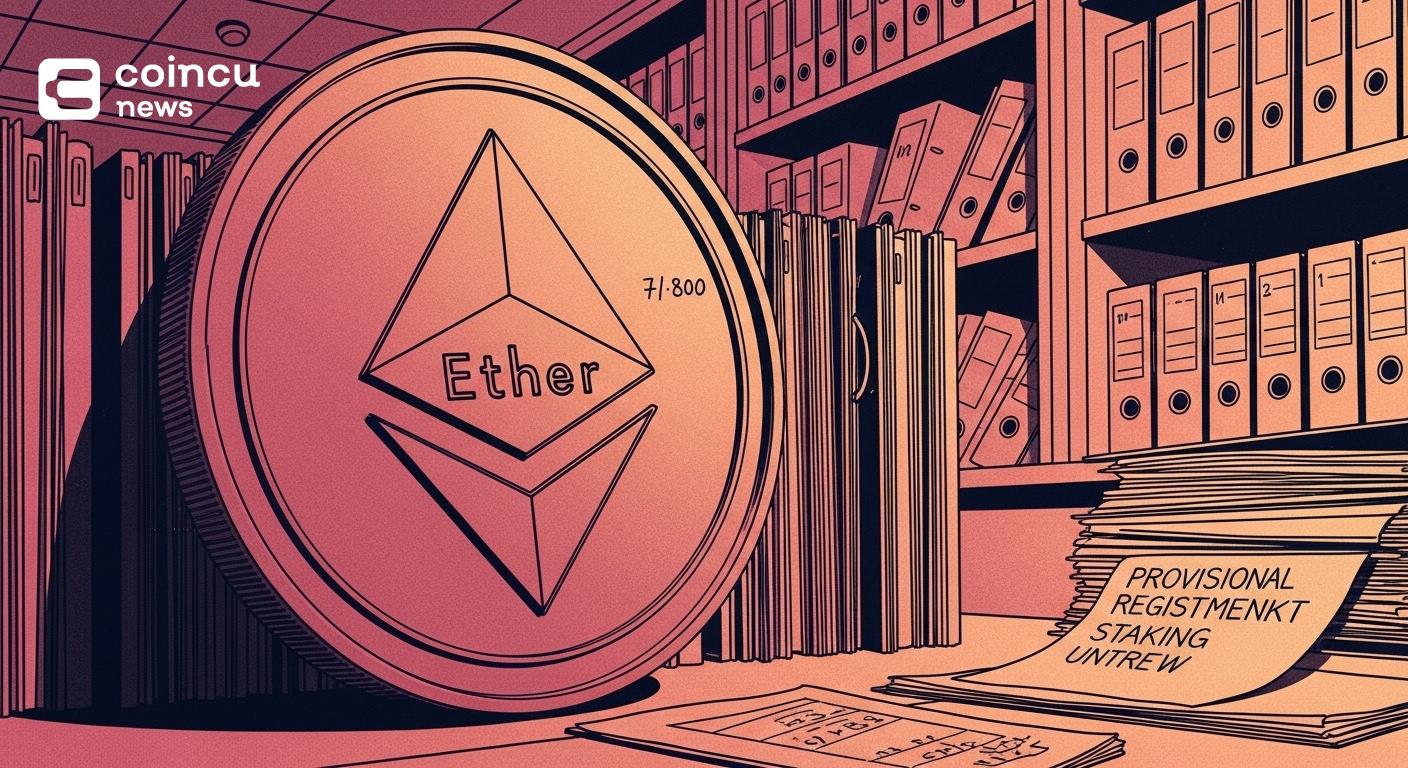
Yes, over 60% in the ETH2 deposit contract
according to Arkham Intelligence’s 2026 holdings report, the ETH2 (Beacon) deposit contract holds roughly 60–63% of total ETH supply, equating to about 72–77 million ETH at that time. These balances represent staked eth helping secure Ethereum’s consensus and are not freely circulating until withdrawn.
The same report identifies Estonian banker Rain Lohmus as the largest individual holder at about 250,000 ETH. He is widely associated with lost private keys, meaning those coins are not accessible for transfers or staking operations.
Why Ethereum staking centralization via Lido DAO and Coinbase matters
S&P Global has warned that staking concentration among a few large operators could amplify centralization risks; it highlights Lido DAO at roughly one‑third of staked ETH and Coinbase near one‑sixth. The concentration could be reinforced if spot ETH ETFs with staking channel flows to a small set of custodial operators.
vitalik buterin has discussed mitigation options, including caps limiting stake per entity and a two‑tier staking design that preserves participation for smaller actors while managing slashing risk. These proposals aim to protect decentralization without unduly burdening network security.
Observers caution that validator dominance by a few platforms may weaken neutrality and resilience. “We’re creating a system where a handful of major players control an outsized portion of network security, undermining the core promise of decentralization,” said Karan Sirdesai, CEO of Mira Network.
Immediate impacts: security, censorship pressure, liquidity, and governance
Based on data from Flipside, the top 10 stakers collectively hold roughly 47–48% of staked ETH, indicating persistent concentration at the validator layer. Such clustering can reduce fault tolerance if a major operator suffers client bugs, misconfigurations, or correlated slashing events.
Large, regulated entities may also face heightened censorship pressure relative to smaller, distributed operators. Concentration can therefore increase the probability that compliance demands propagate into transaction filtering at the validator level.
Liquidity is shaped by how much ETH is staked and by the liquidity of staking derivatives. When a few issuers dominate liquid staking, secondary‑market liquidity can look deep while underlying validator power remains concentrated.
Governance and ecosystem direction can be influenced indirectly by large staking providers through social coordination and agenda‑setting. While protocol changes are not “voted” by stake, outsized operational share can sway client adoption and risk norms.
At the time of this writing, Ethereum (ETH) trades near $1,923, providing a volatile market backdrop to these staking and concentration dynamics.
Rain Lohmus Ethereum holdings: scale and accessibility context
Largest individual holder claim versus lost-keys, non-spendable status
Rain Lohmus is associated with approximately 250,000 ETH acquired early, but the keys are reportedly lost. As a result, the position is non‑spendable and cannot be mobilized for transfers, staking, or delegation.
Effect on circulating supply, liquidity, and perceived concentration
Non‑spendable coins reduce effective free float even if they appear in headline ownership figures. The holding does not contribute to validator concentration or governance influence, though it can amplify perceptions of wealth concentration on chain.
FAQ about ETH2 deposit contract
How much ETH is currently staked and which entities control the largest share?
Roughly 60–63% of supply is staked. Lido holds about one‑third and Coinbase about one‑sixth of staked ETH, according to S&P Global.
Does Rain Lohmus really hold the most ETH, and are his coins accessible?
Yes, about 250,000 ETH is attributed to him. The keys are said to be lost, rendering those coins inaccessible and unusable for staking.
| DISCLAIMER: The information on this website is provided as general market commentary and does not constitute investment advice. We encourage you to do your own research before investing. |


Other Posts









- Amplify 2024: Ohio’s Premier Blockchain Summit
- Polymarket Announces U.S. Beta Relaunch Amid Market Buzz
- China, US Conclude Trade Talks with Focus on Cooperation
- Crypto Weekly: NYSE Backs OKX, Kraken Gets Fed Access, BTC Sells
- CELO holds as Celo reviews Opera 160M token claim
- Michael Saylor Denies Bitcoin Sell-Off Amid Large BTC Transfer
- Court Upholds Fed’s Rejection of Custodia Bank’s Request
- EU Opens Antitrust Probe Into Deutsche Boerse and Nasdaq Derivatives Dealings
- Kazakhstan Explores Crypto Reserves Backed by National Funds
- JPMorgan Increases Holdings in BlackRock’s Bitcoin ETF
- Nordea Bank Introduces Bitcoin ETP Trading for Nordic Customers
- XRP Spot ETF Launches on Nasdaq Amid Market Fluctuations
- JPMorgan Chase Launches 24/7 Digital Deposit Token for Clients
- Crypto Leaders Address Macro Volatility Amid Market Shifts
- Former CFO Convicted for $35M Fraudulent Crypto Investment
- Peter Schiff Challenges Michael Saylor on MSTR’s Business Model
- Thailand Orders Worldcoin to Delete 1.2 Million Biometric Records
- UK Proposes New DeFi Tax Framework to Ease User Burden
- U.S. Treasury Proposes New Tax Relief Regulations
- Uniswap’s UNIfication Proposal Gains Massive Preliminary Support
- Amplify 2024: Ohio’s Premier Blockchain Summit
- Polymarket Announces U.S. Beta Relaunch Amid Market Buzz
- China, US Conclude Trade Talks with Focus on Cooperation
- Crypto Weekly: NYSE Backs OKX, Kraken Gets Fed Access, BTC Sells
- CELO holds as Celo reviews Opera 160M token claim
- Michael Saylor Denies Bitcoin Sell-Off Amid Large BTC Transfer
- Court Upholds Fed’s Rejection of Custodia Bank’s Request
- EU Opens Antitrust Probe Into Deutsche Boerse and Nasdaq Derivatives Dealings
- Kazakhstan Explores Crypto Reserves Backed by National Funds
- JPMorgan Increases Holdings in BlackRock’s Bitcoin ETF
- Nordea Bank Introduces Bitcoin ETP Trading for Nordic Customers
- XRP Spot ETF Launches on Nasdaq Amid Market Fluctuations
- JPMorgan Chase Launches 24/7 Digital Deposit Token for Clients
- Crypto Leaders Address Macro Volatility Amid Market Shifts
- Former CFO Convicted for $35M Fraudulent Crypto Investment
- Peter Schiff Challenges Michael Saylor on MSTR’s Business Model
- Thailand Orders Worldcoin to Delete 1.2 Million Biometric Records
- UK Proposes New DeFi Tax Framework to Ease User Burden
- U.S. Treasury Proposes New Tax Relief Regulations
- Uniswap’s UNIfication Proposal Gains Massive Preliminary Support
- Amplify 2024: Ohio’s Premier Blockchain Summit
- Polymarket Announces U.S. Beta Relaunch Amid Market Buzz
- China, US Conclude Trade Talks with Focus on Cooperation
- Crypto Weekly: NYSE Backs OKX, Kraken Gets Fed Access, BTC Sells
- CELO holds as Celo reviews Opera 160M token claim
- Michael Saylor Denies Bitcoin Sell-Off Amid Large BTC Transfer
- Court Upholds Fed’s Rejection of Custodia Bank’s Request
- EU Opens Antitrust Probe Into Deutsche Boerse and Nasdaq Derivatives Dealings
- Kazakhstan Explores Crypto Reserves Backed by National Funds
- JPMorgan Increases Holdings in BlackRock’s Bitcoin ETF
- Nordea Bank Introduces Bitcoin ETP Trading for Nordic Customers
- XRP Spot ETF Launches on Nasdaq Amid Market Fluctuations
- JPMorgan Chase Launches 24/7 Digital Deposit Token for Clients
- Crypto Leaders Address Macro Volatility Amid Market Shifts
- Former CFO Convicted for $35M Fraudulent Crypto Investment
- Peter Schiff Challenges Michael Saylor on MSTR’s Business Model
- Thailand Orders Worldcoin to Delete 1.2 Million Biometric Records
- UK Proposes New DeFi Tax Framework to Ease User Burden
- U.S. Treasury Proposes New Tax Relief Regulations
- Uniswap’s UNIfication Proposal Gains Massive Preliminary Support
Latest

Analyst Says Bitcoin ETF Could Surpass Gold ETF as Allocation Value Comes Into Focus


FIFA Signs ADI Predictstreet for 2026 World Cup Prediction Markets








Press Release
MEXC Announces USD1 Launchpool Event with 1,500,000 WLFI Prize Pool

Manhattan Private Credit Launches Network to Connect Investors With Private Credit Markets as Bank Lending Continues to Contract