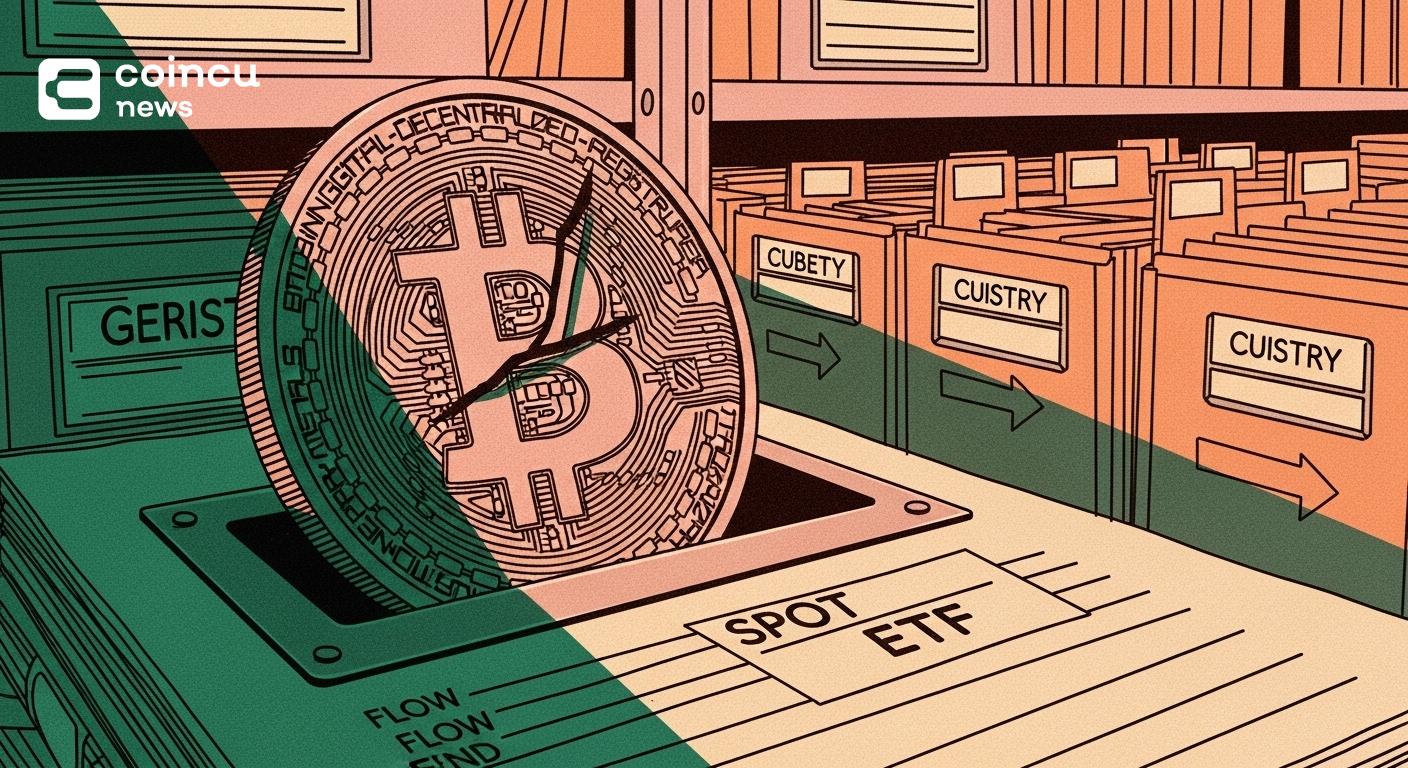
Intesa Sanpaolo spot Bitcoin ETF disclosure, hedged with MicroStrategy puts
Intesa Sanpaolo disclosed approximately $96 million in spot Bitcoin ETFs for the period ending December 2025. Based on data from MEXC News, the position was split roughly between ARK 21Shares and iShares Bitcoin Trust (IBIT), with about $72.6 million and $23.4 million respectively.
In parallel, the bank established a sizeable hedge using put options on MicroStrategy (MSTR). According to KuCoin News, the put options totaled about $184–185 million in notional exposure, indicating a structured approach to managing valuation and correlation risks relative to Bitcoin.
This pairing combines direct bitcoin price exposure via regulated ETFs with a defensive overlay tied to a Bitcoin-proxy equity that has historically traded at premiums or discounts to its implied Bitcoin-backed net asset value (NAV). The disclosure follows earlier, smaller test trades reported in 2025 and suggests a methodical scaling rather than a single-direction bet.
Why pair spot Bitcoin ETFs with MicroStrategy put options
MicroStrategy functions as a leveraged proxy on Bitcoin, but its equity can diverge from the value of its underlying BTC due to operating business value, leverage, and sentiment. A put hedge seeks to benefit if those premiums compress or if the stock underperforms its BTC-linked economics.
As reported by CoinDesk, “The bank also holds a large put option position on MicroStrategy, potentially capitalizing on the company trading above the value of its BTC holdings.” The mechanics align with a valuation-discipline overlay: own the underlying exposure through spot Bitcoin ETFs while hedging exuberance in a correlated proxy.
Consider a simple illustration. If Bitcoin rises 10% and IBIT tracks it closely, the ETF gains accordingly. If, at the same time, MicroStrategy’s premium to its BTC-backed NAV narrows, the put option can offset losses from that premium compression, stabilizing portfolio-level outcomes.
Conversely, if Bitcoin falls and MicroStrategy underperforms due to both BTC decline and premium normalization, puts can gain in value. The net effect is not a perfect hedge, but it reduces basis and sentiment risk introduced by a proxy equity whose valuation can detach from spot BTC.
Immediate implications for European banks, clients, and MiCA regulation
The structure signals a preference for regulated wrappers to access Bitcoin exposure, while recognizing idiosyncratic risks in correlated equities. According to Coindoo, the allocation is consistent with a broader European trend in adopting digital assets through ETFs and structured solutions.
For clients, the approach indicates growing availability of bank-mediated crypto exposure within established governance channels. For peers, it demonstrates how derivative overlays can reconcile client demand with internal risk thresholds under tightening regulatory expectations.
At the time of this writing, Bitcoin (BTC) trades near $67,641 amid elevated short-term volatility and a neutral momentum profile. This context helps frame the timing of hedged, rather than outright, directional positioning.
Regulatory and risk context under MiCA regulation
ETF wrappers vs direct crypto: operational and compliance considerations
MiCA provides a harmonized framework for crypto-asset services in the EU, guiding conduct, disclosures, and oversight for service providers. While MiCA does not itself authorize U.S.-listed spot Bitcoin ETFs, banks can still access them as financial instruments within their existing dealing, custody, and controls frameworks.
Operationally, ETF wrappers centralize custody and market operations at the fund level, simplifying onboarding, reconciliations, and audits compared with direct crypto custody. That distinction matters for enterprise controls, outsourcing oversight, and reconciliations across trading, risk, and finance.
Capital treatment, governance, and disclosure checkpoints
Hedges using listed equity options sit within established market-risk frameworks, whereas crypto exposures and proxies may attract conservative risk limits. Banks typically align these positions with board-approved risk appetite, model validation, and stress-testing routines.
Disclosures via periodic filings allow stakeholders to assess size, instrument mix, and risk mitigants. Under EU prudential regimes, governance emphasizes concentration limits, counterparty controls, and valuation reserves, especially where basis and liquidity risks can widen in stress.
FAQ about Intesa Sanpaolo spot Bitcoin ETF
How does a MicroStrategy put hedge profit if MSTR trades above or below its Bitcoin-backed NAV?
If MSTR’s premium compresses or the stock underperforms its BTC-implied value, puts can gain, offsetting proxy risk while the ETF tracks spot Bitcoin.
Which ETFs did Intesa buy and in what rough proportions (e.g., ARK 21Shares vs. iShares Bitcoin Trust)?
Roughly three-to-one toward ARK 21Shares versus IBIT, with about $72.6 million and $23.4 million respectively in the latest disclosed mix.
| DISCLAIMER: The information on this website is provided as general market commentary and does not constitute investment advice. We encourage you to do your own research before investing. |


Other Posts









- Amplify 2024: Ohio’s Premier Blockchain Summit
- Polymarket Announces U.S. Beta Relaunch Amid Market Buzz
- China, US Conclude Trade Talks with Focus on Cooperation
- Crypto Weekly: NYSE Backs OKX, Kraken Gets Fed Access, BTC Sells
- CELO holds as Celo reviews Opera 160M token claim
- DeriW Launches Edge Hour Trading Competition Platform for Derivatives Traders
- Michael Saylor Denies Bitcoin Sell-Off Amid Large BTC Transfer
- Court Upholds Fed’s Rejection of Custodia Bank’s Request
- EU Opens Antitrust Probe Into Deutsche Boerse and Nasdaq Derivatives Dealings
- Kazakhstan Explores Crypto Reserves Backed by National Funds
- JPMorgan Increases Holdings in BlackRock’s Bitcoin ETF
- Nordea Bank Introduces Bitcoin ETP Trading for Nordic Customers
- XRP Spot ETF Launches on Nasdaq Amid Market Fluctuations
- JPMorgan Chase Launches 24/7 Digital Deposit Token for Clients
- Crypto Leaders Address Macro Volatility Amid Market Shifts
- Former CFO Convicted for $35M Fraudulent Crypto Investment
- Peter Schiff Challenges Michael Saylor on MSTR’s Business Model
- Thailand Orders Worldcoin to Delete 1.2 Million Biometric Records
- UK Proposes New DeFi Tax Framework to Ease User Burden
- U.S. Treasury Proposes New Tax Relief Regulations
- Amplify 2024: Ohio’s Premier Blockchain Summit
- Polymarket Announces U.S. Beta Relaunch Amid Market Buzz
- China, US Conclude Trade Talks with Focus on Cooperation
- Crypto Weekly: NYSE Backs OKX, Kraken Gets Fed Access, BTC Sells
- CELO holds as Celo reviews Opera 160M token claim
- DeriW Launches Edge Hour Trading Competition Platform for Derivatives Traders
- Michael Saylor Denies Bitcoin Sell-Off Amid Large BTC Transfer
- Court Upholds Fed’s Rejection of Custodia Bank’s Request
- EU Opens Antitrust Probe Into Deutsche Boerse and Nasdaq Derivatives Dealings
- Kazakhstan Explores Crypto Reserves Backed by National Funds
- JPMorgan Increases Holdings in BlackRock’s Bitcoin ETF
- Nordea Bank Introduces Bitcoin ETP Trading for Nordic Customers
- XRP Spot ETF Launches on Nasdaq Amid Market Fluctuations
- JPMorgan Chase Launches 24/7 Digital Deposit Token for Clients
- Crypto Leaders Address Macro Volatility Amid Market Shifts
- Former CFO Convicted for $35M Fraudulent Crypto Investment
- Peter Schiff Challenges Michael Saylor on MSTR’s Business Model
- Thailand Orders Worldcoin to Delete 1.2 Million Biometric Records
- UK Proposes New DeFi Tax Framework to Ease User Burden
- U.S. Treasury Proposes New Tax Relief Regulations
- Amplify 2024: Ohio’s Premier Blockchain Summit
- Polymarket Announces U.S. Beta Relaunch Amid Market Buzz
- China, US Conclude Trade Talks with Focus on Cooperation
- Crypto Weekly: NYSE Backs OKX, Kraken Gets Fed Access, BTC Sells
- CELO holds as Celo reviews Opera 160M token claim
- DeriW Launches Edge Hour Trading Competition Platform for Derivatives Traders
- Michael Saylor Denies Bitcoin Sell-Off Amid Large BTC Transfer
- Court Upholds Fed’s Rejection of Custodia Bank’s Request
- EU Opens Antitrust Probe Into Deutsche Boerse and Nasdaq Derivatives Dealings
- Kazakhstan Explores Crypto Reserves Backed by National Funds
- JPMorgan Increases Holdings in BlackRock’s Bitcoin ETF
- Nordea Bank Introduces Bitcoin ETP Trading for Nordic Customers
- XRP Spot ETF Launches on Nasdaq Amid Market Fluctuations
- JPMorgan Chase Launches 24/7 Digital Deposit Token for Clients
- Crypto Leaders Address Macro Volatility Amid Market Shifts
- Former CFO Convicted for $35M Fraudulent Crypto Investment
- Peter Schiff Challenges Michael Saylor on MSTR’s Business Model
- Thailand Orders Worldcoin to Delete 1.2 Million Biometric Records
- UK Proposes New DeFi Tax Framework to Ease User Burden
- U.S. Treasury Proposes New Tax Relief Regulations
Latest

Wang Xiaoer Takes Partial Profit on Binance Life, Tops $470K in One Account

Bitcoin Core Developers Weigh BTC Freeze to Stop Quantum Hackers
Press Release

Bybit CEO Ben Zhou on Trust, AI, and the New Financial Platform at Paris Blockchain Week 2026

Bitunix Exchange Secures ISO 27001:2022 Certification, Reinforcing Strong Protection of User Data