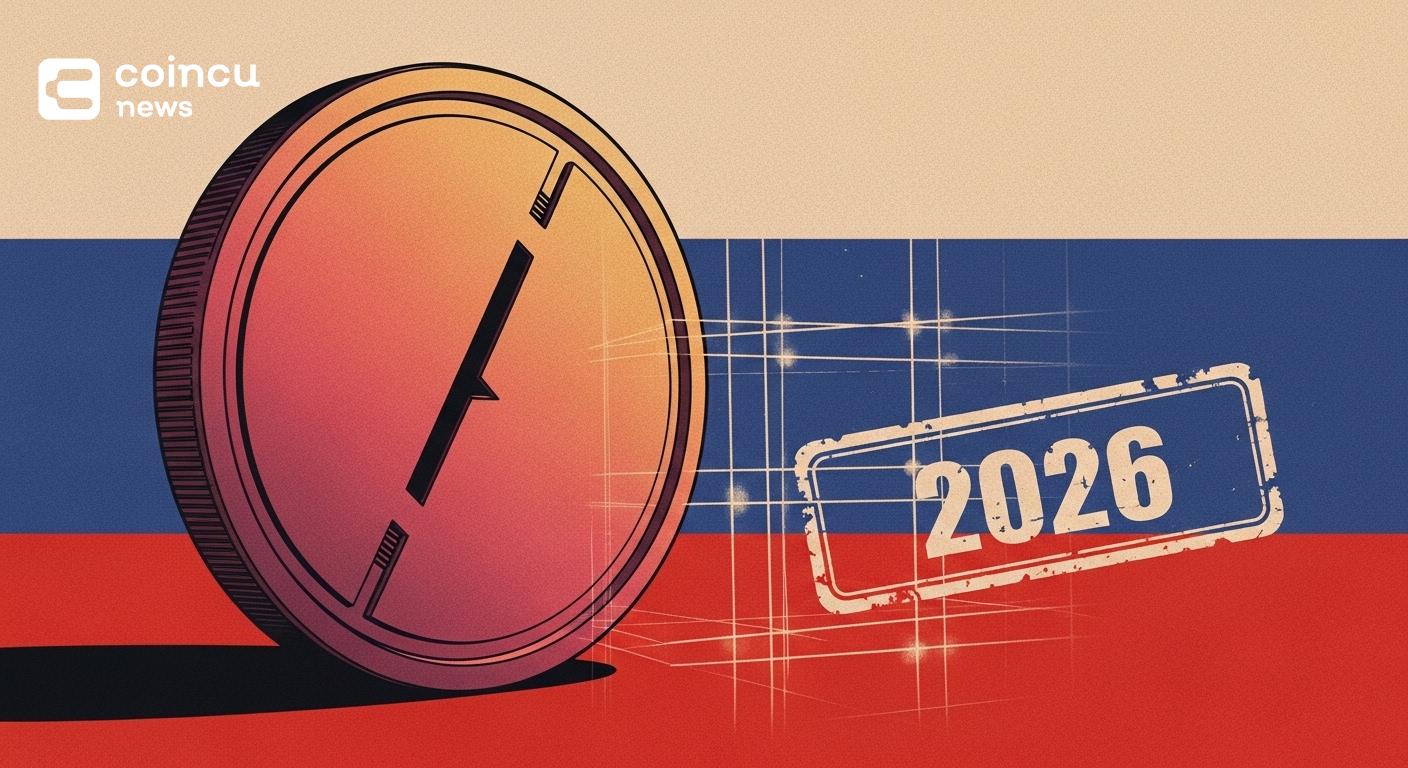
Russia crypto exchange ban 2026: foreign platforms may be blocked
Russia plans to block foreign cryptocurrency exchanges to promote regulated domestic platforms. Experts expect restrictions could begin as early as summer 2026, as reported by FinanceFeeds.
Separately, industry coverage suggests initial blocking steps could start this summer while rules are finalized, as reported by CCN. The policy goal is to shift activity to domestically regulated venues.
Why it matters: Moscow Exchange crypto platform and fee repatriation
The economic stakes are significant: Russian users pay about US$15 billion annually in fees to offshore exchanges, according to Sergey Shvetsov, chairman of the Moscow Exchange’s supervisory board. Domestic platforms aim to capture that revenue once the framework is in place.
Regulators estimate daily turnover around 50 billion rubles, roughly $648 million, with millions of domestic participants, according to the Ministry of Finance of the Russian Federation. Onshoring this activity could consolidate compliance oversight and repatriate fee flows.
A more permanent regulatory framework is targeted by July 1, 2026, as reported by CoinCentral. That timetable underpins the expectation that foreign platforms without a Russian license or approved intermediaries may face access blocks.
Lawmakers have also underscored the need for jurisdictional control over platforms serving Russians. “Rules are needed for the legal operation of crypto exchanges within Russia,” said Anton Gorelkin, First Deputy Chairman of the State Duma Committee on Information Policy, Technologies, and Communications.
Immediate impact: Russian crypto licensing requirements and user access changes
Foreign exchanges are expected to need a Russian license, local data storage, and full AML/CTF compliance to operate lawfully, according to legal analyst Ignat Likhunov. Platforms that fail data‑localization checks may be candidates for blocking.
Service continuity could be possible through approved intermediaries or Russian‑licensed brokerage infrastructure. Otherwise, users may see website access restrictions and be steered toward onshore venues as rules take effect.
For individuals, access may shift toward domestic platforms with standardized KYC, clearer tax reporting under Russian law, and fees paid to local operators. The actual user experience will depend on how domestic liquidity and product features develop.
At the time of this writing, Coinbase Global (COIN) traded near $164 in after‑hours, based on data from Yahoo Finance. This market snapshot is unrelated to Russian policy but frames broader crypto‑equity sentiment.
Enforcement methods, risks, and timeline uncertainty
How blocks could be implemented (DNS/DPI) and why effectiveness may be partial
Network‑level restrictions could involve DNS filtering and deep packet inspection to limit access to unlicensed exchange domains, according to analysts cited by Coinpedia. Some observers expect a Belarus‑style model permitting only certified domestic platforms, according to legal analyst Dmitry Machikhin of BitOK.
Such measures may be only partly effective, as users might attempt circumvention tools. Actual efficacy will depend on implementation scope and coordination with payment and app distribution channels.
Workarounds like VPNs, P2P, DEX carry legal and practical risks
Analysts warn that shifts into VPNs, peer‑to‑peer trades, or decentralized platforms could raise fraud exposure and fragment liquidity, as reported by Airdrops.com. Outcomes will depend on final rules and enforcement capacity.
Regulatory treatment remains uncertain, and attempting to bypass blocks may entail legal and practical risks under Russian law. Timing may also be staggered, with policy milestones preceding full technical enforcement.
FAQ about Russia crypto exchange ban 2026
Which foreign exchanges are likely to be blocked, and will any be exempt if they obtain a Russian license or use approved intermediaries?
Offshore platforms lacking a Russian license or data localization are likely targets. Exemptions may be possible if they obtain a license or operate via approved intermediaries.
How will the proposed ban change Russian users’ access, fees, KYC obligations, and taxation of crypto trading?
Access may migrate to domestic venues with standardized KYC and local data storage. Fees would be repatriated onshore, and tax reporting may standardize under Russian rules.
| DISCLAIMER: The information on this website is provided as general market commentary and does not constitute investment advice. We encourage you to do your own research before investing. |


Other Posts








- China, US Conclude Trade Talks with Focus on Cooperation
- Crypto Weekly: NYSE Backs OKX, Kraken Gets Fed Access, BTC Sells
- DeriW Launches Edge Hour Trading Competition Platform for Derivatives Traders
- Court Upholds Fed’s Rejection of Custodia Bank’s Request
- Former CFO Convicted for $35M Fraudulent Crypto Investment
- Michael Saylor Denies Bitcoin Sell-Off Amid Large BTC Transfer
- Buy Dogecoin on eToro: Step-by-Step Guide for Beginners (2024)
- Kazakhstan Explores Crypto Reserves Backed by National Funds
- JPMorgan Increases Holdings in BlackRock’s Bitcoin ETF
- Nordea Bank Introduces Bitcoin ETP Trading for Nordic Customers
- XRP Spot ETF Launches on Nasdaq Amid Market Fluctuations
- Crypto Leaders Address Macro Volatility Amid Market Shifts
- Peter Schiff Challenges Michael Saylor on MSTR’s Business Model
- Thailand Orders Worldcoin to Delete 1.2 Million Biometric Records
- UK Proposes New DeFi Tax Framework to Ease User Burden
- WLFI Under Fire: Analyst Warns Hyperliquid Could Be Next
- Ancient Ethereum Whale Moves $1.19 Billion After Decade
- BlackRock Receives Large Crypto Transfers from Coinbase
- SEC Scrutiny on ALT5 Sigma’s Leadership Disclosure Timing
- MoonPay Gains Trust License for Crypto Operations in New York
- China, US Conclude Trade Talks with Focus on Cooperation
- Crypto Weekly: NYSE Backs OKX, Kraken Gets Fed Access, BTC Sells
- DeriW Launches Edge Hour Trading Competition Platform for Derivatives Traders
- Court Upholds Fed’s Rejection of Custodia Bank’s Request
- Former CFO Convicted for $35M Fraudulent Crypto Investment
- Michael Saylor Denies Bitcoin Sell-Off Amid Large BTC Transfer
- Buy Dogecoin on eToro: Step-by-Step Guide for Beginners (2024)
- Kazakhstan Explores Crypto Reserves Backed by National Funds
- JPMorgan Increases Holdings in BlackRock’s Bitcoin ETF
- Nordea Bank Introduces Bitcoin ETP Trading for Nordic Customers
- XRP Spot ETF Launches on Nasdaq Amid Market Fluctuations
- Crypto Leaders Address Macro Volatility Amid Market Shifts
- Peter Schiff Challenges Michael Saylor on MSTR’s Business Model
- Thailand Orders Worldcoin to Delete 1.2 Million Biometric Records
- UK Proposes New DeFi Tax Framework to Ease User Burden
- WLFI Under Fire: Analyst Warns Hyperliquid Could Be Next
- Ancient Ethereum Whale Moves $1.19 Billion After Decade
- BlackRock Receives Large Crypto Transfers from Coinbase
- SEC Scrutiny on ALT5 Sigma’s Leadership Disclosure Timing
- MoonPay Gains Trust License for Crypto Operations in New York
- China, US Conclude Trade Talks with Focus on Cooperation
- Crypto Weekly: NYSE Backs OKX, Kraken Gets Fed Access, BTC Sells
- DeriW Launches Edge Hour Trading Competition Platform for Derivatives Traders
- Court Upholds Fed’s Rejection of Custodia Bank’s Request
- Former CFO Convicted for $35M Fraudulent Crypto Investment
- Michael Saylor Denies Bitcoin Sell-Off Amid Large BTC Transfer
- Buy Dogecoin on eToro: Step-by-Step Guide for Beginners (2024)
- Kazakhstan Explores Crypto Reserves Backed by National Funds
- JPMorgan Increases Holdings in BlackRock’s Bitcoin ETF
- Nordea Bank Introduces Bitcoin ETP Trading for Nordic Customers
- XRP Spot ETF Launches on Nasdaq Amid Market Fluctuations
- Crypto Leaders Address Macro Volatility Amid Market Shifts
- Peter Schiff Challenges Michael Saylor on MSTR’s Business Model
- Thailand Orders Worldcoin to Delete 1.2 Million Biometric Records
- UK Proposes New DeFi Tax Framework to Ease User Burden
- WLFI Under Fire: Analyst Warns Hyperliquid Could Be Next
- Ancient Ethereum Whale Moves $1.19 Billion After Decade
- BlackRock Receives Large Crypto Transfers from Coinbase
- SEC Scrutiny on ALT5 Sigma’s Leadership Disclosure Timing
- MoonPay Gains Trust License for Crypto Operations in New York




Toss Brings 30 Million Users Into the AI Data Economy in Partnership With Poseidon

The DATA Foundation Launches to Tackle AI’s Multi-Billion Dollar Training Data Bottleneck