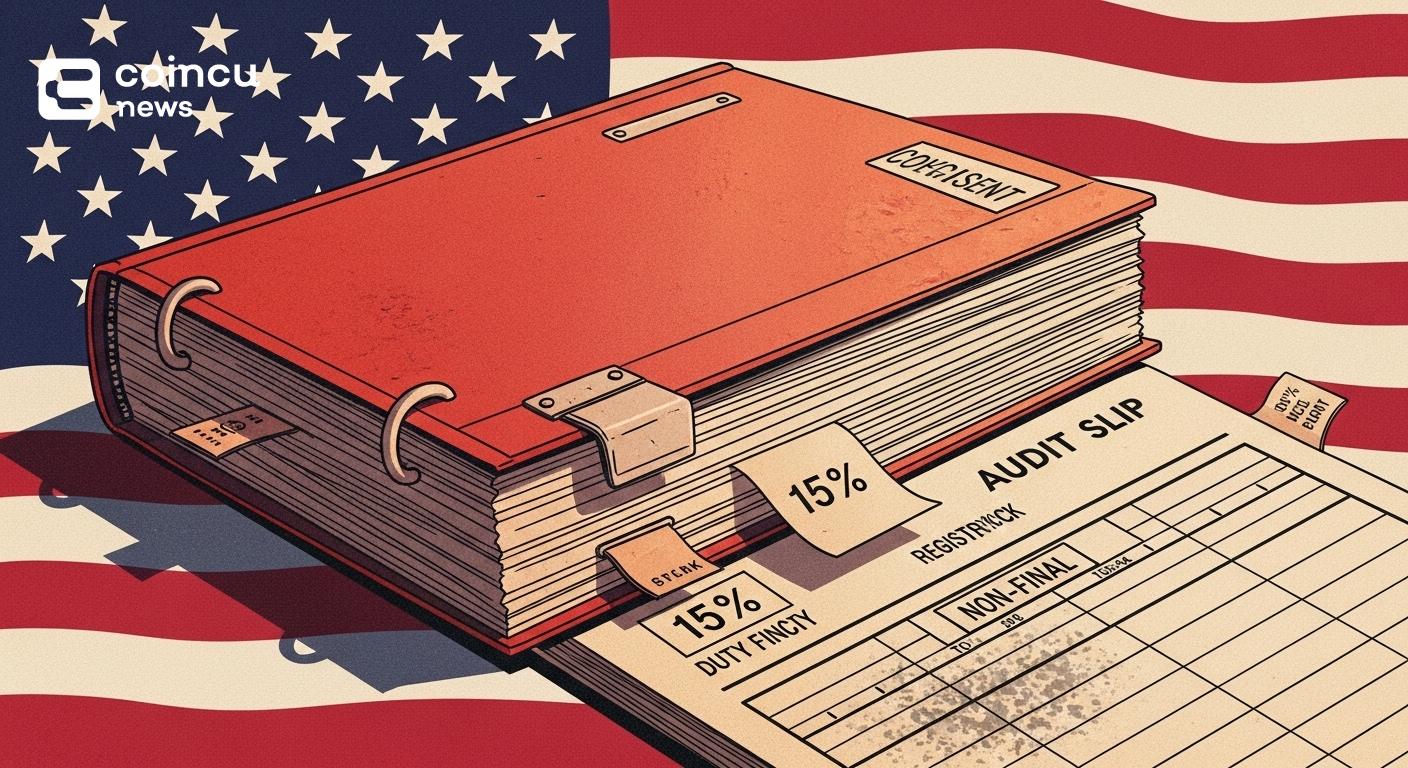
15% global tariff relies on Section 122; legality contested
President Donald Trump moved to lift the baseline global tariff from 10% to 15% after the supreme court’s Feb. 20 ruling against his emergency tariffs, according to USA Today. The White House is now leaning on Section 122 of the Trade Act to justify a uniform, time-limited increase.
The legal pivot follows a decision that struck down tariffs imposed under the International Emergency Economic Powers Act (IEEPA), as analyzed by the Council on Foreign Relations. Section 122 instead ties presidential tariff authority to balance-of-payments conditions and sets procedural limits distinct from national emergency powers.
Chatham House has warned that deploying Section 122 at a global 15% scale is untested and likely to face litigation. Legal exposure stems from the statute’s specific balance-of-payments trigger and the temporary nature of any unilateral increase.
Why a 15% global tariff matters for prices and growth
Raising the baseline tariff lifts import costs across broad categories and could be passed through to consumer prices. The resulting squeeze on margins may also trim capital spending and slow real GDP growth.
Based on data from Global Trade Alert, a 15% setting could lift the U.S. trade-weighted average tariff to roughly 13.2%, compared with about 11.6% at 10%, and far above ~3% pre-2025. A higher average magnifies cost pressures for import-intensive sectors.
As reported by CNBC, economists at the American Enterprise Institute criticized the tariff formula’s import-elasticity assumptions, arguing that corrected inputs would keep most country rates at or near the baseline. That critique speaks to exposure distribution, not the aggregate burden.
Immediate business impact and trade-deal friction after SCOTUS decision
From the EU to Vietnam to the UK and India, multiple partners had signed or finalized trade deals with the United States, as reported by Al Jazeera. The 15% baseline introduces friction with those commitments, and USTR Jamieson Greer has indicated that other authorities (Sections 232 and 301) remain available.
It began as a week of trade wins, with Japan committing $36 billion in U.S. investments, before the tariff escalation reshaped the narrative, according to The New York Times. The turnabout complicates procurement calendars, contract pricing, and inventory planning.
As reported by The Guardian, the British Chambers of Commerce warned the 5% step-up will be harmful for transatlantic trade and consumers, adding to uncertainty. Companies now face compliance rewrites, renegotiations, and potential retaliation risks.
At the time of this writing, Apple Inc. traded at 261.40, up 0.31%, based on data from NasdaqGS – Nasdaq Real Time Price. This offers market context while policy details evolve.
What to watch: timelines, legal risk, and inflation signals
Section 122 of the Trade Act: 150-day limit and Congress
Section 122 permits temporary, across-the-board tariffs to address balance-of-payments pressures but generally caps measures at 150 days unless Congress extends. If lawmakers do not act, rates would be expected to revert. Litigation timelines and agency guidance could compress effective duration.
Balance-of-payments deficit debate; notes from Gita Gopinath, Goldman Sachs
The statute contemplates a large and serious balance-of-payments deficit, which is economically distinct from a trade deficit. Expect court filings to test whether this threshold is met while markets track pass-through to import prices and CPI.
“Trade deficits are distinct from balance-of-payments deficits,” said Gita Gopinath, former IMF Chief Economist, emphasizing the legal significance of Section 122’s precondition.
FAQ about Section 122 of the Trade Act
How will a 15% global tariff affect U.S. inflation, consumer prices, and GDP growth?
Higher import costs can lift goods inflation and compress margins, potentially slowing growth. Magnitudes depend on pass-through, demand elasticity, and policy duration.
What happens after the 150-day limit under Section 122 if Congress does not act?
Absent congressional extension, Section 122 measures expire, and tariff rates would be expected to revert. Ongoing litigation or guidance could alter timing.
| DISCLAIMER: The information on this website is provided as general market commentary and does not constitute investment advice. We encourage you to do your own research before investing. |


Other Posts








- Amplify 2024: Ohio’s Premier Blockchain Summit
- Polymarket Announces U.S. Beta Relaunch Amid Market Buzz
- China, US Conclude Trade Talks with Focus on Cooperation
- Crypto Weekly: NYSE Backs OKX, Kraken Gets Fed Access, BTC Sells
- CELO holds as Celo reviews Opera 160M token claim
- DeriW Launches Edge Hour Trading Competition Platform for Derivatives Traders
- Michael Saylor Denies Bitcoin Sell-Off Amid Large BTC Transfer
- Court Upholds Fed’s Rejection of Custodia Bank’s Request
- EU Opens Antitrust Probe Into Deutsche Boerse and Nasdaq Derivatives Dealings
- Kazakhstan Explores Crypto Reserves Backed by National Funds
- JPMorgan Increases Holdings in BlackRock’s Bitcoin ETF
- Nordea Bank Introduces Bitcoin ETP Trading for Nordic Customers
- XRP Spot ETF Launches on Nasdaq Amid Market Fluctuations
- JPMorgan Chase Launches 24/7 Digital Deposit Token for Clients
- Crypto Leaders Address Macro Volatility Amid Market Shifts
- Former CFO Convicted for $35M Fraudulent Crypto Investment
- Peter Schiff Challenges Michael Saylor on MSTR’s Business Model
- Thailand Orders Worldcoin to Delete 1.2 Million Biometric Records
- UK Proposes New DeFi Tax Framework to Ease User Burden
- U.S. Treasury Proposes New Tax Relief Regulations
- Amplify 2024: Ohio’s Premier Blockchain Summit
- Polymarket Announces U.S. Beta Relaunch Amid Market Buzz
- China, US Conclude Trade Talks with Focus on Cooperation
- Crypto Weekly: NYSE Backs OKX, Kraken Gets Fed Access, BTC Sells
- CELO holds as Celo reviews Opera 160M token claim
- DeriW Launches Edge Hour Trading Competition Platform for Derivatives Traders
- Michael Saylor Denies Bitcoin Sell-Off Amid Large BTC Transfer
- Court Upholds Fed’s Rejection of Custodia Bank’s Request
- EU Opens Antitrust Probe Into Deutsche Boerse and Nasdaq Derivatives Dealings
- Kazakhstan Explores Crypto Reserves Backed by National Funds
- JPMorgan Increases Holdings in BlackRock’s Bitcoin ETF
- Nordea Bank Introduces Bitcoin ETP Trading for Nordic Customers
- XRP Spot ETF Launches on Nasdaq Amid Market Fluctuations
- JPMorgan Chase Launches 24/7 Digital Deposit Token for Clients
- Crypto Leaders Address Macro Volatility Amid Market Shifts
- Former CFO Convicted for $35M Fraudulent Crypto Investment
- Peter Schiff Challenges Michael Saylor on MSTR’s Business Model
- Thailand Orders Worldcoin to Delete 1.2 Million Biometric Records
- UK Proposes New DeFi Tax Framework to Ease User Burden
- U.S. Treasury Proposes New Tax Relief Regulations
- Amplify 2024: Ohio’s Premier Blockchain Summit
- Polymarket Announces U.S. Beta Relaunch Amid Market Buzz
- China, US Conclude Trade Talks with Focus on Cooperation
- Crypto Weekly: NYSE Backs OKX, Kraken Gets Fed Access, BTC Sells
- CELO holds as Celo reviews Opera 160M token claim
- DeriW Launches Edge Hour Trading Competition Platform for Derivatives Traders
- Michael Saylor Denies Bitcoin Sell-Off Amid Large BTC Transfer
- Court Upholds Fed’s Rejection of Custodia Bank’s Request
- EU Opens Antitrust Probe Into Deutsche Boerse and Nasdaq Derivatives Dealings
- Kazakhstan Explores Crypto Reserves Backed by National Funds
- JPMorgan Increases Holdings in BlackRock’s Bitcoin ETF
- Nordea Bank Introduces Bitcoin ETP Trading for Nordic Customers
- XRP Spot ETF Launches on Nasdaq Amid Market Fluctuations
- JPMorgan Chase Launches 24/7 Digital Deposit Token for Clients
- Crypto Leaders Address Macro Volatility Amid Market Shifts
- Former CFO Convicted for $35M Fraudulent Crypto Investment
- Peter Schiff Challenges Michael Saylor on MSTR’s Business Model
- Thailand Orders Worldcoin to Delete 1.2 Million Biometric Records
- UK Proposes New DeFi Tax Framework to Ease User Burden
- U.S. Treasury Proposes New Tax Relief Regulations
Latest

US Government Deposits 8.2 BTC to Coinbase Prime, Raising Market Questions


Deribit BTC Options Expiry: $2.15B Set for Feb. 6 as Puts Lead
Press Release
Crypto News Today: DOGEBALL Presale Hits $200K as FLOKI and WIF Face Key Resistance Levels

Tyga Enters 1win VIP Program, as Platform Blends Crypto and Entertainment