Yes: The AI investment craze can lift the neutral rate now
The neutral rate (r-star) is the real short-term interest rate consistent with full employment and stable inflation. It is unobservable and estimated, and it can shift with structural forces.
An AI-driven buildout, data centers, semiconductor fabrication, networking, and supporting infrastructure, requires heavy upfront capex. When investment demand outpaces available savings, equilibrium real rates tend to rise in the near term.
Energy and compute constraints also matter. Power-hungry data centers, grid bottlenecks, and higher utility investment can add transitory price pressure, nudging the neutral real rate higher until supply expands.
Why a higher neutral rate matters for Fed cuts now
If r-star is rising, a given policy rate becomes less restrictive than assumed. Cutting too early risks easing toward an equilibrium that has moved up, complicating disinflation management.
According to the Financial Times, federal reserve Vice Chair for Supervision Michael S. Barr has modestly raised his r-star estimate and argues that stronger productivity can lift investment demand and reduce precautionary saving, pushing the neutral rate higher.
Productivity benefits from AI may take time to register, while spending and energy needs arrive upfront. That asymmetry argues for caution on timing and pace of rate cuts.
Immediate signals in the AI investment boom to watch
Track large-scale capex in data centers, chip manufacturing, and cloud networks. Rising order books and a bigger share of private nonresidential investment would signal stronger demand for funds and upward pressure on real rates.
Monitor energy intensity. Data-center electricity usage, interconnection queues, and utility capex plans can create near-term inflation impulses, reinforcing a higher-for-longer stance until capacity catches up.
Watch productivity and real yields. Sustained gains in labor and total factor productivity alongside firm inflation expectations can coexist with higher equilibrium real rates.
As contextual market background at the time of this writing, equity narratives remain tied to AI infrastructure demand. As reported by Yahoo Finance: “Nvidia is poised for strong Q4 earnings, driven by significant demand for its datacenter chips amid the AI boom.” At the time of this writing, NVIDIA Corporation (NVDA) traded near 190.10, based on data from Nasdaq.
What officials say: Barr, Kashkari, and the r-star debate
Recent remarks: Barr modestly raised r-star estimate; Kashkari sees AI lifting neutral rate
Michael S. Barr has emphasized that AI’s long-run productivity promise does not, by itself, justify easier policy now; he has also modestly raised his r-star estimate in light of recent trends.
As reported by AInvest, Neel Kashkari has said AI-related investments are probably pushing the neutral rate higher, implying that what counts as “neutral” in policy terms may be shifting.
Transmission channels: investment demand, productivity shifts, savings behavior, energy and compute constraints
Investment demand rises as firms finance data centers, fabs, and networking buildouts, lifting equilibrium real rates if savings do not keep pace. Productivity gains can reduce precautionary saving, reinforcing that effect.
Energy and compute constraints, electricity supply, cooling, and grid upgrades, can add near-term inflation pressure, requiring tighter settings until infrastructure expands.
According to Vanguard research, the neutral rate may be higher over the coming decade, with policy rates expected to remain above 4% even in optimistic scenarios that include AI adoption.
FAQ about neutral rate (r-star)
How do data center and semiconductor capex translate into higher real interest rates?
They raise investment demand for funds. If available savings do not match, equilibrium real rates rise to balance markets, especially when energy and infrastructure constraints add costs.
What are Federal Reserve officials currently saying about AI and the neutral rate?
Some, including Michael S. Barr and Neel Kashkari, see AI-related investment likely lifting r-star. Others caution the near-term impact is modest and uncertain.
| DISCLAIMER: The information on this website is provided as general market commentary and does not constitute investment advice. We encourage you to do your own research before investing. |


Other Posts








- Amplify 2024: Ohio’s Premier Blockchain Summit
- Polymarket Announces U.S. Beta Relaunch Amid Market Buzz
- China, US Conclude Trade Talks with Focus on Cooperation
- Crypto Weekly: NYSE Backs OKX, Kraken Gets Fed Access, BTC Sells
- CELO holds as Celo reviews Opera 160M token claim
- DeriW Launches Edge Hour Trading Competition Platform for Derivatives Traders
- Michael Saylor Denies Bitcoin Sell-Off Amid Large BTC Transfer
- Court Upholds Fed’s Rejection of Custodia Bank’s Request
- EU Opens Antitrust Probe Into Deutsche Boerse and Nasdaq Derivatives Dealings
- Kazakhstan Explores Crypto Reserves Backed by National Funds
- JPMorgan Increases Holdings in BlackRock’s Bitcoin ETF
- Nordea Bank Introduces Bitcoin ETP Trading for Nordic Customers
- XRP Spot ETF Launches on Nasdaq Amid Market Fluctuations
- JPMorgan Chase Launches 24/7 Digital Deposit Token for Clients
- Crypto Leaders Address Macro Volatility Amid Market Shifts
- Former CFO Convicted for $35M Fraudulent Crypto Investment
- Peter Schiff Challenges Michael Saylor on MSTR’s Business Model
- Thailand Orders Worldcoin to Delete 1.2 Million Biometric Records
- UK Proposes New DeFi Tax Framework to Ease User Burden
- U.S. Treasury Proposes New Tax Relief Regulations
- Amplify 2024: Ohio’s Premier Blockchain Summit
- Polymarket Announces U.S. Beta Relaunch Amid Market Buzz
- China, US Conclude Trade Talks with Focus on Cooperation
- Crypto Weekly: NYSE Backs OKX, Kraken Gets Fed Access, BTC Sells
- CELO holds as Celo reviews Opera 160M token claim
- DeriW Launches Edge Hour Trading Competition Platform for Derivatives Traders
- Michael Saylor Denies Bitcoin Sell-Off Amid Large BTC Transfer
- Court Upholds Fed’s Rejection of Custodia Bank’s Request
- EU Opens Antitrust Probe Into Deutsche Boerse and Nasdaq Derivatives Dealings
- Kazakhstan Explores Crypto Reserves Backed by National Funds
- JPMorgan Increases Holdings in BlackRock’s Bitcoin ETF
- Nordea Bank Introduces Bitcoin ETP Trading for Nordic Customers
- XRP Spot ETF Launches on Nasdaq Amid Market Fluctuations
- JPMorgan Chase Launches 24/7 Digital Deposit Token for Clients
- Crypto Leaders Address Macro Volatility Amid Market Shifts
- Former CFO Convicted for $35M Fraudulent Crypto Investment
- Peter Schiff Challenges Michael Saylor on MSTR’s Business Model
- Thailand Orders Worldcoin to Delete 1.2 Million Biometric Records
- UK Proposes New DeFi Tax Framework to Ease User Burden
- U.S. Treasury Proposes New Tax Relief Regulations
- Amplify 2024: Ohio’s Premier Blockchain Summit
- Polymarket Announces U.S. Beta Relaunch Amid Market Buzz
- China, US Conclude Trade Talks with Focus on Cooperation
- Crypto Weekly: NYSE Backs OKX, Kraken Gets Fed Access, BTC Sells
- CELO holds as Celo reviews Opera 160M token claim
- DeriW Launches Edge Hour Trading Competition Platform for Derivatives Traders
- Michael Saylor Denies Bitcoin Sell-Off Amid Large BTC Transfer
- Court Upholds Fed’s Rejection of Custodia Bank’s Request
- EU Opens Antitrust Probe Into Deutsche Boerse and Nasdaq Derivatives Dealings
- Kazakhstan Explores Crypto Reserves Backed by National Funds
- JPMorgan Increases Holdings in BlackRock’s Bitcoin ETF
- Nordea Bank Introduces Bitcoin ETP Trading for Nordic Customers
- XRP Spot ETF Launches on Nasdaq Amid Market Fluctuations
- JPMorgan Chase Launches 24/7 Digital Deposit Token for Clients
- Crypto Leaders Address Macro Volatility Amid Market Shifts
- Former CFO Convicted for $35M Fraudulent Crypto Investment
- Peter Schiff Challenges Michael Saylor on MSTR’s Business Model
- Thailand Orders Worldcoin to Delete 1.2 Million Biometric Records
- UK Proposes New DeFi Tax Framework to Ease User Burden
- U.S. Treasury Proposes New Tax Relief Regulations
Latest



Binance Alpha GENIUS Airdrop Delay: What Binance Wallet Confirmed
Press Release
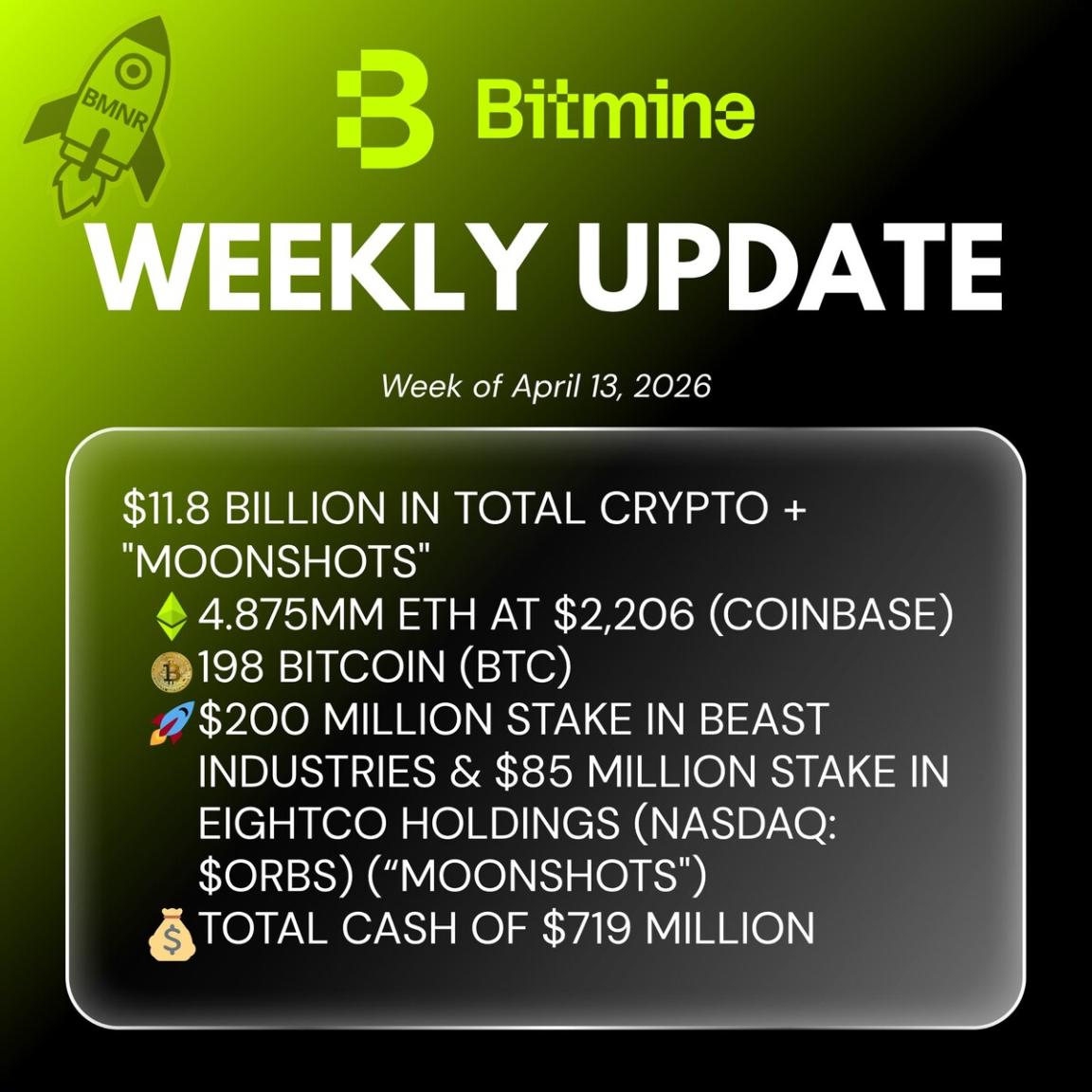
Bitmine Immersion Technologies (BMNR) Announces ETH Holdings Reach 4.875 Million Tokens, and Total Crypto and Total Cash Holdings of $11.8 Billion

Cango’s HPC and AI Inference Subsidiary, EcoHash, Begins Commercial Operations