Bitcoin Posts Third-Worst Q1 Since 2013 as Macro Pressure Weighs
Key Insights:
- Bitcoin fell 23% in Q1 2026, marking its third-worst first-quarter performance since 2013.
- About 9.09 million BTC, or 46% of supply, remain underwater amid price declines.
- Short positions near $67,482 could trigger $20.5M liquidations as traders monitor market stress closely.

Bitcoin recorded one of its weakest first quarters in more than a decade as macro pressure weighed on the market. The asset fell about 23% in Q1 2026, marking its third worst start to a year since 2013. Market data shows only 2014 and 2018 posted deeper first-quarter losses.
Bitcoin Posts Third-Worst Q1 Since 2013
Data from CoinGlass shows Bitcoin dropped roughly 23% in the first quarter of 2026. That performance ranks as the third-worst Q1 result since 2013. The only weaker first quarters occurred during 2014 and 2018. Both years followed strong rallies and led into extended bear markets.
Market participants noted that past sharp Q1 declines came during deep correction phases. Those periods later reset valuations before the next upward cycle. Current price action reflects broad market stress rather than network failure. Analysts point to tighter liquidity conditions and risk-off sentiment across global markets.
At the time of reporting, Bitcoin traded at $66,506.88. The 24-hour trading volume stood at $39.6 billion, with the asset declining 0.07% over the past day. Despite the quarterly drop, trading activity remains active across major exchanges.
Liquidations and Underwater Supply Add Pressure
However, On-chain and derivatives data show increased stress among traders. Analyst Ali Charts indicated that a jump to $67,482 could liquidate $20.5 million in Bitcoin $BTC short positions. This level has drawn attention from short-term traders watching resistance zones.
Meanwhile, according to The Moon Show, “About 9.09 million Bitcoin are underwater right now.” That figure represents around 46% of the circulating supply. Coins are considered underwater when their current price is below the purchase price.
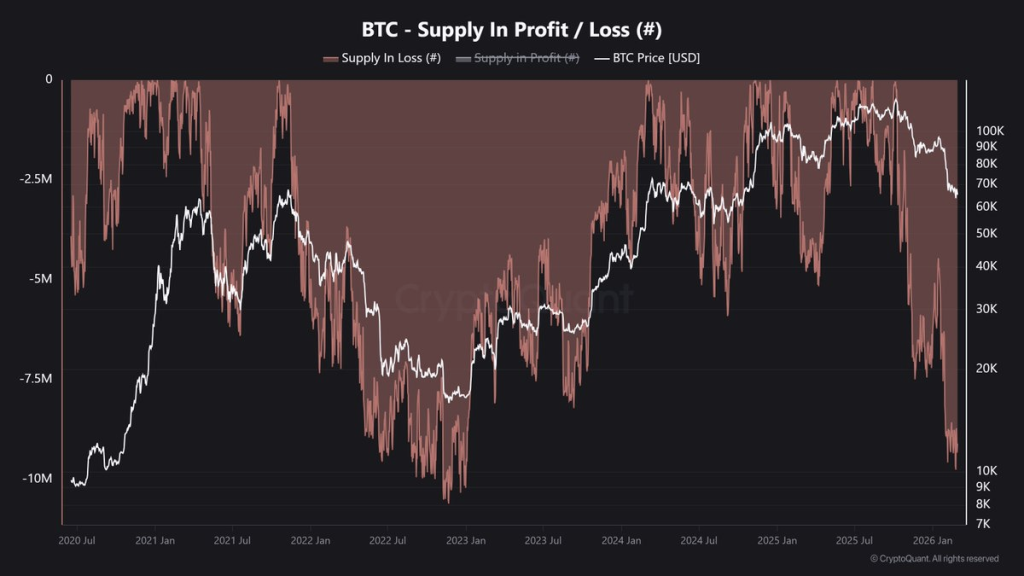
Market observers link the recent weakness to macro pressure and geopolitical volatility. Investors have reduced leverage, and many have adjusted positions amid global uncertainty. Liquidity conditions remain a key factor in short-term price direction.
Historical data suggests extreme Q1 losses often occur during late-stage fear rather than early-cycle strength. However, market direction will depend on capital flows and broader economic trends.
| DISCLAIMER: The information on this website is provided as general market commentary and does not constitute investment advice. We encourage you to do your own research before investing. |


Other Posts









- Amplify 2024: Ohio’s Premier Blockchain Summit
- Polymarket Announces U.S. Beta Relaunch Amid Market Buzz
- China, US Conclude Trade Talks with Focus on Cooperation
- Crypto Weekly: NYSE Backs OKX, Kraken Gets Fed Access, BTC Sells
- CELO holds as Celo reviews Opera 160M token claim
- DeriW Launches Edge Hour Trading Competition Platform for Derivatives Traders
- Michael Saylor Denies Bitcoin Sell-Off Amid Large BTC Transfer
- Court Upholds Fed’s Rejection of Custodia Bank’s Request
- EU Opens Antitrust Probe Into Deutsche Boerse and Nasdaq Derivatives Dealings
- Kazakhstan Explores Crypto Reserves Backed by National Funds
- JPMorgan Increases Holdings in BlackRock’s Bitcoin ETF
- Nordea Bank Introduces Bitcoin ETP Trading for Nordic Customers
- XRP Spot ETF Launches on Nasdaq Amid Market Fluctuations
- JPMorgan Chase Launches 24/7 Digital Deposit Token for Clients
- Crypto Leaders Address Macro Volatility Amid Market Shifts
- Former CFO Convicted for $35M Fraudulent Crypto Investment
- Peter Schiff Challenges Michael Saylor on MSTR’s Business Model
- Thailand Orders Worldcoin to Delete 1.2 Million Biometric Records
- UK Proposes New DeFi Tax Framework to Ease User Burden
- U.S. Treasury Proposes New Tax Relief Regulations
- Amplify 2024: Ohio’s Premier Blockchain Summit
- Polymarket Announces U.S. Beta Relaunch Amid Market Buzz
- China, US Conclude Trade Talks with Focus on Cooperation
- Crypto Weekly: NYSE Backs OKX, Kraken Gets Fed Access, BTC Sells
- CELO holds as Celo reviews Opera 160M token claim
- DeriW Launches Edge Hour Trading Competition Platform for Derivatives Traders
- Michael Saylor Denies Bitcoin Sell-Off Amid Large BTC Transfer
- Court Upholds Fed’s Rejection of Custodia Bank’s Request
- EU Opens Antitrust Probe Into Deutsche Boerse and Nasdaq Derivatives Dealings
- Kazakhstan Explores Crypto Reserves Backed by National Funds
- JPMorgan Increases Holdings in BlackRock’s Bitcoin ETF
- Nordea Bank Introduces Bitcoin ETP Trading for Nordic Customers
- XRP Spot ETF Launches on Nasdaq Amid Market Fluctuations
- JPMorgan Chase Launches 24/7 Digital Deposit Token for Clients
- Crypto Leaders Address Macro Volatility Amid Market Shifts
- Former CFO Convicted for $35M Fraudulent Crypto Investment
- Peter Schiff Challenges Michael Saylor on MSTR’s Business Model
- Thailand Orders Worldcoin to Delete 1.2 Million Biometric Records
- UK Proposes New DeFi Tax Framework to Ease User Burden
- U.S. Treasury Proposes New Tax Relief Regulations
- Amplify 2024: Ohio’s Premier Blockchain Summit
- Polymarket Announces U.S. Beta Relaunch Amid Market Buzz
- China, US Conclude Trade Talks with Focus on Cooperation
- Crypto Weekly: NYSE Backs OKX, Kraken Gets Fed Access, BTC Sells
- CELO holds as Celo reviews Opera 160M token claim
- DeriW Launches Edge Hour Trading Competition Platform for Derivatives Traders
- Michael Saylor Denies Bitcoin Sell-Off Amid Large BTC Transfer
- Court Upholds Fed’s Rejection of Custodia Bank’s Request
- EU Opens Antitrust Probe Into Deutsche Boerse and Nasdaq Derivatives Dealings
- Kazakhstan Explores Crypto Reserves Backed by National Funds
- JPMorgan Increases Holdings in BlackRock’s Bitcoin ETF
- Nordea Bank Introduces Bitcoin ETP Trading for Nordic Customers
- XRP Spot ETF Launches on Nasdaq Amid Market Fluctuations
- JPMorgan Chase Launches 24/7 Digital Deposit Token for Clients
- Crypto Leaders Address Macro Volatility Amid Market Shifts
- Former CFO Convicted for $35M Fraudulent Crypto Investment
- Peter Schiff Challenges Michael Saylor on MSTR’s Business Model
- Thailand Orders Worldcoin to Delete 1.2 Million Biometric Records
- UK Proposes New DeFi Tax Framework to Ease User Burden
- U.S. Treasury Proposes New Tax Relief Regulations
Latest

Bio Protocol Multisig Wallet Transfers 80M BIO to CEX Worth $5.15M

Press Release

SHRMiner Lights Up London’s Piccadilly Circus, Propelling AI Cloud Mining into the Mainstream Spotlight

VerifyVASP acquires Sygna, consolidating the global Travel Rule network