





Why Trump’s Iran strategy signals rising U.S.-Iran tensions
Donald Trump’s renewed posture toward Tehran, framed by claims the Iran situation will become even more unsettled, signals a higher-risk phase in U.S.-Iran relations.
As reported by Moneycontrol, authorizing a major attack on iran mattered abroad and at home, where reactions within his political base underscored the domestic costs of escalation (https://www.moneycontrol.com/world/why-trump-s-iran-strike-is-unsettling-parts-of-his-own-political-base-article-13848525.html/amp).
The Washington Post notes the United States has a fraught record toppling autocratic regimes and securing stable outcomes, even when it has a day-after plan, raising questions about endgames and exit strategies (https://www.washingtonpost.com/national-security/2026/03/02/iran-regime-change-trump/).
Why it matters: Strait of Hormuz, markets, regional spillover
The Week has warned that even narrow strikes risk proxy retaliation that could threaten shipping through the Strait of Hormuz, a chokepoint for global oil flows (https://theweek.com/politics/risks-attack-iran-middle-east-war?utm_source=openai).
CNBC reported airline stocks led losses in Asia as Middle East airspace disruptions and airport closures unsettled travel markets, while oil prices climbed (https://www.cnbc.com/2026/03/02/asia-markets-live-trump-iran-oil-prices-nikkei-hang-seng-us-israel-strikes-oil.html). At the time of this writing, Exxon Mobil (XOM) traded at 153.75, up 0.82%, based on data from Yahoo Scout.
According to the Korea Times, the killing of Iran’s Supreme Leader Ayatollah Ali Khamenei in a joint U.S.-Israeli operation is likely to cast a shadow over diplomatic tracks, including prospective Trump–Kim talks (https://www.koreatimes.co.kr/amp/foreignaffairs/northkorea/20260302/us-strike-on-iran-dampens-prospects-for-trump-kim-talks-in-april).
Immediate impacts: proxies, aviation, oil prices, and Congress
TRT World has highlighted expert warnings that even limited U.S. or Israeli actions could trigger multi-front responses via Iran’s proxies, Hezbollah in Lebanon, the Houthis in Yemen, and Iraqi militias, widening risk to trade routes and energy flows (https://www.trtworld.com/article/0e2b562b826d/amp?utm_source=openai).
Aviation risk centers on reroutings and intermittent airspace restrictions that complicate flight planning and insurance, with knock-on effects for schedules and costs.
Oil tends to spike on perceived supply risk from Hormuz, with energy equities reacting to both geopolitical headlines and fundamentals; the durability of price moves depends on the scale and duration of disruption.
Operational tempo also raises questions for Congress about authorizing U.S. military action and oversight, especially if operations expand or persist.
Officials have framed recent strikes as bounded and focused on specific capabilities, while rejecting regime change as an objective. As reported by AP news, Defense Secretary Pete Hegseth said the conflict is not “endless,” signaling intent to limit scope (https://apnews.com/article/85f4139b11e5191d880a6e114e1b5a62?utm_source=openai).
Escalation paths and UN-led de-escalation off-ramps
IRGC posture and proxy flashpoints: Hezbollah, Houthis, Iraqi militias
The Islamic Revolutionary Guard Corps (IRGC) can calibrate responses through deniable, geographically dispersed actions. Likely flashpoints include Hezbollah–Israel exchanges, Houthi maritime harassment in the Red Sea, and Iraqi militia strikes on U.S. facilities in the Gulf. Even absent direct state-to-state war, these proxy channels could endanger shipping lanes and energy infrastructure.
United Nations role and constraints
The United Nations can convene emergency sessions and urge restraint, but Security Council divisions often limit binding outcomes. Beijing has cautioned publicly against escalation. After calls for de-escalation, China’s deputy permanent representative to the UN, Sun Lei, warned of gathering “clouds of war,” underscoring diplomatic constraints and the risk of miscalculation, as reported by Newsweek (https://www.newsweek.com/iran-protests-news-live-updates-trump-us-strikes-11363300?utm_source=openai).
FAQ about U.S.-Iran tensions
How likely is a wider war with Iran in 2026, and what could trigger it?
Risk remains elevated; triggers include further strikes on core assets, proxy retaliation misread as state action, or maritime incidents near the Strait of Hormuz.
How might Iran’s proxies (Hezbollah, Houthis, Iraqi militias) respond to new strikes?
Expect deniable, geographically dispersed actions: rocket and drone harassment, maritime disruption, and pressure on U.S. facilities, scaled to strike severity and perceived red-line breaches.
| DISCLAIMER: The information on this website is provided as general market commentary and does not constitute investment advice. We encourage you to do your own research before investing. |


Other Posts







- Amplify 2024: Ohio’s Premier Blockchain Summit
- Polymarket Announces U.S. Beta Relaunch Amid Market Buzz
- China, US Conclude Trade Talks with Focus on Cooperation
- Michael Saylor Denies Bitcoin Sell-Off Amid Large BTC Transfer
- Court Upholds Fed’s Rejection of Custodia Bank’s Request
- EU Opens Antitrust Probe Into Deutsche Boerse and Nasdaq Derivatives Dealings
- Kazakhstan Explores Crypto Reserves Backed by National Funds
- Nordea Bank Introduces Bitcoin ETP Trading for Nordic Customers
- JPMorgan Increases Holdings in BlackRock’s Bitcoin ETF
- JPMorgan Chase Launches 24/7 Digital Deposit Token for Clients
- Crypto Leaders Address Macro Volatility Amid Market Shifts
- U.S. Treasury Proposes New Tax Relief Regulations
- Radiant Capital Faces $50M Loss in Major Security Breach
- SEGG Media Unveils $300 Million Crypto Reserve Plan
- Former CFO Convicted for $35M Fraudulent Crypto Investment
- 21Shares Files S-1 With SEC to Launch Hyperliquid ($HYPE) ETF
- Hong Kong Sentences Influencer for Unlicensed Investment Advice
- Franklin Templeton Signals TradFi and Crypto Integration
- XRP Spot ETF Launches on Nasdaq Amid Market Fluctuations
- Peter Schiff Challenges Michael Saylor on MSTR’s Business Model
- Amplify 2024: Ohio’s Premier Blockchain Summit
- Polymarket Announces U.S. Beta Relaunch Amid Market Buzz
- China, US Conclude Trade Talks with Focus on Cooperation
- Michael Saylor Denies Bitcoin Sell-Off Amid Large BTC Transfer
- Court Upholds Fed’s Rejection of Custodia Bank’s Request
- EU Opens Antitrust Probe Into Deutsche Boerse and Nasdaq Derivatives Dealings
- Kazakhstan Explores Crypto Reserves Backed by National Funds
- Nordea Bank Introduces Bitcoin ETP Trading for Nordic Customers
- JPMorgan Increases Holdings in BlackRock’s Bitcoin ETF
- JPMorgan Chase Launches 24/7 Digital Deposit Token for Clients
- Crypto Leaders Address Macro Volatility Amid Market Shifts
- U.S. Treasury Proposes New Tax Relief Regulations
- Radiant Capital Faces $50M Loss in Major Security Breach
- SEGG Media Unveils $300 Million Crypto Reserve Plan
- Former CFO Convicted for $35M Fraudulent Crypto Investment
- 21Shares Files S-1 With SEC to Launch Hyperliquid ($HYPE) ETF
- Hong Kong Sentences Influencer for Unlicensed Investment Advice
- Franklin Templeton Signals TradFi and Crypto Integration
- XRP Spot ETF Launches on Nasdaq Amid Market Fluctuations
- Peter Schiff Challenges Michael Saylor on MSTR’s Business Model
- Amplify 2024: Ohio’s Premier Blockchain Summit
- Polymarket Announces U.S. Beta Relaunch Amid Market Buzz
- China, US Conclude Trade Talks with Focus on Cooperation
- Michael Saylor Denies Bitcoin Sell-Off Amid Large BTC Transfer
- Court Upholds Fed’s Rejection of Custodia Bank’s Request
- EU Opens Antitrust Probe Into Deutsche Boerse and Nasdaq Derivatives Dealings
- Kazakhstan Explores Crypto Reserves Backed by National Funds
- Nordea Bank Introduces Bitcoin ETP Trading for Nordic Customers
- JPMorgan Increases Holdings in BlackRock’s Bitcoin ETF
- JPMorgan Chase Launches 24/7 Digital Deposit Token for Clients
- Crypto Leaders Address Macro Volatility Amid Market Shifts
- U.S. Treasury Proposes New Tax Relief Regulations
- Radiant Capital Faces $50M Loss in Major Security Breach
- SEGG Media Unveils $300 Million Crypto Reserve Plan
- Former CFO Convicted for $35M Fraudulent Crypto Investment
- 21Shares Files S-1 With SEC to Launch Hyperliquid ($HYPE) ETF
- Hong Kong Sentences Influencer for Unlicensed Investment Advice
- Franklin Templeton Signals TradFi and Crypto Integration
- XRP Spot ETF Launches on Nasdaq Amid Market Fluctuations
- Peter Schiff Challenges Michael Saylor on MSTR’s Business Model
Latest









Press Release
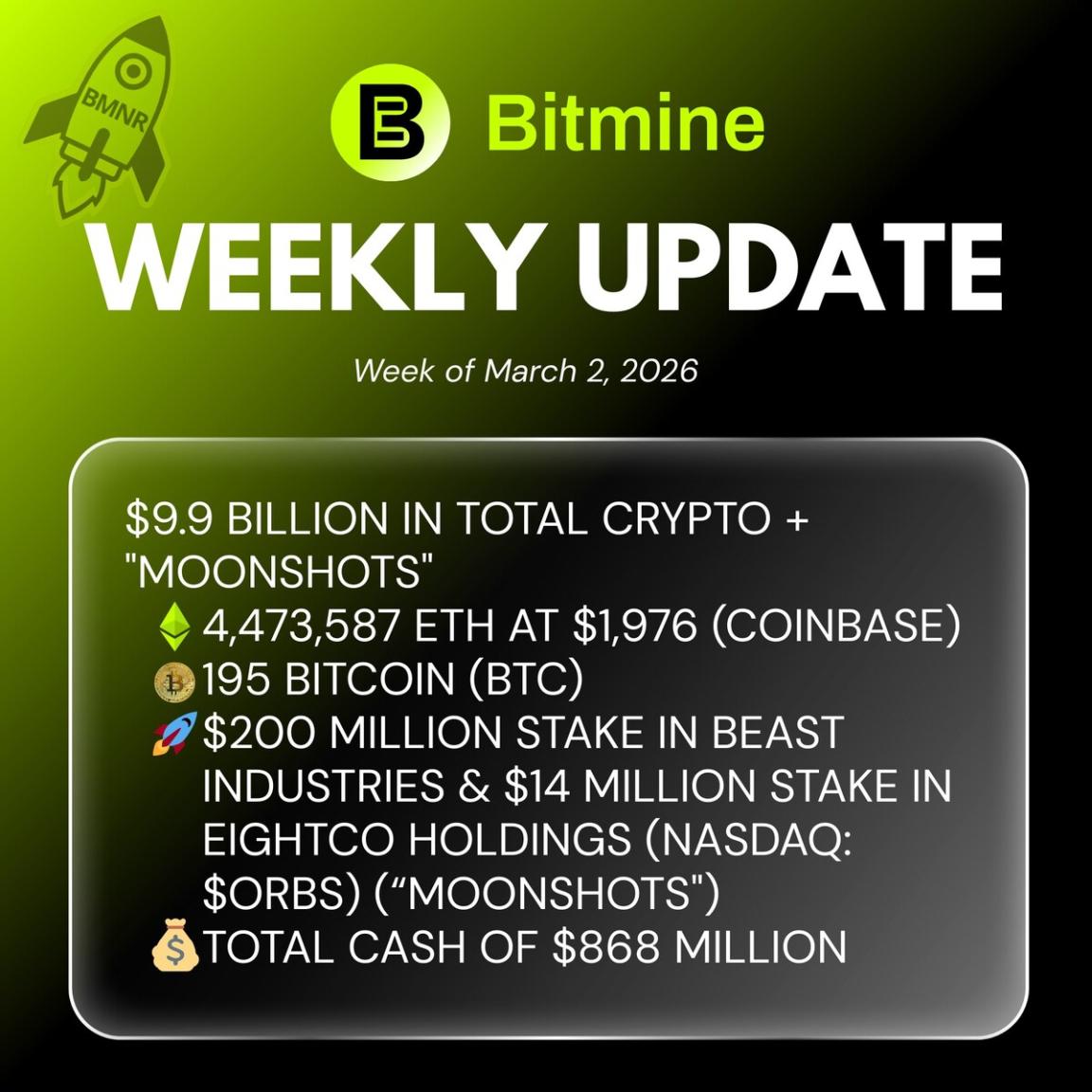
Bitmine Immersion Technologies (BMNR) Announces ETH Holdings Reach 4.474 Million Tokens, and Total Crypto and Total Cash Holdings of $9.9 Billion

MEXC USAT Flexible Savings Achieves 14x Growth from Launch to Peak