Bitcoin holding above $83,000 could be the pivotal condition for a broader market recovery, according to on-chain analytics firm CryptoQuant. The level has emerged as a critical threshold tied to short-term holder cost basis, and whether price sustains above it may determine the next directional move.
CryptoQuant Identifies $83,000 as the Recovery Threshold
A CryptoQuant Quicktake analysis flagged $83,000 as the key level Bitcoin needs to hold for a recovery scenario to remain intact. The thesis is conditional: maintaining price above this zone is necessary but not sufficient for a sustained rebound.
The analysis frames $83,000 not as a simple support line drawn on a chart, but as a level with on-chain significance rooted in holder behavior. CryptoQuant’s data links the threshold to the aggregate cost basis of short-term holders, the cohort most likely to sell under pressure.
It is worth noting that the specific market data surrounding this analysis could not be fully verified at the time of publication. The $83,000 figure originates from CryptoQuant’s on-chain modeling, and readers should treat the recovery framing as an analyst perspective rather than a confirmed market outcome.
Short-Term Holders Trading Below Cost Basis Create Fragility
A separate CryptoQuant report on short-term holder pressure outlined the mechanics behind the $83,000 level. When Bitcoin trades below the average purchase price of recent buyers, those holders sit on unrealized losses, increasing the probability of capitulation selling.
Cost basis refers to the average price at which a group of holders acquired their Bitcoin. For short-term holders, defined as wallets that acquired coins within the past 155 days, this metric shifts relatively quickly with price action. A sustained move below their aggregate cost basis historically correlates with elevated sell pressure.
If Bitcoin holds above the $83,000 zone, short-term holders would remain at or near breakeven, reducing the incentive to panic sell. A breakdown below it, on the other hand, could trigger a cascading wave of liquidations, similar to patterns observed during previous episodes where BTC long liquidations threatened to accelerate losses.
Reporting from Phemex corroborated this framing, noting that short-term holder pressure has eased but that the $83,000 level remains the key boundary to watch. The convergence of multiple sources on the same price zone strengthens the case that it carries genuine on-chain weight.
What Holding Above $83,000 Would Actually Signal
A sustained hold above the threshold would not by itself confirm a market bottom or guarantee a rally. Recovery in on-chain terms requires several conditions to align: price stability above short-term holder cost basis, declining exchange inflows, and a shift in net unrealized profit/loss ratios.
The distinction between a bounce, consolidation, and sustained recovery matters here. A brief spike above the level followed by rejection would not satisfy CryptoQuant’s thesis. The analysis implies that Bitcoin needs to establish the zone as a floor through multiple daily closes, not just a single wick.
Large holder behavior adds another layer to the picture. When dormant whales begin moving Bitcoin to exchanges, it can signal distribution rather than accumulation, potentially undermining recovery setups regardless of where short-term holder cost basis sits.
Conversely, if whale activity shifts toward withdrawals from exchanges, as seen in recent large-scale altcoin withdrawals from centralized platforms, it would suggest accumulation behavior that supports a bullish case for the broader market.
Data Points That Would Confirm or Weaken the Thesis
For CryptoQuant’s $83,000 recovery thesis to gain credibility, several measurable signals would need to align. Spot price behavior is the most obvious: consecutive daily closes above the level would be the first confirmation.
Exchange reserve trends provide a second layer of validation. Declining reserves on major exchanges, trackable through CryptoQuant’s exchange flow data, would indicate that holders are moving Bitcoin to cold storage rather than positioning to sell.
On-chain flow metrics from platforms like CoinMetrics could offer additional confirmation through metrics such as active addresses, transfer volume, and miner behavior. A healthy recovery typically shows rising active addresses alongside stable or declining exchange deposits.
The current evidence base for this story is incomplete. The research phase that supports this article terminated early due to budget constraints, meaning that live market data, volume figures, and precise holder cost-basis numbers were not fully verified. Readers should monitor the named data sources directly for updated confirmation.
FAQ: Bitcoin’s $83,000 Support and Recovery Setup
What did CryptoQuant say about Bitcoin and $83,000?
CryptoQuant’s Quicktake analysis identified $83,000 as the critical level Bitcoin must hold for a market recovery scenario to remain viable. The firm tied the level to the aggregate cost basis of short-term holders.
Why is $83,000 important for Bitcoin?
The level corresponds to the average acquisition price of short-term Bitcoin holders. When price trades below this cost basis, those holders face unrealized losses, which historically increases sell pressure and market fragility.
Does holding $83,000 confirm a market bottom?
Not on its own. Holding above the level is a necessary condition in CryptoQuant’s framework, but confirmation would require additional signals including declining exchange reserves, sustained daily closes above the zone, and healthy on-chain activity metrics.
What could invalidate the recovery setup?
A decisive breakdown below $83,000 with rising exchange inflows and increasing short-term holder capitulation would weaken the thesis. Large-scale whale deposits to exchanges during a price decline would further signal distribution rather than accumulation.
Disclaimer: This article is for informational purposes only and does not constitute financial or investment advice. Cryptocurrency and digital asset markets carry significant risk. Always do your own research before making decisions.
No tags available.


Other Posts








- China, US Conclude Trade Talks with Focus on Cooperation
- Crypto Weekly: NYSE Backs OKX, Kraken Gets Fed Access, BTC Sells
- DeriW Launches Edge Hour Trading Competition Platform for Derivatives Traders
- Court Upholds Fed’s Rejection of Custodia Bank’s Request
- Former CFO Convicted for $35M Fraudulent Crypto Investment
- Michael Saylor Denies Bitcoin Sell-Off Amid Large BTC Transfer
- Buy Dogecoin on eToro: Step-by-Step Guide for Beginners (2024)
- Kazakhstan Explores Crypto Reserves Backed by National Funds
- JPMorgan Increases Holdings in BlackRock’s Bitcoin ETF
- Nordea Bank Introduces Bitcoin ETP Trading for Nordic Customers
- XRP Spot ETF Launches on Nasdaq Amid Market Fluctuations
- Crypto Leaders Address Macro Volatility Amid Market Shifts
- Peter Schiff Challenges Michael Saylor on MSTR’s Business Model
- Thailand Orders Worldcoin to Delete 1.2 Million Biometric Records
- UK Proposes New DeFi Tax Framework to Ease User Burden
- WLFI Under Fire: Analyst Warns Hyperliquid Could Be Next
- Ancient Ethereum Whale Moves $1.19 Billion After Decade
- BlackRock Receives Large Crypto Transfers from Coinbase
- SEC Scrutiny on ALT5 Sigma’s Leadership Disclosure Timing
- MoonPay Gains Trust License for Crypto Operations in New York
- China, US Conclude Trade Talks with Focus on Cooperation
- Crypto Weekly: NYSE Backs OKX, Kraken Gets Fed Access, BTC Sells
- DeriW Launches Edge Hour Trading Competition Platform for Derivatives Traders
- Court Upholds Fed’s Rejection of Custodia Bank’s Request
- Former CFO Convicted for $35M Fraudulent Crypto Investment
- Michael Saylor Denies Bitcoin Sell-Off Amid Large BTC Transfer
- Buy Dogecoin on eToro: Step-by-Step Guide for Beginners (2024)
- Kazakhstan Explores Crypto Reserves Backed by National Funds
- JPMorgan Increases Holdings in BlackRock’s Bitcoin ETF
- Nordea Bank Introduces Bitcoin ETP Trading for Nordic Customers
- XRP Spot ETF Launches on Nasdaq Amid Market Fluctuations
- Crypto Leaders Address Macro Volatility Amid Market Shifts
- Peter Schiff Challenges Michael Saylor on MSTR’s Business Model
- Thailand Orders Worldcoin to Delete 1.2 Million Biometric Records
- UK Proposes New DeFi Tax Framework to Ease User Burden
- WLFI Under Fire: Analyst Warns Hyperliquid Could Be Next
- Ancient Ethereum Whale Moves $1.19 Billion After Decade
- BlackRock Receives Large Crypto Transfers from Coinbase
- SEC Scrutiny on ALT5 Sigma’s Leadership Disclosure Timing
- MoonPay Gains Trust License for Crypto Operations in New York
- China, US Conclude Trade Talks with Focus on Cooperation
- Crypto Weekly: NYSE Backs OKX, Kraken Gets Fed Access, BTC Sells
- DeriW Launches Edge Hour Trading Competition Platform for Derivatives Traders
- Court Upholds Fed’s Rejection of Custodia Bank’s Request
- Former CFO Convicted for $35M Fraudulent Crypto Investment
- Michael Saylor Denies Bitcoin Sell-Off Amid Large BTC Transfer
- Buy Dogecoin on eToro: Step-by-Step Guide for Beginners (2024)
- Kazakhstan Explores Crypto Reserves Backed by National Funds
- JPMorgan Increases Holdings in BlackRock’s Bitcoin ETF
- Nordea Bank Introduces Bitcoin ETP Trading for Nordic Customers
- XRP Spot ETF Launches on Nasdaq Amid Market Fluctuations
- Crypto Leaders Address Macro Volatility Amid Market Shifts
- Peter Schiff Challenges Michael Saylor on MSTR’s Business Model
- Thailand Orders Worldcoin to Delete 1.2 Million Biometric Records
- UK Proposes New DeFi Tax Framework to Ease User Burden
- WLFI Under Fire: Analyst Warns Hyperliquid Could Be Next
- Ancient Ethereum Whale Moves $1.19 Billion After Decade
- BlackRock Receives Large Crypto Transfers from Coinbase
- SEC Scrutiny on ALT5 Sigma’s Leadership Disclosure Timing
- MoonPay Gains Trust License for Crypto Operations in New York

Solmate’s Largest Outside Shareholder Sues the Board: What to Know


Goldfinch Africa-Focused Crypto Lending Project Collapses as GFI Token Falls 99.8%

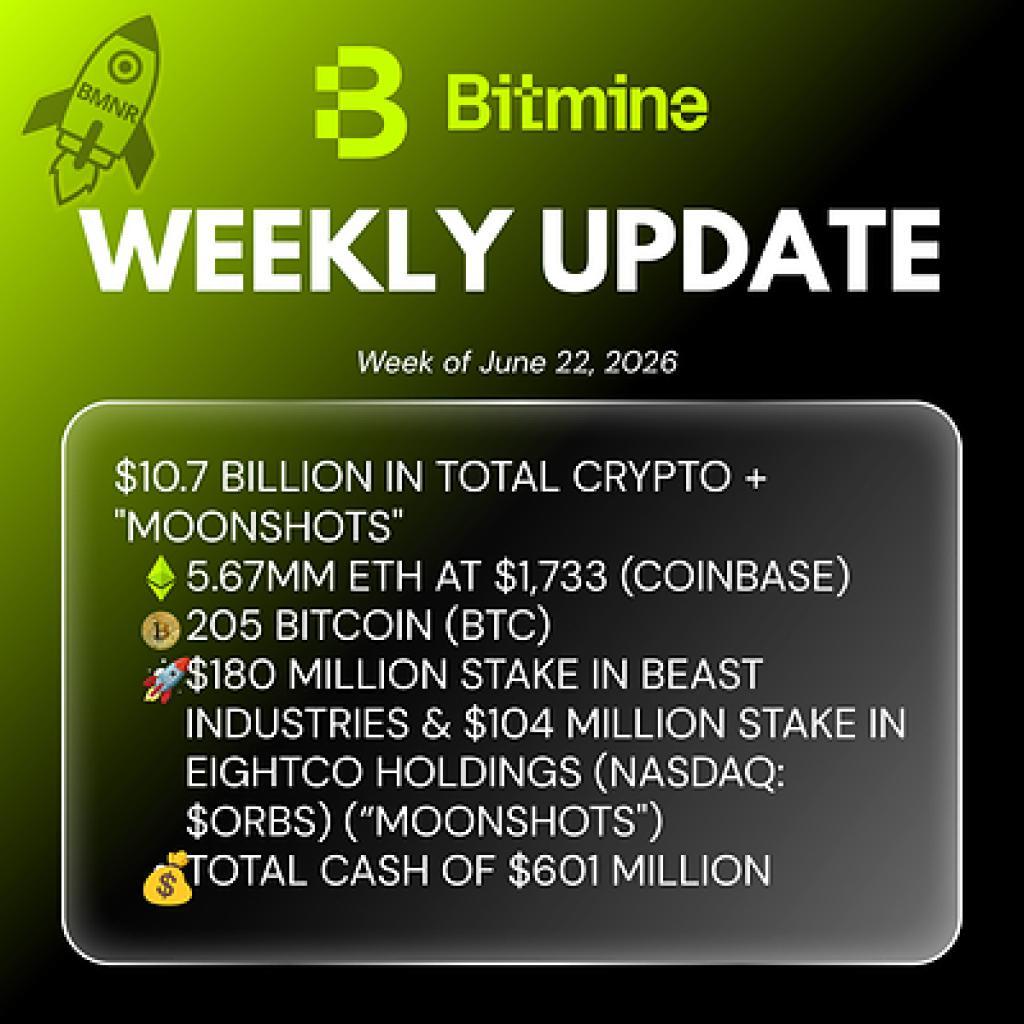
Bitmine Reports 5.67M ETH Holdings, Total Assets Reach $10.7B