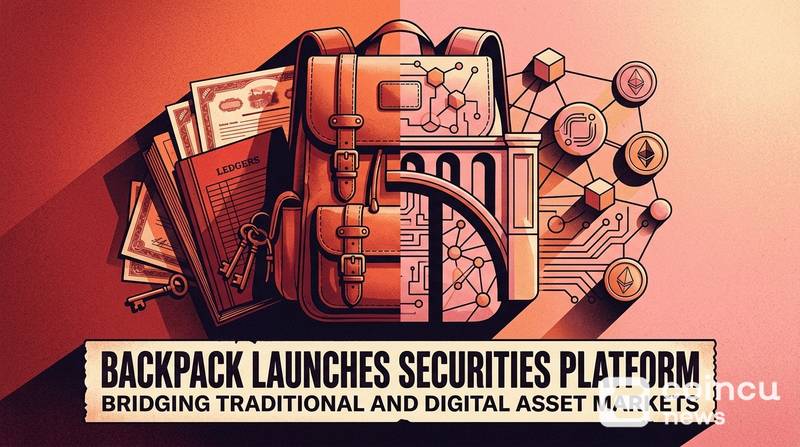
Backpack Launches Securities Platform Bridging Traditional and Digital Asset Markets
Backpack has launched a securities platform designed to bridge traditional finance and digital asset markets, expanding beyond its crypto-native exchange roots into tokenized equities and IPO access.
The platform, built through a partnership with Superstate, enables users to access SEC-registered tokenized stocks alongside digital assets. The move positions Backpack as one of a growing number of exchanges attempting to unify access to both traditional securities and crypto trading within a single interface.
Tokenized Stocks and On-Chain Equities Drive the Platform
Backpack’s securities offering centers on tokenized stocks and on-chain equities, including access to IPOs. Tokenized securities represent ownership in traditional financial instruments but settle and trade on blockchain infrastructure, potentially offering faster settlement and broader access than conventional brokerage accounts.
The use of the term “securities” rather than purely crypto-native framing signals that Backpack is targeting a regulated product category. This matters because securities offerings in the United States fall under SEC oversight, requiring registration or valid exemptions.
An SEC filing related to the Galaxy-Superstate launch provides regulatory context for this class of product. The filing underscores that tokenized securities platforms must navigate federal registration requirements, a compliance layer that distinguishes these offerings from unregulated token trading.
Why the TradFi-Crypto Bridge Matters for Traders
Platforms that connect traditional and digital asset markets address a practical problem: most retail and institutional investors currently manage equities and crypto through entirely separate systems. A unified platform reduces friction and consolidates portfolio visibility.
Backpack’s approach is notable in the context of broader industry trends. Firms expanding their holdings in digital assets, such as those increasing Bitcoin positions to thousands of BTC, reflect growing institutional appetite for cross-market exposure. A platform that serves both traditional equities and crypto could capture demand from participants seeking that kind of diversification in one place.
The exchange has also opened a waitlist for on-chain IPO access, suggesting that primary market participation, not just secondary trading, is part of the roadmap. If executed, this would let users participate in stock offerings directly through blockchain rails.
For traders already active in crypto, the addition of tokenized equities creates new pairing and hedging possibilities. For traditional investors, the on-chain settlement model may offer advantages in speed and transparency compared to conventional T+1 or T+2 clearing cycles.
Execution and Adoption Will Determine Impact
While the launch represents a strategic expansion, the platform’s real-world impact depends on several factors that remain unconfirmed at this stage.
First, the range of supported securities matters. Whether Backpack offers a handful of blue-chip tokenized stocks or a broad equity catalog will shape its appeal. The initial rollout details have not been fully disclosed beyond the Superstate partnership and IPO waitlist.
Second, regulatory compliance will be closely watched. Operating a securities platform in the United States requires ongoing adherence to SEC rules, including investor protection standards, reporting requirements, and anti-fraud provisions. Any compliance misstep could undermine the platform’s credibility.
Third, liquidity is critical. Tokenized securities platforms have historically struggled with thin order books compared to traditional exchanges. Early user adoption and market-maker participation will signal whether Backpack can sustain viable trading conditions.
Entities seeking large-scale exposure to digital assets, such as firms pursuing billion-dollar funding approvals to expand crypto holdings, represent the kind of institutional flow that could eventually support liquidity on platforms like Backpack’s, though no such partnerships have been announced.
What to Watch Next
Readers tracking this story should monitor several developments. The most immediate is whether the on-chain IPO waitlist converts into live offerings and which equities become available first.
Regulatory filings and any SEC correspondence regarding Backpack’s securities operations will provide transparency into the platform’s compliance posture. Investors and traders exploring new tools, including those evaluating automated trading solutions across multiple asset classes, may find Backpack’s multi-market approach relevant as it matures.
Partnership announcements beyond Superstate could indicate expansion of the securities catalog. Any integration with additional blockchain networks or traditional clearinghouses would also signal the platform’s trajectory.
Early liquidity data, once available, will be the clearest indicator of whether the platform is gaining traction or facing the adoption challenges common to tokenized securities ventures.
FAQ About Backpack’s Securities Platform Launch
What is Backpack’s new securities platform?
Backpack’s securities platform is an extension of its existing crypto exchange that offers tokenized stocks and on-chain equities, built through a partnership with Superstate. It is designed to let users trade both traditional securities and digital assets in one place.
How does it link traditional and digital asset markets?
The platform tokenizes traditional securities so they can be traded on blockchain infrastructure. This means equities that normally settle through conventional clearinghouses are instead represented as on-chain tokens, combining the asset class of traditional finance with the settlement mechanics of crypto.
Why is the launch significant?
The launch is significant because it represents Backpack’s move into regulated securities territory, not just crypto tokens. Offering SEC-registered tokenized stocks requires compliance with federal securities law, setting a higher bar than typical crypto exchange activity.
What should users watch next?
Users should watch for the conversion of the on-chain IPO waitlist into live offerings, the breadth of available tokenized equities, early liquidity and volume data, and any regulatory updates or SEC filings related to the platform’s operations.
Disclaimer: This article is for informational purposes only and does not constitute financial or investment advice. Cryptocurrency and digital asset markets carry significant risk. Always do your own research before making decisions.
No tags available.


Other Posts








- China, US Conclude Trade Talks with Focus on Cooperation
- Crypto Weekly: NYSE Backs OKX, Kraken Gets Fed Access, BTC Sells
- Court Upholds Fed’s Rejection of Custodia Bank’s Request
- Former CFO Convicted for $35M Fraudulent Crypto Investment
- DeriW Launches Edge Hour Trading Competition Platform for Derivatives Traders
- Michael Saylor Denies Bitcoin Sell-Off Amid Large BTC Transfer
- Buy Dogecoin on eToro: Step-by-Step Guide for Beginners (2024)
- Kazakhstan Explores Crypto Reserves Backed by National Funds
- JPMorgan Increases Holdings in BlackRock’s Bitcoin ETF
- Nordea Bank Introduces Bitcoin ETP Trading for Nordic Customers
- XRP Spot ETF Launches on Nasdaq Amid Market Fluctuations
- Peter Schiff Challenges Michael Saylor on MSTR’s Business Model
- Thailand Orders Worldcoin to Delete 1.2 Million Biometric Records
- UK Proposes New DeFi Tax Framework to Ease User Burden
- WLFI Under Fire: Analyst Warns Hyperliquid Could Be Next
- Ancient Ethereum Whale Moves $1.19 Billion After Decade
- BlackRock Receives Large Crypto Transfers from Coinbase
- SEC Scrutiny on ALT5 Sigma’s Leadership Disclosure Timing
- Yala Injects $5.5 Million Amid Recovery Efforts
- Radiant Capital Faces $50M Loss in Major Security Breach
- China, US Conclude Trade Talks with Focus on Cooperation
- Crypto Weekly: NYSE Backs OKX, Kraken Gets Fed Access, BTC Sells
- Court Upholds Fed’s Rejection of Custodia Bank’s Request
- Former CFO Convicted for $35M Fraudulent Crypto Investment
- DeriW Launches Edge Hour Trading Competition Platform for Derivatives Traders
- Michael Saylor Denies Bitcoin Sell-Off Amid Large BTC Transfer
- Buy Dogecoin on eToro: Step-by-Step Guide for Beginners (2024)
- Kazakhstan Explores Crypto Reserves Backed by National Funds
- JPMorgan Increases Holdings in BlackRock’s Bitcoin ETF
- Nordea Bank Introduces Bitcoin ETP Trading for Nordic Customers
- XRP Spot ETF Launches on Nasdaq Amid Market Fluctuations
- Peter Schiff Challenges Michael Saylor on MSTR’s Business Model
- Thailand Orders Worldcoin to Delete 1.2 Million Biometric Records
- UK Proposes New DeFi Tax Framework to Ease User Burden
- WLFI Under Fire: Analyst Warns Hyperliquid Could Be Next
- Ancient Ethereum Whale Moves $1.19 Billion After Decade
- BlackRock Receives Large Crypto Transfers from Coinbase
- SEC Scrutiny on ALT5 Sigma’s Leadership Disclosure Timing
- Yala Injects $5.5 Million Amid Recovery Efforts
- Radiant Capital Faces $50M Loss in Major Security Breach
- China, US Conclude Trade Talks with Focus on Cooperation
- Crypto Weekly: NYSE Backs OKX, Kraken Gets Fed Access, BTC Sells
- Court Upholds Fed’s Rejection of Custodia Bank’s Request
- Former CFO Convicted for $35M Fraudulent Crypto Investment
- DeriW Launches Edge Hour Trading Competition Platform for Derivatives Traders
- Michael Saylor Denies Bitcoin Sell-Off Amid Large BTC Transfer
- Buy Dogecoin on eToro: Step-by-Step Guide for Beginners (2024)
- Kazakhstan Explores Crypto Reserves Backed by National Funds
- JPMorgan Increases Holdings in BlackRock’s Bitcoin ETF
- Nordea Bank Introduces Bitcoin ETP Trading for Nordic Customers
- XRP Spot ETF Launches on Nasdaq Amid Market Fluctuations
- Peter Schiff Challenges Michael Saylor on MSTR’s Business Model
- Thailand Orders Worldcoin to Delete 1.2 Million Biometric Records
- UK Proposes New DeFi Tax Framework to Ease User Burden
- WLFI Under Fire: Analyst Warns Hyperliquid Could Be Next
- Ancient Ethereum Whale Moves $1.19 Billion After Decade
- BlackRock Receives Large Crypto Transfers from Coinbase
- SEC Scrutiny on ALT5 Sigma’s Leadership Disclosure Timing
- Yala Injects $5.5 Million Amid Recovery Efforts
- Radiant Capital Faces $50M Loss in Major Security Breach


Former FBI Agent Charged With Stealing Nearly $1 Million in Crypto

Coldcard Exploit Raises Questions About Air-Gapped Bitcoin Wallet Security
Bybit.eu Expands European Offering as Bybit Payments GmbH Secures Electronic Money Institution Licence

1win Introduces Seamless Web3 Login and Crypto Deposits via Trust Wallet, MetaMask, and WalletConnect