Bitcoin’s Four-Year Cycle Influenced by Political Factors, Reports Markus Thielen
- Markus Thielen of 10x Research outlines political factors reshaping Bitcoin cycles.
- Liquidity and elections now drive Bitcoin trends, not halvings.
- Bitcoin maintains consolidation amid cautious institutional trading.
Markus Thielen of 10x Research noted Bitcoin’s cycle persists, driven by political factors and liquidity, as stated at a recent Cointelegraph event.
Institutional investors affect Bitcoin’s momentum amid tightening liquidity, challenging traditional cycle dynamics and leading to a potential shift in market behavior.
Bitcoin Cycles Shift to Political and Liquidity Influences
The diminishing effect of halvings signifies a shift in Bitcoin’s price trigger markers. Political events and market liquidity are the new forces impacting Bitcoin’s growth trajectory, challenging historical norms. Such changes forecast a sustained consolidation phase until liquidity conditions see notable enhancements. Institutional investors remain vigilant, contributing to the range-bound trend. Key figures, like Changpeng Zhao, founder of Binance, suggest that institutional and sovereign interests could lead to a “super cycle.”
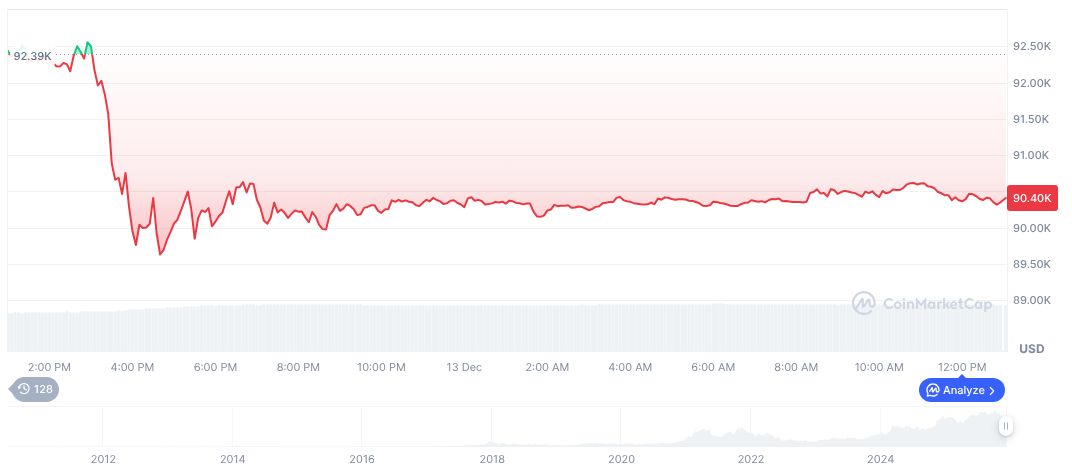
Bitcoin’s market data, sourced from CoinMarketCap, reveals the cryptocurrency’s current status following the influence of evolving market forces. As of December 14, 2025, Bitcoin (BTC) stands at $89,760.14, commanding a market cap of $1.79 trillion and a dominant 58.61% market share. Despite 24-hour volume reaching nearly $68.5 billion, latest trends highlight a notable 16.05% decrease. During this period, the coin’s price moved by -0.92% in 24 hours and -7.18% over 30 days, with an ongoing declining trajectory over 90 days. With a cap of 21 million coins, BTC’s circulation nears 20 million.
CoinCu’s research data emphasizes that political dynamics’ profound impact mirrors growing institutional dominance over supply factors. Historical trends where elections aligned with liquidity boosts should instead focus on larger global policy shifts. The evolving cycle diverges from conventional paradigms, introducing a complex interplay between markets and non-traditional factors.
Bitcoin Price Influenced by Evolving Political and Market Dynamics
Did you know? In 2013, 2017, and 2021, Bitcoin peaked and maintained momentum through cyclical events like halvings and elections. Now, the dynamics include political factors, possibly indicating a paradigm shift.
Bitcoin’s market data, sourced from CoinMarketCap, reveals the cryptocurrency’s current status following the influence of evolving market forces. As of December 14, 2025, Bitcoin (BTC) stands at $89,760.14, commanding a market cap of $1.79 trillion and a dominant 58.61% market share. Despite 24-hour volume reaching nearly $68.5 billion, latest trends highlight a notable 16.05% decrease. During this period, the coin’s price moved by -0.92% in 24 hours and -7.18% over 30 days, with an ongoing declining trajectory over 90 days. With a cap of 21 million coins, BTC’s circulation nears 20 million.
CoinCu’s research data emphasizes that political dynamics’ profound impact mirrors growing institutional dominance over supply factors. Historical trends where elections aligned with liquidity boosts should instead focus on larger global policy shifts. The evolving cycle diverges from conventional paradigms, introducing a complex interplay between markets and non-traditional factors.
| DISCLAIMER: The information on this website is provided as general market commentary and does not constitute investment advice. We encourage you to do your own research before investing. |

No tags available.


Other Posts









- Amplify 2024: Ohio’s Premier Blockchain Summit
- Polymarket Announces U.S. Beta Relaunch Amid Market Buzz
- China, US Conclude Trade Talks with Focus on Cooperation
- Crypto Weekly: NYSE Backs OKX, Kraken Gets Fed Access, BTC Sells
- CELO holds as Celo reviews Opera 160M token claim
- DeriW Launches Edge Hour Trading Competition Platform for Derivatives Traders
- Michael Saylor Denies Bitcoin Sell-Off Amid Large BTC Transfer
- Court Upholds Fed’s Rejection of Custodia Bank’s Request
- EU Opens Antitrust Probe Into Deutsche Boerse and Nasdaq Derivatives Dealings
- Kazakhstan Explores Crypto Reserves Backed by National Funds
- JPMorgan Increases Holdings in BlackRock’s Bitcoin ETF
- Nordea Bank Introduces Bitcoin ETP Trading for Nordic Customers
- XRP Spot ETF Launches on Nasdaq Amid Market Fluctuations
- JPMorgan Chase Launches 24/7 Digital Deposit Token for Clients
- Crypto Leaders Address Macro Volatility Amid Market Shifts
- Former CFO Convicted for $35M Fraudulent Crypto Investment
- Peter Schiff Challenges Michael Saylor on MSTR’s Business Model
- Thailand Orders Worldcoin to Delete 1.2 Million Biometric Records
- UK Proposes New DeFi Tax Framework to Ease User Burden
- U.S. Treasury Proposes New Tax Relief Regulations
- Amplify 2024: Ohio’s Premier Blockchain Summit
- Polymarket Announces U.S. Beta Relaunch Amid Market Buzz
- China, US Conclude Trade Talks with Focus on Cooperation
- Crypto Weekly: NYSE Backs OKX, Kraken Gets Fed Access, BTC Sells
- CELO holds as Celo reviews Opera 160M token claim
- DeriW Launches Edge Hour Trading Competition Platform for Derivatives Traders
- Michael Saylor Denies Bitcoin Sell-Off Amid Large BTC Transfer
- Court Upholds Fed’s Rejection of Custodia Bank’s Request
- EU Opens Antitrust Probe Into Deutsche Boerse and Nasdaq Derivatives Dealings
- Kazakhstan Explores Crypto Reserves Backed by National Funds
- JPMorgan Increases Holdings in BlackRock’s Bitcoin ETF
- Nordea Bank Introduces Bitcoin ETP Trading for Nordic Customers
- XRP Spot ETF Launches on Nasdaq Amid Market Fluctuations
- JPMorgan Chase Launches 24/7 Digital Deposit Token for Clients
- Crypto Leaders Address Macro Volatility Amid Market Shifts
- Former CFO Convicted for $35M Fraudulent Crypto Investment
- Peter Schiff Challenges Michael Saylor on MSTR’s Business Model
- Thailand Orders Worldcoin to Delete 1.2 Million Biometric Records
- UK Proposes New DeFi Tax Framework to Ease User Burden
- U.S. Treasury Proposes New Tax Relief Regulations
- Amplify 2024: Ohio’s Premier Blockchain Summit
- Polymarket Announces U.S. Beta Relaunch Amid Market Buzz
- China, US Conclude Trade Talks with Focus on Cooperation
- Crypto Weekly: NYSE Backs OKX, Kraken Gets Fed Access, BTC Sells
- CELO holds as Celo reviews Opera 160M token claim
- DeriW Launches Edge Hour Trading Competition Platform for Derivatives Traders
- Michael Saylor Denies Bitcoin Sell-Off Amid Large BTC Transfer
- Court Upholds Fed’s Rejection of Custodia Bank’s Request
- EU Opens Antitrust Probe Into Deutsche Boerse and Nasdaq Derivatives Dealings
- Kazakhstan Explores Crypto Reserves Backed by National Funds
- JPMorgan Increases Holdings in BlackRock’s Bitcoin ETF
- Nordea Bank Introduces Bitcoin ETP Trading for Nordic Customers
- XRP Spot ETF Launches on Nasdaq Amid Market Fluctuations
- JPMorgan Chase Launches 24/7 Digital Deposit Token for Clients
- Crypto Leaders Address Macro Volatility Amid Market Shifts
- Former CFO Convicted for $35M Fraudulent Crypto Investment
- Peter Schiff Challenges Michael Saylor on MSTR’s Business Model
- Thailand Orders Worldcoin to Delete 1.2 Million Biometric Records
- UK Proposes New DeFi Tax Framework to Ease User Burden
- U.S. Treasury Proposes New Tax Relief Regulations
Latest


BIT: Ethereum Call Option Selling Pressure Rises as Volatility Falls









Press Release

Why This Top 1000x Crypto Presale is Seeing Massive Last-Minute Buy Pressure

Best Crypto to Invest in Now: Why DOGEBALL Crypto Presale 2026 Outperforms Legacy ICOs