Bitcoin fund inflows flipped positive for the first time since January, with CoinShares logging US$871 million into BTC investment products in a week that saw US$1.1 billion flow into digital assets overall. The reversal puts the US$80,000 price level squarely in focus as the next confirmation threshold, even as broader sentiment remains locked in extreme fear.
CoinShares data shows Bitcoin demand has turned positive again
Digital asset investment products recorded US$1.1 billion of inflows in the week ending April 13, 2026, according to CoinShares’ latest weekly report. The firm called it the strongest weekly total since early January, marking a clear inflection point after months of net outflows and muted institutional appetite.
Bitcoin captured the majority of weekly flows
Bitcoin accounted for US$871 million of the weekly total, representing roughly 79% of all digital asset product inflows. The concentration in BTC-specific products, rather than altcoin or multi-asset funds, signals that institutional allocators are rebuilding core positions before branching into broader crypto exposure.
Short-Bitcoin products also attracted US$20.2 million during the same period. The simultaneous inflow into both long and short products suggests that institutions are not uniformly bullish but are actively positioning around a directional thesis, with hedging activity running alongside renewed accumulation.
The January comparison in context
The last time weekly inflows matched this scale was early January, before a prolonged drawdown in both price and fund flows through Q1. The return to positive territory is notable because it represents regulated investment product demand, not speculative spot or derivatives activity. This mirrors the pattern seen in U.S. Bitcoin ETF inflows that have tracked institutional sentiment shifts throughout 2026.
Why $80,000 is the market’s real test after the rebound
On-chain analyst Willy Woo framed the inflow reversal as a liquidity event with a specific price target attached. He wrote on April 13 that capital flows into BTC had flipped positive for the first time since January and that the US$80,000 level remains the key test.
Capital flows into BTC just flipped positive, first time since January.
Liquidity is repairing… spot remains stable while derivatives after being destroyed 10 Oct is now making its second attempt at rebounding.
80k remains key test level.
— Willy Woo (@willywoo) April 13, 2026
Source: @willywoo on X
BTC was trading at US$72,549 at the time of the research snapshot, up 2.15% over 24 hours. That places the price roughly 10.3% below the US$80,000 threshold Woo identified.
Derivatives and liquidity repair are the real story
Woo described the current environment as one where spot remained stable while derivatives, after being “destroyed” in October, were making a second attempt at rebounding. This framing matters because sustained fund inflows alone do not guarantee a move to US$80,000 without parallel recovery in leveraged positioning.
Technical analyst Ali Martinez has noted that a clean 12-hour close above US$72,000 could open a path toward the US$80,000 zone. Conversely, a drop below US$67,000 could expose BTC to a move toward US$59,000, a scenario that would carry significant liquidation risk across leveraged positions in both BTC and ETH markets.
Fresh inflows are colliding with still-bearish sentiment
The disconnect between institutional flow data and broader market sentiment is the most notable feature of the current setup. The Fear and Greed Index printed a score of 12 at the latest reading, classified as Extreme Fear. That is one of the lowest readings of 2026, sitting deep in risk-off territory even as regulated products logged their best week in months.
BTC’s 24-hour trading volume of roughly US$39.2 billion suggests active participation, but the fear reading indicates that most of that activity is defensive rather than conviction-driven. Institutional allocators appear to be front-running a sentiment shift that retail participants have not yet embraced.
This divergence matters for anyone watching for follow-through above the current range. In previous cycles, fund inflows have turned positive before sentiment indicators recovered, making early institutional positioning a leading signal rather than a lagging confirmation. The question is whether this pattern holds with the Fear and Greed Index still near single digits.
U.S. products accounted for nearly all of the weekly demand
The geographic concentration of the inflow rebound was striking. The United States contributed US$1.06 billion of the weekly total, equal to 95% of all flows. No other jurisdiction came close to matching U.S.-listed product demand during the period.
This concentration reflects the growing dominance of U.S.-listed Bitcoin investment vehicles, including spot ETF products that have reshaped institutional access to BTC since their approval. The pattern is consistent with the sustained ETF inflow trends tracked throughout Q1 2026, where U.S. products repeatedly captured the lion’s share of global digital asset allocations.
No new regulatory filing or approval appears to have triggered the weekly surge. CoinShares framed the move as a macro-driven rebound into regulated products, suggesting that broader risk appetite rather than crypto-specific catalysts was the primary driver.
What must happen before Bitcoin can seriously challenge $80,000
The near-term confirmation level is straightforward. Martinez identified a 12-hour close above US$72,000 as the breakout trigger that could set up a run toward US$80,000. BTC was trading just above that threshold at last check, making the next several daily closes critical.
On the downside, US$67,000 serves as the invalidation level. A sustained break below that zone could open a path to US$59,000, unwinding much of the positioning that the fresh inflows represent. Woo’s characterization of the current move as a “second attempt” at a derivatives rebound adds weight to this level, as a failed second attempt typically carries more bearish significance than a first.
Three conditions would need to align for a credible push toward US$80,000: continued positive fund flows in the coming weeks, a meaningful recovery in the Fear and Greed Index from its current Extreme Fear reading of 12, and a sustained hold above US$72,000 on higher timeframes. Without all three, the US$80,000 level remains a technical target rather than an imminent probability.
For readers tracking related market dynamics, the broader staking and DeFi activity across networks may offer additional signals about whether capital rotation is broadening beyond BTC-specific products.
Disclaimer: This article is for informational purposes only and does not constitute financial or investment advice. Cryptocurrency and digital asset markets carry significant risk. Always do your own research before making decisions.

No tags available.


Other Posts









- Amplify 2024: Ohio’s Premier Blockchain Summit
- Polymarket Announces U.S. Beta Relaunch Amid Market Buzz
- China, US Conclude Trade Talks with Focus on Cooperation
- Crypto Weekly: NYSE Backs OKX, Kraken Gets Fed Access, BTC Sells
- CELO holds as Celo reviews Opera 160M token claim
- DeriW Launches Edge Hour Trading Competition Platform for Derivatives Traders
- Michael Saylor Denies Bitcoin Sell-Off Amid Large BTC Transfer
- Court Upholds Fed’s Rejection of Custodia Bank’s Request
- EU Opens Antitrust Probe Into Deutsche Boerse and Nasdaq Derivatives Dealings
- Kazakhstan Explores Crypto Reserves Backed by National Funds
- JPMorgan Increases Holdings in BlackRock’s Bitcoin ETF
- Nordea Bank Introduces Bitcoin ETP Trading for Nordic Customers
- XRP Spot ETF Launches on Nasdaq Amid Market Fluctuations
- JPMorgan Chase Launches 24/7 Digital Deposit Token for Clients
- Crypto Leaders Address Macro Volatility Amid Market Shifts
- Former CFO Convicted for $35M Fraudulent Crypto Investment
- Peter Schiff Challenges Michael Saylor on MSTR’s Business Model
- Thailand Orders Worldcoin to Delete 1.2 Million Biometric Records
- UK Proposes New DeFi Tax Framework to Ease User Burden
- U.S. Treasury Proposes New Tax Relief Regulations
- Amplify 2024: Ohio’s Premier Blockchain Summit
- Polymarket Announces U.S. Beta Relaunch Amid Market Buzz
- China, US Conclude Trade Talks with Focus on Cooperation
- Crypto Weekly: NYSE Backs OKX, Kraken Gets Fed Access, BTC Sells
- CELO holds as Celo reviews Opera 160M token claim
- DeriW Launches Edge Hour Trading Competition Platform for Derivatives Traders
- Michael Saylor Denies Bitcoin Sell-Off Amid Large BTC Transfer
- Court Upholds Fed’s Rejection of Custodia Bank’s Request
- EU Opens Antitrust Probe Into Deutsche Boerse and Nasdaq Derivatives Dealings
- Kazakhstan Explores Crypto Reserves Backed by National Funds
- JPMorgan Increases Holdings in BlackRock’s Bitcoin ETF
- Nordea Bank Introduces Bitcoin ETP Trading for Nordic Customers
- XRP Spot ETF Launches on Nasdaq Amid Market Fluctuations
- JPMorgan Chase Launches 24/7 Digital Deposit Token for Clients
- Crypto Leaders Address Macro Volatility Amid Market Shifts
- Former CFO Convicted for $35M Fraudulent Crypto Investment
- Peter Schiff Challenges Michael Saylor on MSTR’s Business Model
- Thailand Orders Worldcoin to Delete 1.2 Million Biometric Records
- UK Proposes New DeFi Tax Framework to Ease User Burden
- U.S. Treasury Proposes New Tax Relief Regulations
- Amplify 2024: Ohio’s Premier Blockchain Summit
- Polymarket Announces U.S. Beta Relaunch Amid Market Buzz
- China, US Conclude Trade Talks with Focus on Cooperation
- Crypto Weekly: NYSE Backs OKX, Kraken Gets Fed Access, BTC Sells
- CELO holds as Celo reviews Opera 160M token claim
- DeriW Launches Edge Hour Trading Competition Platform for Derivatives Traders
- Michael Saylor Denies Bitcoin Sell-Off Amid Large BTC Transfer
- Court Upholds Fed’s Rejection of Custodia Bank’s Request
- EU Opens Antitrust Probe Into Deutsche Boerse and Nasdaq Derivatives Dealings
- Kazakhstan Explores Crypto Reserves Backed by National Funds
- JPMorgan Increases Holdings in BlackRock’s Bitcoin ETF
- Nordea Bank Introduces Bitcoin ETP Trading for Nordic Customers
- XRP Spot ETF Launches on Nasdaq Amid Market Fluctuations
- JPMorgan Chase Launches 24/7 Digital Deposit Token for Clients
- Crypto Leaders Address Macro Volatility Amid Market Shifts
- Former CFO Convicted for $35M Fraudulent Crypto Investment
- Peter Schiff Challenges Michael Saylor on MSTR’s Business Model
- Thailand Orders Worldcoin to Delete 1.2 Million Biometric Records
- UK Proposes New DeFi Tax Framework to Ease User Burden
- U.S. Treasury Proposes New Tax Relief Regulations
Latest


U.S. Bitcoin ETF Sees 3,353 BTC Inflow, Ethereum ETF Adds 29,225 ETH

Pharos Network and OKX Wallet Launch ‘Stake Before the Stake’ Event
Press Release
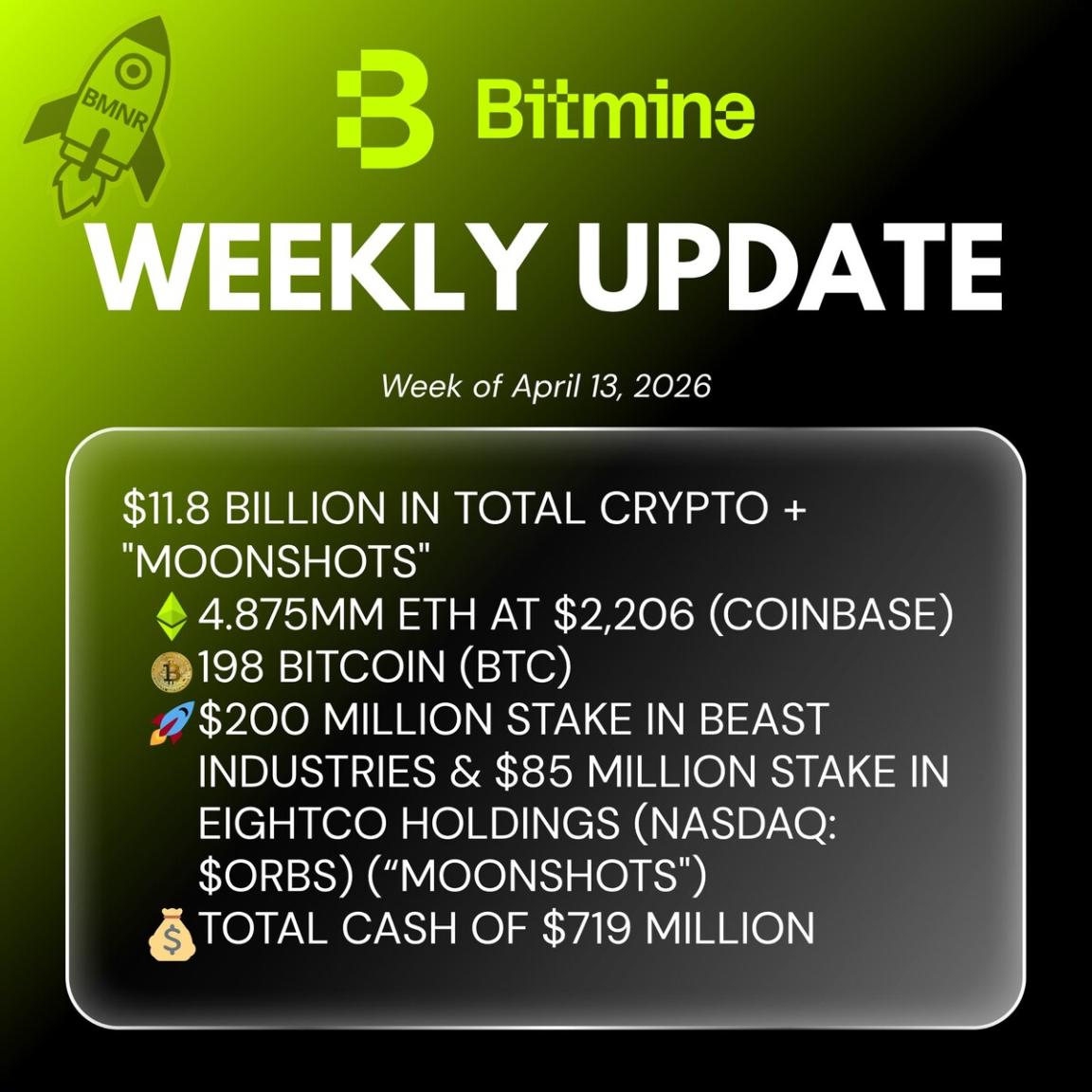
Bitmine Immersion Technologies (BMNR) Announces ETH Holdings Reach 4.875 Million Tokens, and Total Crypto and Total Cash Holdings of $11.8 Billion

Cango’s HPC and AI Inference Subsidiary, EcoHash, Begins Commercial Operations