Crypto CEX Is Becoming a Historical Species as DEXs and ETFs Rise
Centralized crypto exchanges are not disappearing, but they are losing their monopoly over how people access, trade, and hold digital assets. A combination of surging decentralized exchange volume, fast-growing ETF assets under management, and expanding stablecoin-based settlement rails is fragmenting a market that CEXs once dominated almost entirely.
CEXs Are Losing Their Exclusive Grip on Crypto Access
The phrase “historical species” overstates the case, but the underlying shift is real. Centralized exchanges are no longer the only meaningful gateway into crypto exposure, trading, or settlement. They now compete with on-chain venues, regulated investment products, and tokenized cash instruments for user attention and capital flow.
On-chain trading has reached a scale that would have been difficult to imagine a few years ago. DefiLlama’s DEX dashboard recorded $208.33 billion in 30-day DEX volume, reflecting meaningful trading activity that bypasses centralized order books entirely.
Investment Access Is Fragmenting Too
Beyond trading, passive crypto exposure increasingly happens outside exchange accounts. As of March 30, 2026, bitcoin ETF assets under management stood at $83.433 billion, with ethereum ETF AUM at $10.979 billion. These products let investors gain price exposure through traditional brokerage accounts, never touching an exchange.
Chainalysis noted that tokenized U.S. Treasury money-market funds grew from about $2 billion in August 2024 to more than $7 billion in August 2025. That expansion created on-chain alternatives for capital parking that previously defaulted to exchange-held stablecoins or fiat balances, a trend visible across major industry gatherings where firms like BlackRock and OKX now share the same stage.
Hyperliquid Shows What On-Chain Trading Can Already Replace
If the thesis is that on-chain venues can match CEX-grade execution at scale, Hyperliquid is the strongest current evidence. The protocol posted $200.101 billion in 30-day perpetual volume and $4.16 trillion in cumulative perpetual volume, according to DefiLlama.
Perpetual futures matter more than spot volume in this market-structure argument because they represent the highest-margin, highest-frequency activity that CEXs have traditionally dominated. Hyperliquid’s scale shows that deep, fast execution no longer requires custodial infrastructure.
HYPE Token Volume Tells Its Own Story
DefiLlama data showed HYPE 24-hour DEX volume at $135.49 million versus $89.44 million on centralized exchanges, meaning 59.56% of the token’s tracked volume occurred on decentralized venues. For at least one major token, the CEX liquidity advantage has already flipped.
One standout protocol does not prove full market-wide CEX replacement. But it demonstrates that the custody-and-liquidity moat, long considered the primary structural advantage of centralized venues, is no longer unbreachable.
ETFs and Stablecoin Rails Shrink the Traditional CEX Funnel
The fragmentation extends beyond active trading. A growing share of crypto exposure and crypto-linked capital movement now happens without users maintaining exchange accounts at all.
Bitcoin ETF AUM of $83.433 billion and ethereum ETF AUM of $10.979 billion represent passive exposure channels that serve a different user segment than exchanges. ETFs are not a direct substitute for on-chain trading, but they divert a category of capital, institutional allocations and retirement account exposure, that previously had to flow through exchange on-ramps.
U.S. regulators including the SEC, OCC, and CFTC withdrew prior guidance that had constrained institutional crypto activity, according to Chainalysis research on North American crypto adoption. That regulatory shift accelerated the expansion of both ETF products and tokenized cash instruments, creating settlement rails where exchanges play a smaller role. The growing interest from institutional attendees at events like the Blockchain Futurist Conference reflects this broadening access landscape.
Why Centralized Exchanges Still Matter Today
The counterevidence is substantial. Chainalysis reported that North America accounted for 26% of global crypto transaction activity and received $2.3 trillion in transaction value between July 2024 and June 2025. Much of that activity still runs through centralized platforms.
Between June 2024 and July 2025, everyday users purchased $2.7 trillion worth of bitcoin using USD on centralized exchanges, according to Chainalysis. That figure alone demonstrates that fiat on-ramps remain a major CEX advantage that DEXs and ETFs have not replicated.
Compliance infrastructure, custodial services, customer support, and institutional familiarity remain durable strengths. For users entering crypto for the first time, or for institutions requiring auditable counterparties, exchanges still serve functions that decentralized alternatives do not yet match. The recent wave of publicly traded firms building crypto treasuries often relies on CEX execution and custody rails.
The simplistic claim that CEXs are already obsolete does not survive contact with this data. What is happening is a redistribution of market share, not an extinction event.
From CEX-Centric to Multi-Rail: What the Next Market Structure Looks Like
The evidence points to a market splitting along user-segment lines. Retail newcomers still need the guided experience and fiat on-ramps that CEXs provide. Active traders, particularly in perpetual futures, now have credible on-chain alternatives like Hyperliquid. Passive allocators can access bitcoin and ethereum exposure through ETFs without ever logging into an exchange.
CEXs may persist as service layers, offering compliance, fiat conversion, and custody, rather than as the monopoly gateways they once were. The $208.33 billion in 30-day DEX volume, the $200.101 billion from Hyperliquid alone, and the $83.433 billion in bitcoin ETF AUM all describe a market that has already moved past single-rail dependency.
CEX dominance is fading faster than CEX relevance. The distinction matters because it shapes realistic expectations: exchanges are unlikely to vanish, but their share of total crypto activity, from trading to settlement to capital parking, is structurally declining as alternatives mature.
FAQ: Are Centralized Exchanges Actually Dying?
Are centralized crypto exchanges obsolete?
No. Chainalysis data shows $2.7 trillion in retail bitcoin purchases on CEXs through mid-2025. CEXs remain essential for fiat on-ramps and institutional custody, but they no longer hold exclusive control over crypto access.
Why does Hyperliquid matter in this debate?
Hyperliquid posted $200.101 billion in 30-day perpetual volume, demonstrating that on-chain venues can handle trading scale and speed previously reserved for centralized platforms.
How do ETFs change the CEX market?
With $83.433 billion in bitcoin ETF AUM, a significant share of crypto exposure now flows through regulated investment products that bypass exchange accounts entirely.
What still keeps users on centralized exchanges?
Fiat-to-crypto conversion, regulatory compliance, customer support, and institutional-grade custody remain functions that decentralized alternatives have not fully replicated.
What does a post-CEX-centric market mean?
It means crypto access fragments across multiple rails, with DEXs, ETFs, stablecoins, and tokenized assets each serving different user segments, while CEXs retain a role as one option among several rather than the default.
Disclaimer: This article is for informational purposes only and does not constitute financial or investment advice. Cryptocurrency and digital asset markets carry significant risk. Always do your own research before making decisions.

No tags available.


Other Posts







- Amplify 2024: Ohio’s Premier Blockchain Summit
- Polymarket Announces U.S. Beta Relaunch Amid Market Buzz
- China, US Conclude Trade Talks with Focus on Cooperation
- Crypto Weekly: NYSE Backs OKX, Kraken Gets Fed Access, BTC Sells
- CELO holds as Celo reviews Opera 160M token claim
- Michael Saylor Denies Bitcoin Sell-Off Amid Large BTC Transfer
- Court Upholds Fed’s Rejection of Custodia Bank’s Request
- EU Opens Antitrust Probe Into Deutsche Boerse and Nasdaq Derivatives Dealings
- Kazakhstan Explores Crypto Reserves Backed by National Funds
- JPMorgan Increases Holdings in BlackRock’s Bitcoin ETF
- Nordea Bank Introduces Bitcoin ETP Trading for Nordic Customers
- XRP Spot ETF Launches on Nasdaq Amid Market Fluctuations
- JPMorgan Chase Launches 24/7 Digital Deposit Token for Clients
- Crypto Leaders Address Macro Volatility Amid Market Shifts
- Former CFO Convicted for $35M Fraudulent Crypto Investment
- Peter Schiff Challenges Michael Saylor on MSTR’s Business Model
- Thailand Orders Worldcoin to Delete 1.2 Million Biometric Records
- UK Proposes New DeFi Tax Framework to Ease User Burden
- U.S. Treasury Proposes New Tax Relief Regulations
- Uniswap’s UNIfication Proposal Gains Massive Preliminary Support
- Amplify 2024: Ohio’s Premier Blockchain Summit
- Polymarket Announces U.S. Beta Relaunch Amid Market Buzz
- China, US Conclude Trade Talks with Focus on Cooperation
- Crypto Weekly: NYSE Backs OKX, Kraken Gets Fed Access, BTC Sells
- CELO holds as Celo reviews Opera 160M token claim
- Michael Saylor Denies Bitcoin Sell-Off Amid Large BTC Transfer
- Court Upholds Fed’s Rejection of Custodia Bank’s Request
- EU Opens Antitrust Probe Into Deutsche Boerse and Nasdaq Derivatives Dealings
- Kazakhstan Explores Crypto Reserves Backed by National Funds
- JPMorgan Increases Holdings in BlackRock’s Bitcoin ETF
- Nordea Bank Introduces Bitcoin ETP Trading for Nordic Customers
- XRP Spot ETF Launches on Nasdaq Amid Market Fluctuations
- JPMorgan Chase Launches 24/7 Digital Deposit Token for Clients
- Crypto Leaders Address Macro Volatility Amid Market Shifts
- Former CFO Convicted for $35M Fraudulent Crypto Investment
- Peter Schiff Challenges Michael Saylor on MSTR’s Business Model
- Thailand Orders Worldcoin to Delete 1.2 Million Biometric Records
- UK Proposes New DeFi Tax Framework to Ease User Burden
- U.S. Treasury Proposes New Tax Relief Regulations
- Uniswap’s UNIfication Proposal Gains Massive Preliminary Support
- Amplify 2024: Ohio’s Premier Blockchain Summit
- Polymarket Announces U.S. Beta Relaunch Amid Market Buzz
- China, US Conclude Trade Talks with Focus on Cooperation
- Crypto Weekly: NYSE Backs OKX, Kraken Gets Fed Access, BTC Sells
- CELO holds as Celo reviews Opera 160M token claim
- Michael Saylor Denies Bitcoin Sell-Off Amid Large BTC Transfer
- Court Upholds Fed’s Rejection of Custodia Bank’s Request
- EU Opens Antitrust Probe Into Deutsche Boerse and Nasdaq Derivatives Dealings
- Kazakhstan Explores Crypto Reserves Backed by National Funds
- JPMorgan Increases Holdings in BlackRock’s Bitcoin ETF
- Nordea Bank Introduces Bitcoin ETP Trading for Nordic Customers
- XRP Spot ETF Launches on Nasdaq Amid Market Fluctuations
- JPMorgan Chase Launches 24/7 Digital Deposit Token for Clients
- Crypto Leaders Address Macro Volatility Amid Market Shifts
- Former CFO Convicted for $35M Fraudulent Crypto Investment
- Peter Schiff Challenges Michael Saylor on MSTR’s Business Model
- Thailand Orders Worldcoin to Delete 1.2 Million Biometric Records
- UK Proposes New DeFi Tax Framework to Ease User Burden
- U.S. Treasury Proposes New Tax Relief Regulations
- Uniswap’s UNIfication Proposal Gains Massive Preliminary Support
Latest


Digital Asset Investment Products See $414M Outflow — First in Five Weeks

USDD TVL Hits $1.93 Billion Record High — What’s Driving the Surge








Press Release
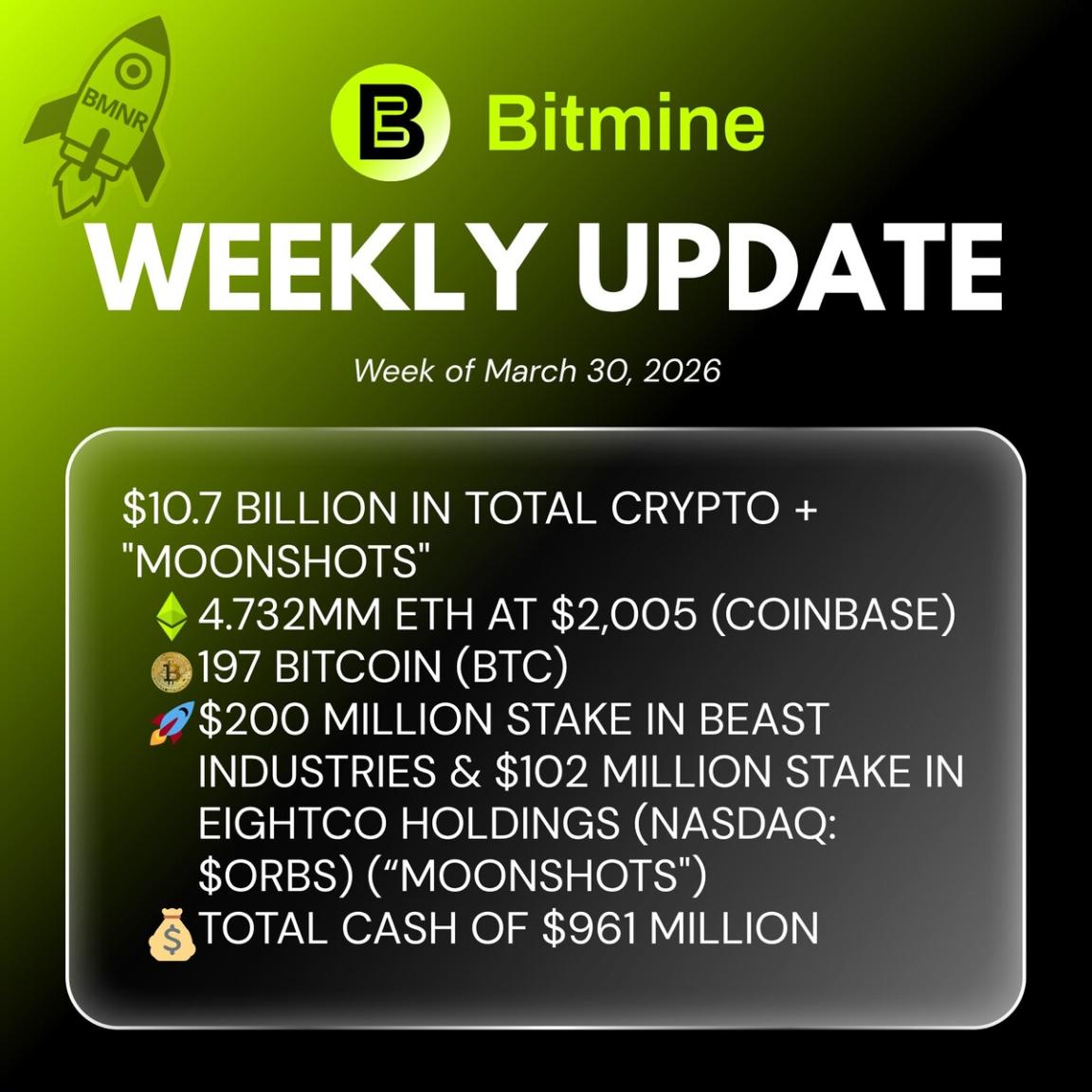
Bitmine Immersion Technologies (BMNR) Announces ETH Holdings Reach 4.732 Million Tokens, and Total Crypto and Total Cash Holdings of $10.7 Billion

TxFlow L1 Mainnet Launch Marks a New Phase for Multi-Application On-Chain Finance