Blockstream Jade Lightning Network uses hardware-backed recovery, not cold storage
Blockstream Jade now interfaces with the Lightning Network to enable faster Bitcoin payments. Despite shorthand suggesting “from cold storage,” the implementation uses the device for hardware-backed recovery rather than offline channel custody.
Lightning accounts are created in the Blockstream Green app and bound to the Jade seed. The device secures keys and confirmations, while Lightning operations remain online and distinct from the wallet’s traditional on-chain cold storage behavior.
Why this matters for non-custodial security and recovery
Non-custodial design hinges on who holds the keys and how recovery works. According to Blockstream’s Help Center, “The recovery phrase of Jade suffices to restore your funds both on-chain and in Lightning.”
The same documentation notes that hardware wallets add checks before moving bitcoin and that Lightning verification on-device is not yet mature, underscoring a still-evolving user experience. A review of disclosures and independent commentary indicates a trade-off: seed-based recovery reduces backup complexity while relying on managed Lightning components for availability.
Immediate impact: setup, limits, reliability, and on-chain fallback
Setup involves pairing Jade with the Green application, enabling a Lightning account tied to the device seed, and confirming sensitive actions on the hardware. The app coordinates Lightning interactions; users do not open or manage channels on the device.
As reported by BlockDYOR, the wallet does not store funds on Lightning; the app facilitates Lightning usage while Jade backs recovery. BlockDYOR, an independent review site, wrote: “Jade does not store Bitcoin on the Lightning Network.”
Reliability remains uneven based on community reporting. As reported by Reddit, one Lightning transfer stalled for roughly 40 hours before failing, and other posts referenced experimental status and inconsistent usability.
If issues arise, recovery falls back to the same seed phrase, which restores on-chain and Lightning accounts within the app. This preserves non-custodial recovery even when Lightning services are temporarily unavailable.
Trust assumptions and managed components in Blockstream Green
Lightning accounts backed by hardware wallet seed explained
Lightning accounts originate in the Green app but derive from the hardware wallet seed. The device confirms critical actions, while the application handles routing, liquidity, and other network-facing operations.
Because the seed unifies both account types, backup and disaster recovery use a single phrase. Restoration depends on service availability and the network’s ability to synchronize and detect current channel states.
cold storage vs Lightning: what Jade does and does not do
Cold storage implies offline key isolation with no live network state. Lightning, by contrast, maintains channel state online; the device backs keys but does not run channels offline as cold storage would.
In practice, Lightning balances function as hot, spend-oriented funds, while cold storage remains an on-chain pattern where keys and transactions stay offline until explicitly signed and broadcast.
FAQ about Blockstream Jade Lightning Network
Can I keep Lightning funds in cold storage on Jade, or is Jade only backing up the Lightning account seed?
Jade does not cold-store Lightning funds. It backs the Lightning account via your recovery seed. Lightning balances remain online through managed components tied to your seed.
How do Lightning accounts work with Jade and Blockstream Green, and how do I recover funds with my seed phrase?
Lightning runs in the Green app, secured by Jade’s seed. Restore the seed to regain both on-chain and Lightning balances, subject to service availability and network synchronization.
| DISCLAIMER: The information on this website is provided as general market commentary and does not constitute investment advice. We encourage you to do your own research before investing. |


Other Posts








- Amplify 2024: Ohio’s Premier Blockchain Summit
- Polymarket Announces U.S. Beta Relaunch Amid Market Buzz
- China, US Conclude Trade Talks with Focus on Cooperation
- Crypto Weekly: NYSE Backs OKX, Kraken Gets Fed Access, BTC Sells
- CELO holds as Celo reviews Opera 160M token claim
- Michael Saylor Denies Bitcoin Sell-Off Amid Large BTC Transfer
- Court Upholds Fed’s Rejection of Custodia Bank’s Request
- EU Opens Antitrust Probe Into Deutsche Boerse and Nasdaq Derivatives Dealings
- Kazakhstan Explores Crypto Reserves Backed by National Funds
- JPMorgan Increases Holdings in BlackRock’s Bitcoin ETF
- Nordea Bank Introduces Bitcoin ETP Trading for Nordic Customers
- XRP Spot ETF Launches on Nasdaq Amid Market Fluctuations
- JPMorgan Chase Launches 24/7 Digital Deposit Token for Clients
- Crypto Leaders Address Macro Volatility Amid Market Shifts
- Former CFO Convicted for $35M Fraudulent Crypto Investment
- Peter Schiff Challenges Michael Saylor on MSTR’s Business Model
- Thailand Orders Worldcoin to Delete 1.2 Million Biometric Records
- UK Proposes New DeFi Tax Framework to Ease User Burden
- U.S. Treasury Proposes New Tax Relief Regulations
- Uniswap’s UNIfication Proposal Gains Massive Preliminary Support
- Amplify 2024: Ohio’s Premier Blockchain Summit
- Polymarket Announces U.S. Beta Relaunch Amid Market Buzz
- China, US Conclude Trade Talks with Focus on Cooperation
- Crypto Weekly: NYSE Backs OKX, Kraken Gets Fed Access, BTC Sells
- CELO holds as Celo reviews Opera 160M token claim
- Michael Saylor Denies Bitcoin Sell-Off Amid Large BTC Transfer
- Court Upholds Fed’s Rejection of Custodia Bank’s Request
- EU Opens Antitrust Probe Into Deutsche Boerse and Nasdaq Derivatives Dealings
- Kazakhstan Explores Crypto Reserves Backed by National Funds
- JPMorgan Increases Holdings in BlackRock’s Bitcoin ETF
- Nordea Bank Introduces Bitcoin ETP Trading for Nordic Customers
- XRP Spot ETF Launches on Nasdaq Amid Market Fluctuations
- JPMorgan Chase Launches 24/7 Digital Deposit Token for Clients
- Crypto Leaders Address Macro Volatility Amid Market Shifts
- Former CFO Convicted for $35M Fraudulent Crypto Investment
- Peter Schiff Challenges Michael Saylor on MSTR’s Business Model
- Thailand Orders Worldcoin to Delete 1.2 Million Biometric Records
- UK Proposes New DeFi Tax Framework to Ease User Burden
- U.S. Treasury Proposes New Tax Relief Regulations
- Uniswap’s UNIfication Proposal Gains Massive Preliminary Support
- Amplify 2024: Ohio’s Premier Blockchain Summit
- Polymarket Announces U.S. Beta Relaunch Amid Market Buzz
- China, US Conclude Trade Talks with Focus on Cooperation
- Crypto Weekly: NYSE Backs OKX, Kraken Gets Fed Access, BTC Sells
- CELO holds as Celo reviews Opera 160M token claim
- Michael Saylor Denies Bitcoin Sell-Off Amid Large BTC Transfer
- Court Upholds Fed’s Rejection of Custodia Bank’s Request
- EU Opens Antitrust Probe Into Deutsche Boerse and Nasdaq Derivatives Dealings
- Kazakhstan Explores Crypto Reserves Backed by National Funds
- JPMorgan Increases Holdings in BlackRock’s Bitcoin ETF
- Nordea Bank Introduces Bitcoin ETP Trading for Nordic Customers
- XRP Spot ETF Launches on Nasdaq Amid Market Fluctuations
- JPMorgan Chase Launches 24/7 Digital Deposit Token for Clients
- Crypto Leaders Address Macro Volatility Amid Market Shifts
- Former CFO Convicted for $35M Fraudulent Crypto Investment
- Peter Schiff Challenges Michael Saylor on MSTR’s Business Model
- Thailand Orders Worldcoin to Delete 1.2 Million Biometric Records
- UK Proposes New DeFi Tax Framework to Ease User Burden
- U.S. Treasury Proposes New Tax Relief Regulations
- Uniswap’s UNIfication Proposal Gains Massive Preliminary Support
Latest

Crypto CEX Is Becoming a Historical Species as DEXs and ETFs Rise

Digital Asset Investment Products See $414M Outflow — First in Five Weeks

USDD TVL Hits $1.93 Billion Record High — What’s Driving the Surge








Press Release
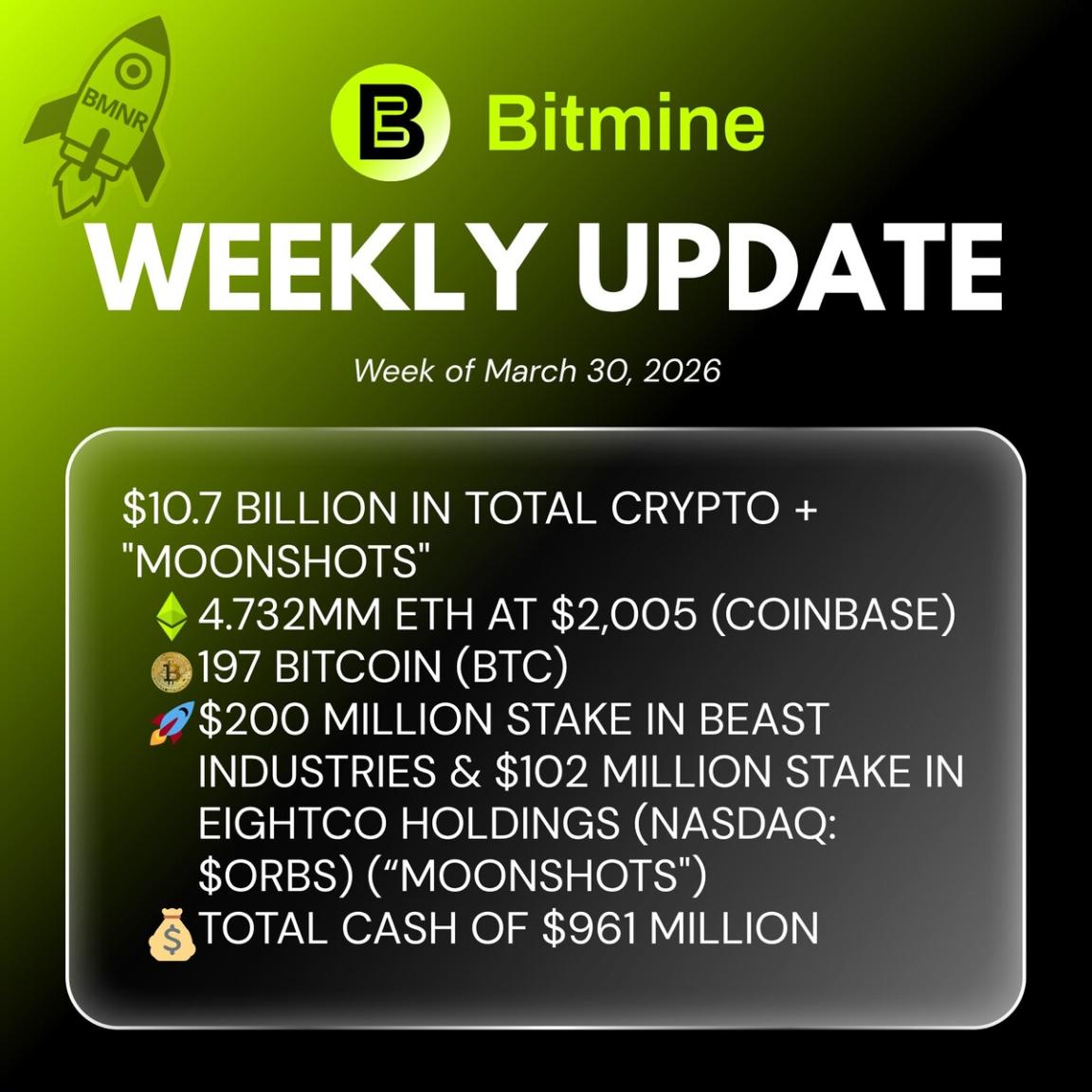
Bitmine Immersion Technologies (BMNR) Announces ETH Holdings Reach 4.732 Million Tokens, and Total Crypto and Total Cash Holdings of $10.7 Billion

TxFlow L1 Mainnet Launch Marks a New Phase for Multi-Application On-Chain Finance