VanEck Report Projects Bitcoin Reaching $2.9 Million by 2050
- VanEck forecasts Bitcoin at $2.9 million by 2050 in base scenario.
- Potential 15% CAGR over 25 years.
- Bitcoin viewed as a low-correlation asset in portfolios.
VanEck’s report forecasts Bitcoin could reach $2.9 million by 2050, according to the firm’s digital asset research, highlighting Bitcoin’s potential long-term growth as a reserve asset.
This report suggests Bitcoin may become a strategic asset for institutional investors, impacting diversification strategies and offering a hedge against currency devaluation in high-debt markets.
Historical Context and Institutional Reactions to Bitcoin Growth
Did you know? Bitcoin is anticipated to become a reserve asset by 2050, according to VanEck. This historical shift represents a significant change in how global finance perceives cryptocurrency.
As per CoinMarketCap data, Bitcoin’s current price stands at $90,860.77 with a market cap of $1.81 trillion. Recent trading volumes reached $38.08 billion, although experiencing a 9.79% decrease. Bitcoin’s price rose 0.70% over 24 hours but declined 18.02% over the last 90 days.
“Base Case Expected Return, 15% CAGR … Our Base Case model has Bitcoin reaching $2.9 million by 2050, driven by its adoption as a settlement currency for 5-10% of global trade and a reserve asset comprising 2.5% of central bank balance sheets.” — Matthew Sigel, VanEck – Bitcoin Long-Term Capital Market Assumptions
Market Data and Insights
Did you know? Bitcoin is anticipated to become a reserve asset by 2050, according to VanEck. This historical shift represents a significant change in how global finance perceives cryptocurrency.
For those looking to purchase cryptocurrency, platforms like Phemex offer easy access to buying and trading Bitcoin and other digital currencies.
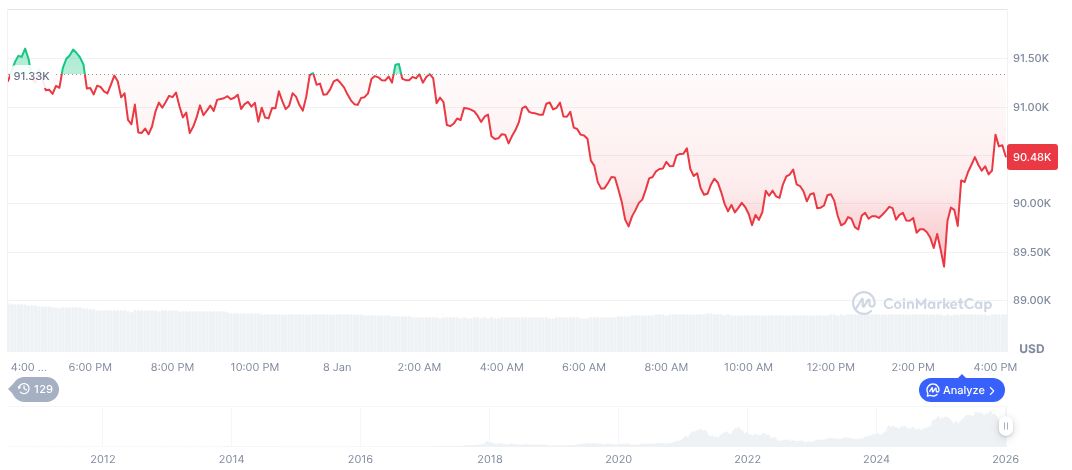
Insights from Coincu research indicate that institutional adoption may evolve regulatory outlooks, encouraging technological integration into financial systems. Historical patterns reveal potential resistance to change, but long-term data suggests evolving financial landscapes could favor cryptocurrency inclusion.
| DISCLAIMER: The information on this website is provided as general market commentary and does not constitute investment advice. We encourage you to do your own research before investing. |

No tags available.


Other Posts









- Amplify 2024: Ohio’s Premier Blockchain Summit
- Polymarket Announces U.S. Beta Relaunch Amid Market Buzz
- China, US Conclude Trade Talks with Focus on Cooperation
- Michael Saylor Denies Bitcoin Sell-Off Amid Large BTC Transfer
- Court Upholds Fed’s Rejection of Custodia Bank’s Request
- EU Opens Antitrust Probe Into Deutsche Boerse and Nasdaq Derivatives Dealings
- Kazakhstan Explores Crypto Reserves Backed by National Funds
- Nordea Bank Introduces Bitcoin ETP Trading for Nordic Customers
- JPMorgan Increases Holdings in BlackRock’s Bitcoin ETF
- XRP Spot ETF Launches on Nasdaq Amid Market Fluctuations
- JPMorgan Chase Launches 24/7 Digital Deposit Token for Clients
- Crypto Leaders Address Macro Volatility Amid Market Shifts
- Former CFO Convicted for $35M Fraudulent Crypto Investment
- Peter Schiff Challenges Michael Saylor on MSTR’s Business Model
- U.S. Treasury Proposes New Tax Relief Regulations
- Japan to Reduce Cryptocurrency Tax to 20%
- Amazon seeks to raise about $12 billion through a U.S. bond offering
- Radiant Capital Faces $50M Loss in Major Security Breach
- SEGG Media Unveils $300 Million Crypto Reserve Plan
- Yala Injects $5.5 Million Amid Recovery Efforts
- Amplify 2024: Ohio’s Premier Blockchain Summit
- Polymarket Announces U.S. Beta Relaunch Amid Market Buzz
- China, US Conclude Trade Talks with Focus on Cooperation
- Michael Saylor Denies Bitcoin Sell-Off Amid Large BTC Transfer
- Court Upholds Fed’s Rejection of Custodia Bank’s Request
- EU Opens Antitrust Probe Into Deutsche Boerse and Nasdaq Derivatives Dealings
- Kazakhstan Explores Crypto Reserves Backed by National Funds
- Nordea Bank Introduces Bitcoin ETP Trading for Nordic Customers
- JPMorgan Increases Holdings in BlackRock’s Bitcoin ETF
- XRP Spot ETF Launches on Nasdaq Amid Market Fluctuations
- JPMorgan Chase Launches 24/7 Digital Deposit Token for Clients
- Crypto Leaders Address Macro Volatility Amid Market Shifts
- Former CFO Convicted for $35M Fraudulent Crypto Investment
- Peter Schiff Challenges Michael Saylor on MSTR’s Business Model
- U.S. Treasury Proposes New Tax Relief Regulations
- Japan to Reduce Cryptocurrency Tax to 20%
- Amazon seeks to raise about $12 billion through a U.S. bond offering
- Radiant Capital Faces $50M Loss in Major Security Breach
- SEGG Media Unveils $300 Million Crypto Reserve Plan
- Yala Injects $5.5 Million Amid Recovery Efforts
- Amplify 2024: Ohio’s Premier Blockchain Summit
- Polymarket Announces U.S. Beta Relaunch Amid Market Buzz
- China, US Conclude Trade Talks with Focus on Cooperation
- Michael Saylor Denies Bitcoin Sell-Off Amid Large BTC Transfer
- Court Upholds Fed’s Rejection of Custodia Bank’s Request
- EU Opens Antitrust Probe Into Deutsche Boerse and Nasdaq Derivatives Dealings
- Kazakhstan Explores Crypto Reserves Backed by National Funds
- Nordea Bank Introduces Bitcoin ETP Trading for Nordic Customers
- JPMorgan Increases Holdings in BlackRock’s Bitcoin ETF
- XRP Spot ETF Launches on Nasdaq Amid Market Fluctuations
- JPMorgan Chase Launches 24/7 Digital Deposit Token for Clients
- Crypto Leaders Address Macro Volatility Amid Market Shifts
- Former CFO Convicted for $35M Fraudulent Crypto Investment
- Peter Schiff Challenges Michael Saylor on MSTR’s Business Model
- U.S. Treasury Proposes New Tax Relief Regulations
- Japan to Reduce Cryptocurrency Tax to 20%
- Amazon seeks to raise about $12 billion through a U.S. bond offering
- Radiant Capital Faces $50M Loss in Major Security Breach
- SEGG Media Unveils $300 Million Crypto Reserve Plan
- Yala Injects $5.5 Million Amid Recovery Efforts
Latest










Press Release


Phemex TradFi Hits $10B Monthly Volume, Advancing Cross-Market Trading Infrastructure