Federal Reserve Announces Reserve Management Purchases, Not QE
- Federal Reserve launches reserve management purchases, not classified as quantitative easing.
- Program begins December 11-12, focusing on short-term securities.
- Market stability expected with indirect effects on cryptocurrencies.
On December 10, 2025, the Federal Reserve announced Reserve Management Purchases to maintain ample bank reserves, distinct from quantitative easing, impacting short-term Treasury securities in the U.S.
This move seeks to manage liquidity without QE effects, potentially stabilizing financial markets, indirectly impacting cryptocurrencies like Bitcoin and Ethereum due to reserve increases.
Federal Reserve to Begin $40 Billion Monthly Treasury Purchases
The Federal Open Market Committee announced the initiation of reserve management purchases (RMPs) of short-term Treasury securities, set to begin on December 11-12, 2025. These purchases, capped at $40 billion monthly, aim to maintain reserves after a recent rate cut.
Unlike quantitative easing, these RMPs focus on stabilizing reserves without aggressive economic stimulus. The program initially targets short-term Treasury bills and securities maturing in three years or less.
“The FOMC directs the purchases of Treasury bills and, if needed, other Treasury securities with remaining maturities of 3 years or less to maintain an ample level of reserves.”
Cryptocurrencies Face Increased Volatility Amid Federal Actions
Did you know? The Federal Reserve’s actions can indirectly influence the cryptocurrency market by stabilizing traditional financial systems.
Bitcoin (BTC) traded at $85,618.09, reflecting a decline of 3.72% over 24 hours, with a market cap of $1.71 trillion as of December 15, 2025, per CoinMarketCap data. Trading volume decreased by 25.92%, indicating cautious market engagement amid ongoing volatility.
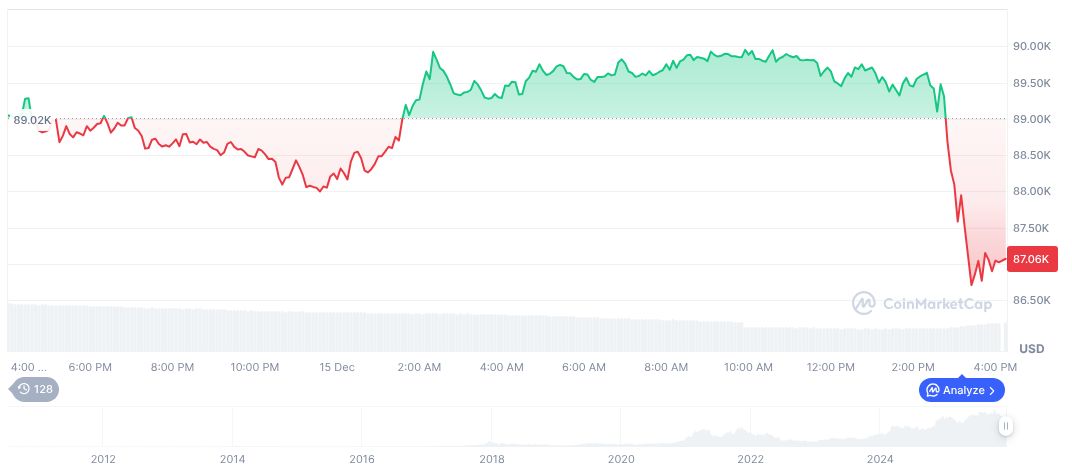
Financial and technology sectors may see increased stability from these reserve management actions. However, analysts from Coincu highlight that regulatory scrutiny could intensify as financial markets adjust to these new dynamics, underscoring the importance of agile policy responses.
| DISCLAIMER: The information on this website is provided as general market commentary and does not constitute investment advice. We encourage you to do your own research before investing. |

No tags available.


Other Posts







- Amplify 2024: Ohio’s Premier Blockchain Summit
- Polymarket Announces U.S. Beta Relaunch Amid Market Buzz
- China, US Conclude Trade Talks with Focus on Cooperation
- Michael Saylor Denies Bitcoin Sell-Off Amid Large BTC Transfer
- Court Upholds Fed’s Rejection of Custodia Bank’s Request
- EU Opens Antitrust Probe Into Deutsche Boerse and Nasdaq Derivatives Dealings
- Kazakhstan Explores Crypto Reserves Backed by National Funds
- Nordea Bank Introduces Bitcoin ETP Trading for Nordic Customers
- JPMorgan Increases Holdings in BlackRock’s Bitcoin ETF
- XRP Spot ETF Launches on Nasdaq Amid Market Fluctuations
- JPMorgan Chase Launches 24/7 Digital Deposit Token for Clients
- Crypto Leaders Address Macro Volatility Amid Market Shifts
- Crypto Weekly: NYSE Backs OKX, Kraken Gets Fed Access, BTC Sells
- Former CFO Convicted for $35M Fraudulent Crypto Investment
- Peter Schiff Challenges Michael Saylor on MSTR’s Business Model
- U.S. Treasury Proposes New Tax Relief Regulations
- WLFI Under Fire: Analyst Warns Hyperliquid Could Be Next
- Japan to Reduce Cryptocurrency Tax to 20%
- Yala Injects $5.5 Million Amid Recovery Efforts
- HSBC to Offer Tokenized Deposits in US and UAE
- Amplify 2024: Ohio’s Premier Blockchain Summit
- Polymarket Announces U.S. Beta Relaunch Amid Market Buzz
- China, US Conclude Trade Talks with Focus on Cooperation
- Michael Saylor Denies Bitcoin Sell-Off Amid Large BTC Transfer
- Court Upholds Fed’s Rejection of Custodia Bank’s Request
- EU Opens Antitrust Probe Into Deutsche Boerse and Nasdaq Derivatives Dealings
- Kazakhstan Explores Crypto Reserves Backed by National Funds
- Nordea Bank Introduces Bitcoin ETP Trading for Nordic Customers
- JPMorgan Increases Holdings in BlackRock’s Bitcoin ETF
- XRP Spot ETF Launches on Nasdaq Amid Market Fluctuations
- JPMorgan Chase Launches 24/7 Digital Deposit Token for Clients
- Crypto Leaders Address Macro Volatility Amid Market Shifts
- Crypto Weekly: NYSE Backs OKX, Kraken Gets Fed Access, BTC Sells
- Former CFO Convicted for $35M Fraudulent Crypto Investment
- Peter Schiff Challenges Michael Saylor on MSTR’s Business Model
- U.S. Treasury Proposes New Tax Relief Regulations
- WLFI Under Fire: Analyst Warns Hyperliquid Could Be Next
- Japan to Reduce Cryptocurrency Tax to 20%
- Yala Injects $5.5 Million Amid Recovery Efforts
- HSBC to Offer Tokenized Deposits in US and UAE
- Amplify 2024: Ohio’s Premier Blockchain Summit
- Polymarket Announces U.S. Beta Relaunch Amid Market Buzz
- China, US Conclude Trade Talks with Focus on Cooperation
- Michael Saylor Denies Bitcoin Sell-Off Amid Large BTC Transfer
- Court Upholds Fed’s Rejection of Custodia Bank’s Request
- EU Opens Antitrust Probe Into Deutsche Boerse and Nasdaq Derivatives Dealings
- Kazakhstan Explores Crypto Reserves Backed by National Funds
- Nordea Bank Introduces Bitcoin ETP Trading for Nordic Customers
- JPMorgan Increases Holdings in BlackRock’s Bitcoin ETF
- XRP Spot ETF Launches on Nasdaq Amid Market Fluctuations
- JPMorgan Chase Launches 24/7 Digital Deposit Token for Clients
- Crypto Leaders Address Macro Volatility Amid Market Shifts
- Crypto Weekly: NYSE Backs OKX, Kraken Gets Fed Access, BTC Sells
- Former CFO Convicted for $35M Fraudulent Crypto Investment
- Peter Schiff Challenges Michael Saylor on MSTR’s Business Model
- U.S. Treasury Proposes New Tax Relief Regulations
- WLFI Under Fire: Analyst Warns Hyperliquid Could Be Next
- Japan to Reduce Cryptocurrency Tax to 20%
- Yala Injects $5.5 Million Amid Recovery Efforts
- HSBC to Offer Tokenized Deposits in US and UAE
Latest











Press Release

Aster Chain Launch: Defining a New Era for Onchain Privacy and Transparency
Bybit Launches AI Skills: Powering AI Agents for Crypto Trading With Zero Setup, 253 API Endpoints and Growing