- Ethereum developers test Fusaka upgrade with PeerDAS methodology.
- Mainnet launch is planned for December 3, 2025.
- Lower data processing costs anticipated for institutional users.
Ethereum developers, led by Tim Beiko and Danny Ryan, initiated a second test of the Fusaka upgrade on the Sepolia testnet on Tuesday, planning the mainnet activation soon.
Fusaka introduces PeerDAS, expected to reduce Ethereum’s costs and bandwidth, potentially increasing market activity and benefitting Layer 2 networks and institutional users.
Sepolia Test Advances Fusaka Upgrade Milestones
Ethereum’s second Fusaka test on the Sepolia testnet follows a Holesky trial. This strategic action signals intent to reduce bandwidth needs. A final rehearsal on the Hoodi testnet is set for late October, cementing mainnet plans.
The Fusaka rollout introduces PeerDAS technology, enhancing efficiency for Ethereum validators who will process fewer data segments. This change could benefit institutional users confronting high bandwidth costs, leading to greater Layer 2 adoption.
“Fusaka’s PeerDAS will dramatically lower validator resource requirements and make Ethereum rollups more affordable. We are on track for mainnet launch December 3, pending Hoodi testnet results.” — Tim Beiko, Protocol Support, Ethereum Foundation
Price Trends Amid Ethereum’s 2025 Development Goals
Did you know? Previous Ethereum upgrades, like Dencun and Pectra, led to significant reductions in transaction fees and increased network utilization, setting expectations for Fusaka’s impact on Layer 2 scalability.
According to CoinMarketCap, Ethereum’s (ETH) price stands at $3,999.79 with a market cap of $482.77 billion and dominance of 12.74%. The 24-hour trading volume is reported as $55.71 billion, marking an 8.81% drop. Notably, ETH has decreased by 3.76% over the last 24 hours and 14.49% over the past week, despite showing a 26.36% increase over 90 days.
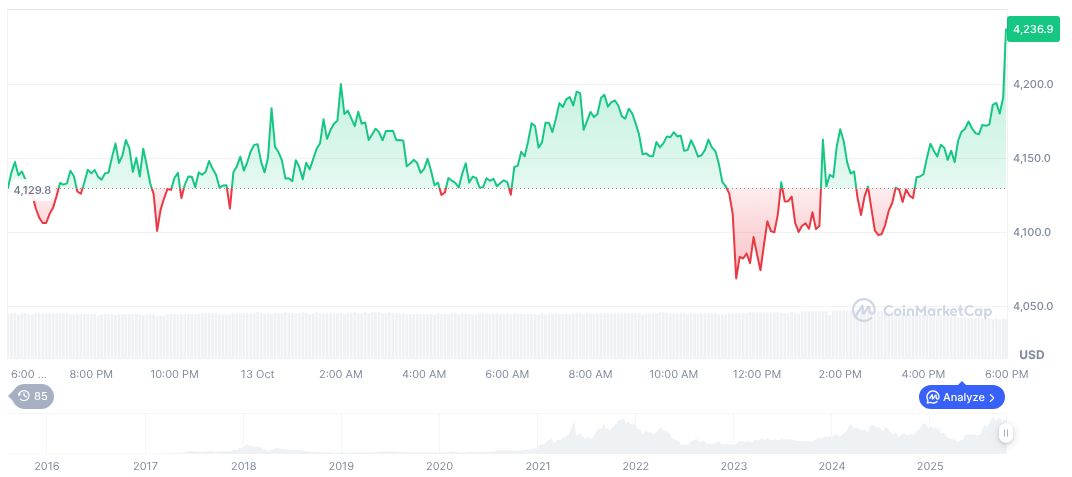
The Coincu research team suggests that if Fusaka succeeds, Ethereum could see lower operating costs, promoting more robust institutional participation. Improved data processing could enhance scalability, fostering greater ecosystem efficiency.
| DISCLAIMER: The information on this website is provided as general market commentary and does not constitute investment advice. We encourage you to do your own research before investing. |

No tags available.


Other Posts









- Amplify 2024: Ohio’s Premier Blockchain Summit
- Polymarket Announces U.S. Beta Relaunch Amid Market Buzz
- China, US Conclude Trade Talks with Focus on Cooperation
- Crypto Weekly: NYSE Backs OKX, Kraken Gets Fed Access, BTC Sells
- CELO holds as Celo reviews Opera 160M token claim
- DeriW Launches Edge Hour Trading Competition Platform for Derivatives Traders
- Michael Saylor Denies Bitcoin Sell-Off Amid Large BTC Transfer
- Court Upholds Fed’s Rejection of Custodia Bank’s Request
- EU Opens Antitrust Probe Into Deutsche Boerse and Nasdaq Derivatives Dealings
- Kazakhstan Explores Crypto Reserves Backed by National Funds
- JPMorgan Increases Holdings in BlackRock’s Bitcoin ETF
- Nordea Bank Introduces Bitcoin ETP Trading for Nordic Customers
- XRP Spot ETF Launches on Nasdaq Amid Market Fluctuations
- JPMorgan Chase Launches 24/7 Digital Deposit Token for Clients
- Crypto Leaders Address Macro Volatility Amid Market Shifts
- Former CFO Convicted for $35M Fraudulent Crypto Investment
- Peter Schiff Challenges Michael Saylor on MSTR’s Business Model
- Thailand Orders Worldcoin to Delete 1.2 Million Biometric Records
- UK Proposes New DeFi Tax Framework to Ease User Burden
- U.S. Treasury Proposes New Tax Relief Regulations
- Amplify 2024: Ohio’s Premier Blockchain Summit
- Polymarket Announces U.S. Beta Relaunch Amid Market Buzz
- China, US Conclude Trade Talks with Focus on Cooperation
- Crypto Weekly: NYSE Backs OKX, Kraken Gets Fed Access, BTC Sells
- CELO holds as Celo reviews Opera 160M token claim
- DeriW Launches Edge Hour Trading Competition Platform for Derivatives Traders
- Michael Saylor Denies Bitcoin Sell-Off Amid Large BTC Transfer
- Court Upholds Fed’s Rejection of Custodia Bank’s Request
- EU Opens Antitrust Probe Into Deutsche Boerse and Nasdaq Derivatives Dealings
- Kazakhstan Explores Crypto Reserves Backed by National Funds
- JPMorgan Increases Holdings in BlackRock’s Bitcoin ETF
- Nordea Bank Introduces Bitcoin ETP Trading for Nordic Customers
- XRP Spot ETF Launches on Nasdaq Amid Market Fluctuations
- JPMorgan Chase Launches 24/7 Digital Deposit Token for Clients
- Crypto Leaders Address Macro Volatility Amid Market Shifts
- Former CFO Convicted for $35M Fraudulent Crypto Investment
- Peter Schiff Challenges Michael Saylor on MSTR’s Business Model
- Thailand Orders Worldcoin to Delete 1.2 Million Biometric Records
- UK Proposes New DeFi Tax Framework to Ease User Burden
- U.S. Treasury Proposes New Tax Relief Regulations
- Amplify 2024: Ohio’s Premier Blockchain Summit
- Polymarket Announces U.S. Beta Relaunch Amid Market Buzz
- China, US Conclude Trade Talks with Focus on Cooperation
- Crypto Weekly: NYSE Backs OKX, Kraken Gets Fed Access, BTC Sells
- CELO holds as Celo reviews Opera 160M token claim
- DeriW Launches Edge Hour Trading Competition Platform for Derivatives Traders
- Michael Saylor Denies Bitcoin Sell-Off Amid Large BTC Transfer
- Court Upholds Fed’s Rejection of Custodia Bank’s Request
- EU Opens Antitrust Probe Into Deutsche Boerse and Nasdaq Derivatives Dealings
- Kazakhstan Explores Crypto Reserves Backed by National Funds
- JPMorgan Increases Holdings in BlackRock’s Bitcoin ETF
- Nordea Bank Introduces Bitcoin ETP Trading for Nordic Customers
- XRP Spot ETF Launches on Nasdaq Amid Market Fluctuations
- JPMorgan Chase Launches 24/7 Digital Deposit Token for Clients
- Crypto Leaders Address Macro Volatility Amid Market Shifts
- Former CFO Convicted for $35M Fraudulent Crypto Investment
- Peter Schiff Challenges Michael Saylor on MSTR’s Business Model
- Thailand Orders Worldcoin to Delete 1.2 Million Biometric Records
- UK Proposes New DeFi Tax Framework to Ease User Burden
- U.S. Treasury Proposes New Tax Relief Regulations
Latest

Bitcoin Mining After the 2028 Halving: Profit, Power, Infrastructure


Press Release

Polkadot’s $145M Legacy vs. DOGEBALL’s Future: These are the Best Cryptos to Buy Now
Enhanced Secures $1M in Strategic Pre-Seed Funding to Bring Structured Yield to More Assets Onchain