- Vitalik Buterin calls for improvements in decentralized stablecoins.
- Recommends shifting focus from USD pegs in long term.
- Analyzes yield competition as a structural issue.
Vitalik Buterin, co-founder of Ethereum, highlighted critical design issues within the crypto industry concerning decentralized stablecoins on January 11 via a detailed article.
The discussion focuses on stablecoin reliance on USD pegs, vulnerability to oracle manipulation by large entities, and uncompetitive yields compared to staking, impacting decentralized finance strategies.
Vitalik Buterin’s Stablecoin Reform Initiative
Vitalik Buterin, influential co-founder of Ethereum, has raised significant concerns over the current state of decentralized stablecoins. Expressing dissatisfaction with their present design, Buterin suggests that a shift beyond USD tracking, more resilient oracle systems, and competitive staking rewards are necessary for evolution. Buterin’s remarks underscore pivotal issues faced by decentralized stablecoins, especially the risk of over-reliance on USD’s stability and the systemic vulnerability to capital-driven oracle manipulation.
Buterin cites these as structural obstacles preventing broader adoption and sustainable growth within the crypto ecosystem. He emphasizes the need for a more robust framework to protect against large-scale capital attacks. Further, the persistent gap between staking rewards and stablecoin yields presents a challenge in attracting funds effectively. Responding to Buterin’s call, figures in the cryptocurrency sector have acknowledged the validity of these concerns. Though no immediate changes have been implemented, the community views his proposals as a call to action for comprehensive improvements in decentralized finance structures.
Vitalik Buterin, Co-founder, Ethereum – “The crypto industry urgently needs better decentralized stablecoins, but the hardest structural problems—over-dependence on USD, oracle capture by capital, and yield competition with staking—remain unsolved.” Source
Ethereum Price Dynamics Reflect Market Volatility
Did you know? Historically, Ethereum’s staking yield has posed a significant challenge to stablecoin returns, influencing the capital flow and liquidity’s sustainability within the crypto ecosystem.
As of January 11, Ethereum (ETH) trades at $3,109.29, holding a market cap of $375.27 billion and a 24-hour trading volume of $9.69 billion. Over 90 days, ETH has experienced a 27.14% price drop, reflecting broader market volatility. This data is sourced from CoinMarketCap and highlights the impact of market fluctuations on Ethereum’s price dynamics, particularly amid evolving market sentiments and technological analyses.
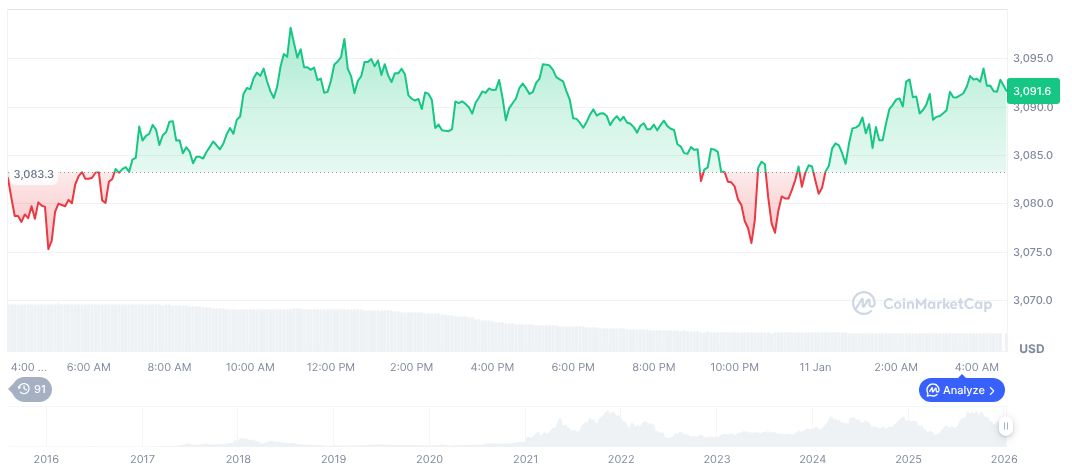
Insights from the Coincu research team anticipate that the issues Vitalik highlighted might significantly influence future decentralized stablecoin frameworks, potentially encouraging the inclusion of non-USD indices and innovative oracle models. The stakes between Ethereum’s PoS yield and stablecoin will persist as a core area for decentralized financial evolution.
| DISCLAIMER: The information on this website is provided as general market commentary and does not constitute investment advice. We encourage you to do your own research before investing. |

No tags available.


Other Posts









- Amplify 2024: Ohio’s Premier Blockchain Summit
- Polymarket Announces U.S. Beta Relaunch Amid Market Buzz
- China, US Conclude Trade Talks with Focus on Cooperation
- Crypto Weekly: NYSE Backs OKX, Kraken Gets Fed Access, BTC Sells
- CELO holds as Celo reviews Opera 160M token claim
- Michael Saylor Denies Bitcoin Sell-Off Amid Large BTC Transfer
- DeriW Launches Edge Hour Trading Competition Platform for Derivatives Traders
- Court Upholds Fed’s Rejection of Custodia Bank’s Request
- EU Opens Antitrust Probe Into Deutsche Boerse and Nasdaq Derivatives Dealings
- Kazakhstan Explores Crypto Reserves Backed by National Funds
- JPMorgan Increases Holdings in BlackRock’s Bitcoin ETF
- Nordea Bank Introduces Bitcoin ETP Trading for Nordic Customers
- XRP Spot ETF Launches on Nasdaq Amid Market Fluctuations
- JPMorgan Chase Launches 24/7 Digital Deposit Token for Clients
- Crypto Leaders Address Macro Volatility Amid Market Shifts
- Former CFO Convicted for $35M Fraudulent Crypto Investment
- Peter Schiff Challenges Michael Saylor on MSTR’s Business Model
- Thailand Orders Worldcoin to Delete 1.2 Million Biometric Records
- UK Proposes New DeFi Tax Framework to Ease User Burden
- U.S. Treasury Proposes New Tax Relief Regulations
- Amplify 2024: Ohio’s Premier Blockchain Summit
- Polymarket Announces U.S. Beta Relaunch Amid Market Buzz
- China, US Conclude Trade Talks with Focus on Cooperation
- Crypto Weekly: NYSE Backs OKX, Kraken Gets Fed Access, BTC Sells
- CELO holds as Celo reviews Opera 160M token claim
- Michael Saylor Denies Bitcoin Sell-Off Amid Large BTC Transfer
- DeriW Launches Edge Hour Trading Competition Platform for Derivatives Traders
- Court Upholds Fed’s Rejection of Custodia Bank’s Request
- EU Opens Antitrust Probe Into Deutsche Boerse and Nasdaq Derivatives Dealings
- Kazakhstan Explores Crypto Reserves Backed by National Funds
- JPMorgan Increases Holdings in BlackRock’s Bitcoin ETF
- Nordea Bank Introduces Bitcoin ETP Trading for Nordic Customers
- XRP Spot ETF Launches on Nasdaq Amid Market Fluctuations
- JPMorgan Chase Launches 24/7 Digital Deposit Token for Clients
- Crypto Leaders Address Macro Volatility Amid Market Shifts
- Former CFO Convicted for $35M Fraudulent Crypto Investment
- Peter Schiff Challenges Michael Saylor on MSTR’s Business Model
- Thailand Orders Worldcoin to Delete 1.2 Million Biometric Records
- UK Proposes New DeFi Tax Framework to Ease User Burden
- U.S. Treasury Proposes New Tax Relief Regulations
- Amplify 2024: Ohio’s Premier Blockchain Summit
- Polymarket Announces U.S. Beta Relaunch Amid Market Buzz
- China, US Conclude Trade Talks with Focus on Cooperation
- Crypto Weekly: NYSE Backs OKX, Kraken Gets Fed Access, BTC Sells
- CELO holds as Celo reviews Opera 160M token claim
- Michael Saylor Denies Bitcoin Sell-Off Amid Large BTC Transfer
- DeriW Launches Edge Hour Trading Competition Platform for Derivatives Traders
- Court Upholds Fed’s Rejection of Custodia Bank’s Request
- EU Opens Antitrust Probe Into Deutsche Boerse and Nasdaq Derivatives Dealings
- Kazakhstan Explores Crypto Reserves Backed by National Funds
- JPMorgan Increases Holdings in BlackRock’s Bitcoin ETF
- Nordea Bank Introduces Bitcoin ETP Trading for Nordic Customers
- XRP Spot ETF Launches on Nasdaq Amid Market Fluctuations
- JPMorgan Chase Launches 24/7 Digital Deposit Token for Clients
- Crypto Leaders Address Macro Volatility Amid Market Shifts
- Former CFO Convicted for $35M Fraudulent Crypto Investment
- Peter Schiff Challenges Michael Saylor on MSTR’s Business Model
- Thailand Orders Worldcoin to Delete 1.2 Million Biometric Records
- UK Proposes New DeFi Tax Framework to Ease User Burden
- U.S. Treasury Proposes New Tax Relief Regulations
Latest


Crypto Liquidations Hit $59.82M in 24 Hours as Shorts Lead Losses

Crypto Liquidations Reach $49.02M in 24 Hours as Shorts Lead Losses








Press Release

Best Crypto to Invest in Now: Why DOGEBALL Crypto Presale 2026 Outperforms Legacy ICOs

MEXC Announces USD1 Launchpool Event with 1,500,000 WLFI Prize Pool