- The Bank of Japan increased interest rates to 0.75% under Kazuo Ueda’s leadership.
- Rate hike marks end of 30-year low-interest era.
- Japan’s rate increase is highest since 1995.
The Bank of Japan increased the benchmark interest rate to 0.75%, its highest level since 1995, marking a significant policy shift amid a gently recovering economy.
This rate increase indicates Japan’s move away from prolonged low rates, potentially impacting global market dynamics, though immediate stringent effects on the economy are not observed yet.
Bank of Japan’s Rate Hike: A Historic Shift
Kazuo Ueda, Governor of the Bank of Japan, announced today that the institution has raised its short-term interest rate to 0.75%. This adjustment is significant as it is the highest rate since 1995, signaling Japan’s departure from its long-standing phase of extremely low interest rates. This marks a pivotal shift in the country’s monetary policy under Ueda’s leadership. According to Ueda, “If the outlook presented in the October 2025 Outlook Report will be realized, the Bank, in accordance with improvement in economic activity and prices, will continue to raise the policy interest rate.” BoJ Official PDF
The rate hike from 0.50% to 0.75% affects Japan’s economic landscape by potentially easing previous financial constraints. The decision follows positive indicators of economic recovery, with the central bank continuing to evaluate economic conditions before further adjustments. The financial community is closely observing the effects of this rate hike. Kazuo Ueda emphasized the ongoing analysis of this impact, particularly how it influences wages and prices, suggesting the possibility of future rate increases contingent on economic data outcomes.
Did you know? Japan’s recent interest rate hike to 0.75% signifies its highest level since 1995, ending a 30-year trend of ultra-low rates.
Economic Implications and Global Reactions to Japan’s Rate Decision
Did you know? Japan’s recent interest rate hike to 0.75% signifies its highest level since 1995, ending a 30-year trend of ultra-low rates.
Bitcoin’s current market metrics, according to CoinMarketCap, reflect a price of $88,457.33, a market cap of 1.77 trillion, and dominance at 59.16%. Although showing a 24-hour price increase of 0.23%, its value has declined 23.82% over 90 days.
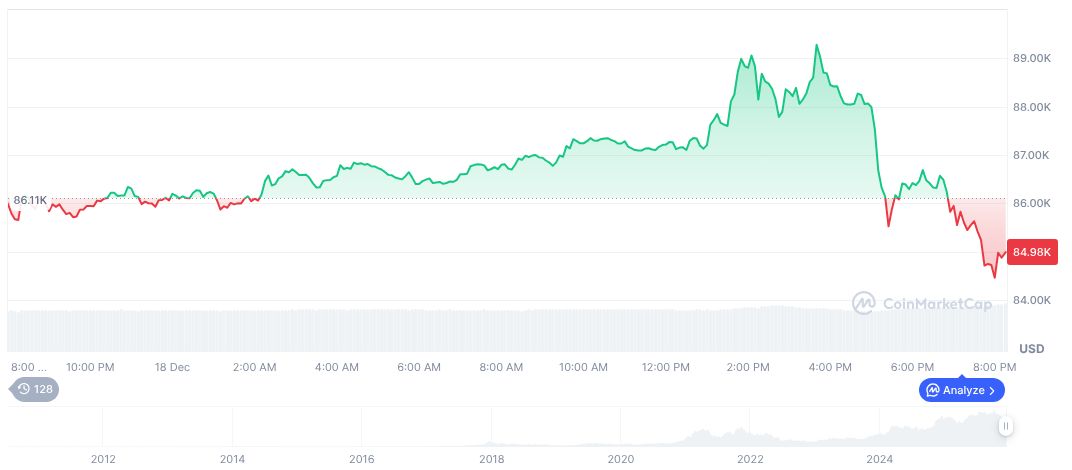
Insights from the Coincu research team indicate uncertainty in Japan’s regulatory direction could potentially shape global economic patterns. Monitoring how rate adjustments impact financial systems remains a priority, as institutions analyze the full effects of these recent decisions.
| DISCLAIMER: The information on this website is provided as general market commentary and does not constitute investment advice. We encourage you to do your own research before investing. |

No tags available.


Other Posts









- Amplify 2024: Ohio’s Premier Blockchain Summit
- Polymarket Announces U.S. Beta Relaunch Amid Market Buzz
- China, US Conclude Trade Talks with Focus on Cooperation
- Crypto Weekly: NYSE Backs OKX, Kraken Gets Fed Access, BTC Sells
- Michael Saylor Denies Bitcoin Sell-Off Amid Large BTC Transfer
- Court Upholds Fed’s Rejection of Custodia Bank’s Request
- EU Opens Antitrust Probe Into Deutsche Boerse and Nasdaq Derivatives Dealings
- Kazakhstan Explores Crypto Reserves Backed by National Funds
- Nordea Bank Introduces Bitcoin ETP Trading for Nordic Customers
- JPMorgan Increases Holdings in BlackRock’s Bitcoin ETF
- XRP Spot ETF Launches on Nasdaq Amid Market Fluctuations
- JPMorgan Chase Launches 24/7 Digital Deposit Token for Clients
- Crypto Leaders Address Macro Volatility Amid Market Shifts
- Former CFO Convicted for $35M Fraudulent Crypto Investment
- Peter Schiff Challenges Michael Saylor on MSTR’s Business Model
- Thailand Orders Worldcoin to Delete 1.2 Million Biometric Records
- UK Proposes New DeFi Tax Framework to Ease User Burden
- U.S. Treasury Proposes New Tax Relief Regulations
- Uniswap’s UNIfication Proposal Gains Massive Preliminary Support
- WLFI Under Fire: Analyst Warns Hyperliquid Could Be Next
- Amplify 2024: Ohio’s Premier Blockchain Summit
- Polymarket Announces U.S. Beta Relaunch Amid Market Buzz
- China, US Conclude Trade Talks with Focus on Cooperation
- Crypto Weekly: NYSE Backs OKX, Kraken Gets Fed Access, BTC Sells
- Michael Saylor Denies Bitcoin Sell-Off Amid Large BTC Transfer
- Court Upholds Fed’s Rejection of Custodia Bank’s Request
- EU Opens Antitrust Probe Into Deutsche Boerse and Nasdaq Derivatives Dealings
- Kazakhstan Explores Crypto Reserves Backed by National Funds
- Nordea Bank Introduces Bitcoin ETP Trading for Nordic Customers
- JPMorgan Increases Holdings in BlackRock’s Bitcoin ETF
- XRP Spot ETF Launches on Nasdaq Amid Market Fluctuations
- JPMorgan Chase Launches 24/7 Digital Deposit Token for Clients
- Crypto Leaders Address Macro Volatility Amid Market Shifts
- Former CFO Convicted for $35M Fraudulent Crypto Investment
- Peter Schiff Challenges Michael Saylor on MSTR’s Business Model
- Thailand Orders Worldcoin to Delete 1.2 Million Biometric Records
- UK Proposes New DeFi Tax Framework to Ease User Burden
- U.S. Treasury Proposes New Tax Relief Regulations
- Uniswap’s UNIfication Proposal Gains Massive Preliminary Support
- WLFI Under Fire: Analyst Warns Hyperliquid Could Be Next
- Amplify 2024: Ohio’s Premier Blockchain Summit
- Polymarket Announces U.S. Beta Relaunch Amid Market Buzz
- China, US Conclude Trade Talks with Focus on Cooperation
- Crypto Weekly: NYSE Backs OKX, Kraken Gets Fed Access, BTC Sells
- Michael Saylor Denies Bitcoin Sell-Off Amid Large BTC Transfer
- Court Upholds Fed’s Rejection of Custodia Bank’s Request
- EU Opens Antitrust Probe Into Deutsche Boerse and Nasdaq Derivatives Dealings
- Kazakhstan Explores Crypto Reserves Backed by National Funds
- Nordea Bank Introduces Bitcoin ETP Trading for Nordic Customers
- JPMorgan Increases Holdings in BlackRock’s Bitcoin ETF
- XRP Spot ETF Launches on Nasdaq Amid Market Fluctuations
- JPMorgan Chase Launches 24/7 Digital Deposit Token for Clients
- Crypto Leaders Address Macro Volatility Amid Market Shifts
- Former CFO Convicted for $35M Fraudulent Crypto Investment
- Peter Schiff Challenges Michael Saylor on MSTR’s Business Model
- Thailand Orders Worldcoin to Delete 1.2 Million Biometric Records
- UK Proposes New DeFi Tax Framework to Ease User Burden
- U.S. Treasury Proposes New Tax Relief Regulations
- Uniswap’s UNIfication Proposal Gains Massive Preliminary Support
- WLFI Under Fire: Analyst Warns Hyperliquid Could Be Next
Latest

Traders Now Price In Over 50% Odds of Fed Rate Hike in 2026 — Crypto Impact

PeakAI Raises $2M Seed Funding to Power AI-Driven Web3 Marketing Analytics

US Bill Proposes Ban on President and Congress Members From Prediction Markets








Press Release

Bitmine Immersion Technologies (BMNR) Announces Launch of MAVAN (Made In America VAlidator Network), the Company’s Proprietary Staking Solution

BYDFi Expands European Reach with Next Block Expo 2026 Sponsorship in Warsaw