Oil above $110 alone won’t decouple Bitcoin from stocks
The claim that oil sustained above $110 would break Bitcoin’s correlation with U.S. equities lacks explicit backing from named institutions and recent public research. Correlation regimes in crypto have historically shifted with multiple macro variables acting together, not from a single commodity threshold.
Any durable decoupling would likely require broader shifts in inflation expectations, real rates, U.S. dollar dynamics, and liquidity conditions. Oil is a catalyst within those channels, but by itself it is not a sufficient trigger.
Why this claim matters for the digital-gold narrative
Whether Bitcoin behaves more like a risk asset or a store of value is central to its “digital gold” framing. Institutional commentary has recently emphasized equity-linked behavior over safe-haven properties.
“Bitcoin’s ‘digital gold’ narrative is under pressure,” said analysts at JPMorgan. That view reflects concerns about volatility and equity-market sensitivity in the post-ETF era.
Recent bank commentary has also challenged the safe-haven case. “Bitcoin has ‘decoupled’ from gold,” said Marion Laboure, a strategist at Deutsche Bank, highlighting that gold, not Bitcoin, has led haven flows in recent periods.
Immediate market signals and institutional commentary snapshot
At the time of this writing, Bitcoin (BTC) trades near 67,882 with a Neutral RSI (14) around 46 and medium volatility of about 4.50%. Trend gauges show price below the 50-day SMA near 77,048 and the 200-day SMA near 96,782, consistent with a cautious tone.
As reported by FXStreet, Bitcoin has struggled below the psychologically important 70,000 level while its correlation with tech stocks has tightened. That backdrop argues against a simple oil-price threshold flipping Bitcoin into a safe-haven regime.
Taken together, near-term tape action, positioning, and macro sensitivity still look more equity-like than commodity-like. The federal reserve’s policy stance, by shaping real yields and liquidity, remains an overarching driver of those correlations.
How oil can influence Bitcoin via macro channels
Inflation expectations, USD strength, real rates, and Federal Reserve stance
Higher oil can lift headline and implied inflation, potentially firming the U.S. dollar and nudging real rates higher. Tighter real financial conditions often pressure risk assets, including Bitcoin, especially when growth concerns rise. If, instead, inflation rises while policy remains accommodative, negative real yields could support scarce assets, but that requires more than oil alone. The Federal Reserve’s reaction function is pivotal in determining which path dominates.
Liquidity, risk sentiment, and ETF flow sensitivities
Oil shocks can alter global risk appetite and cross-asset liquidity, which in turn affect crypto market depth and ETF flow behavior. In stress episodes, investors often de-risk broadly, keeping Bitcoin aligned with equities. Only if a weaker dollar, easier financial conditions, and sustained haven demand emerge together might Bitcoin’s behavior tilt toward a gold-like profile.
FAQ about Bitcoin correlation with U.S. stocks
What is Bitcoin’s current correlation with the S&P 500 and with gold since spot ETF approvals?
according to a December 2025 working paper on arXiv, BTC–S&P correlation increased; BTC–gold hovered near zero post U.S. spot ETF approvals.
How do higher oil prices feed into inflation, the U.S. dollar, and real rates, and what does that mean for Bitcoin?
Higher oil can lift inflation expectations, firm the dollar, and push real rates up, which historically tightens financial conditions and can pressure Bitcoin’s risk-sensitive flows.
| DISCLAIMER: The information on this website is provided as general market commentary and does not constitute investment advice. We encourage you to do your own research before investing. |


Other Posts









- Amplify 2024: Ohio’s Premier Blockchain Summit
- Polymarket Announces U.S. Beta Relaunch Amid Market Buzz
- China, US Conclude Trade Talks with Focus on Cooperation
- Crypto Weekly: NYSE Backs OKX, Kraken Gets Fed Access, BTC Sells
- CELO holds as Celo reviews Opera 160M token claim
- DeriW Launches Edge Hour Trading Competition Platform for Derivatives Traders
- Michael Saylor Denies Bitcoin Sell-Off Amid Large BTC Transfer
- Court Upholds Fed’s Rejection of Custodia Bank’s Request
- EU Opens Antitrust Probe Into Deutsche Boerse and Nasdaq Derivatives Dealings
- Kazakhstan Explores Crypto Reserves Backed by National Funds
- JPMorgan Increases Holdings in BlackRock’s Bitcoin ETF
- Nordea Bank Introduces Bitcoin ETP Trading for Nordic Customers
- XRP Spot ETF Launches on Nasdaq Amid Market Fluctuations
- JPMorgan Chase Launches 24/7 Digital Deposit Token for Clients
- Crypto Leaders Address Macro Volatility Amid Market Shifts
- Former CFO Convicted for $35M Fraudulent Crypto Investment
- Peter Schiff Challenges Michael Saylor on MSTR’s Business Model
- Thailand Orders Worldcoin to Delete 1.2 Million Biometric Records
- UK Proposes New DeFi Tax Framework to Ease User Burden
- U.S. Treasury Proposes New Tax Relief Regulations
- Amplify 2024: Ohio’s Premier Blockchain Summit
- Polymarket Announces U.S. Beta Relaunch Amid Market Buzz
- China, US Conclude Trade Talks with Focus on Cooperation
- Crypto Weekly: NYSE Backs OKX, Kraken Gets Fed Access, BTC Sells
- CELO holds as Celo reviews Opera 160M token claim
- DeriW Launches Edge Hour Trading Competition Platform for Derivatives Traders
- Michael Saylor Denies Bitcoin Sell-Off Amid Large BTC Transfer
- Court Upholds Fed’s Rejection of Custodia Bank’s Request
- EU Opens Antitrust Probe Into Deutsche Boerse and Nasdaq Derivatives Dealings
- Kazakhstan Explores Crypto Reserves Backed by National Funds
- JPMorgan Increases Holdings in BlackRock’s Bitcoin ETF
- Nordea Bank Introduces Bitcoin ETP Trading for Nordic Customers
- XRP Spot ETF Launches on Nasdaq Amid Market Fluctuations
- JPMorgan Chase Launches 24/7 Digital Deposit Token for Clients
- Crypto Leaders Address Macro Volatility Amid Market Shifts
- Former CFO Convicted for $35M Fraudulent Crypto Investment
- Peter Schiff Challenges Michael Saylor on MSTR’s Business Model
- Thailand Orders Worldcoin to Delete 1.2 Million Biometric Records
- UK Proposes New DeFi Tax Framework to Ease User Burden
- U.S. Treasury Proposes New Tax Relief Regulations
- Amplify 2024: Ohio’s Premier Blockchain Summit
- Polymarket Announces U.S. Beta Relaunch Amid Market Buzz
- China, US Conclude Trade Talks with Focus on Cooperation
- Crypto Weekly: NYSE Backs OKX, Kraken Gets Fed Access, BTC Sells
- CELO holds as Celo reviews Opera 160M token claim
- DeriW Launches Edge Hour Trading Competition Platform for Derivatives Traders
- Michael Saylor Denies Bitcoin Sell-Off Amid Large BTC Transfer
- Court Upholds Fed’s Rejection of Custodia Bank’s Request
- EU Opens Antitrust Probe Into Deutsche Boerse and Nasdaq Derivatives Dealings
- Kazakhstan Explores Crypto Reserves Backed by National Funds
- JPMorgan Increases Holdings in BlackRock’s Bitcoin ETF
- Nordea Bank Introduces Bitcoin ETP Trading for Nordic Customers
- XRP Spot ETF Launches on Nasdaq Amid Market Fluctuations
- JPMorgan Chase Launches 24/7 Digital Deposit Token for Clients
- Crypto Leaders Address Macro Volatility Amid Market Shifts
- Former CFO Convicted for $35M Fraudulent Crypto Investment
- Peter Schiff Challenges Michael Saylor on MSTR’s Business Model
- Thailand Orders Worldcoin to Delete 1.2 Million Biometric Records
- UK Proposes New DeFi Tax Framework to Ease User Burden
- U.S. Treasury Proposes New Tax Relief Regulations
Latest

Pharos Network and OKX Wallet Launch ‘Stake Before the Stake’ Event


Bitcoin Slides to $71,000 as Hormuz Tensions Hit Risk Appetite
Press Release
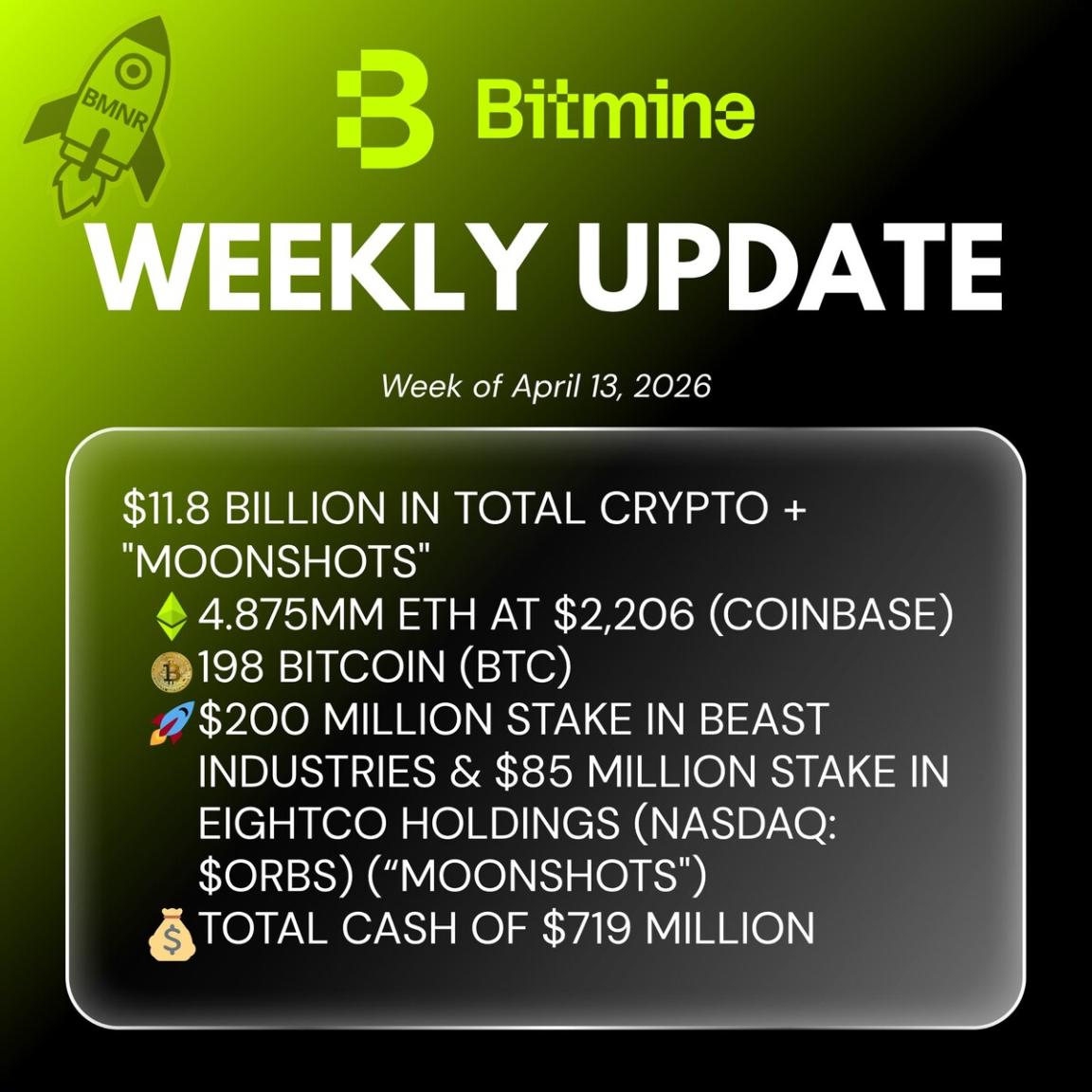
Bitmine Immersion Technologies (BMNR) Announces ETH Holdings Reach 4.875 Million Tokens, and Total Crypto and Total Cash Holdings of $11.8 Billion

Cango’s HPC and AI Inference Subsidiary, EcoHash, Begins Commercial Operations