Fed Rate Hold Probability Reaches 94.8% for April 2026 FOMC Meeting
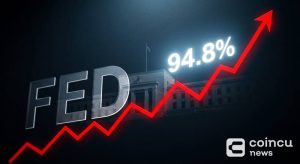
The CME FedWatch Tool now shows a 94.8% probability that the Federal Reserve will keep interest rates unchanged at its April 2026 FOMC meeting, reinforcing expectations of a prolonged pause in monetary policy that continues to shape risk asset positioning across crypto markets.
CME FedWatch Now Prices Near-Certainty of an April Hold
The CME FedWatch Tool, which derives probabilities from federal funds futures contracts, assigns just a 5.2% combined probability to any rate change at the April 29-30 FOMC meeting. The current federal funds rate target range stands at 4.25%-4.50%, where it has remained since December 2024.
This near-unanimous market expectation follows the March 2026 FOMC meeting, where futures markets had similarly priced in a 96% probability of a rate hold. The pattern reflects a market that has fully accepted the Fed’s “higher for longer” stance heading into the second quarter of 2026.
The tiny residual probability is split between a small chance of a 25 basis point cut and a negligible chance of a hike. Neither outcome is considered a realistic base case by rate traders at this stage.
Why the Fed Is Expected to Stay Put
The Federal Reserve has maintained a consistent message throughout early 2026: rate cuts require sustained evidence that inflation is converging toward the 2% target. With the current pause now stretching past 15 months since the last rate adjustment in December 2024, the FOMC has shown no urgency to move in either direction.
Labor market resilience has been a key factor keeping the Fed on hold. Steady employment conditions reduce the pressure to ease policy preemptively, even as some sectors of the economy show signs of slowing. The Fed has repeatedly signaled that the labor market would need to deteriorate meaningfully before rate cuts come into serious consideration.
Inflation readings, while trending lower from their 2022-2023 peaks, have not yet provided the “sustained” decline the FOMC has set as its threshold. The Fed’s December 2025 Summary of Economic Projections indicated fewer rate cuts for 2026 than markets had originally anticipated at the start of the year, a hawkish signal that continues to anchor expectations.
Commentary from Fed officials has reinforced patience. Multiple FOMC members have emphasized a data-dependent approach, suggesting that the bar for the next move, whether a cut or a hike, remains high.
What a Prolonged Rate Hold Means for Crypto
For crypto markets, the distinction between a hold and a cut matters more than it might appear. A rate cut signals active easing and typically drives capital toward risk assets. A hold, by contrast, simply maintains the status quo, keeping borrowing costs elevated and limiting the liquidity expansion that has historically fueled crypto rallies.
Bitcoin has traded within a range-bound pattern for much of early 2026, reflecting a market that has already priced in the Fed’s reluctance to cut. With a 94.8% hold probability, the April meeting is unlikely to serve as a catalyst in either direction unless the remaining 5.2% scenario materializes as a surprise.
The “priced in” dynamic is important. When markets assign near-certainty to an outcome, the actual event tends to produce minimal volatility. The risk for crypto traders lies not in the April decision itself, but in any data between now and April 29 that shifts the probability distribution.
DeFi lending rates and stablecoin yields remain closely tethered to the federal funds rate environment. With rates held at 4.25%-4.50%, on-chain lending protocols continue to offer yields that compete with traditional money market instruments, a dynamic that has supported stablecoin ecosystem growth and kept capital circulating within DeFi rather than exiting to traditional finance.
The broader risk appetite picture, measured through the Dollar Index (DXY) and Treasury yields, also reflects the hold consensus. A stable rate environment has kept the dollar from strengthening further, providing a neutral-to-slightly-supportive backdrop for Bitcoin and other digital assets.
Upcoming Data That Could Shift the Odds
While 94.8% suggests near-certainty, rate probabilities can shift rapidly on a single data miss. Between now and the April 29-30 meeting, several scheduled releases have the potential to move FedWatch probabilities by 10 or more percentage points.
The April CPI report, typically released in the second week of the month, is the most closely watched data point. A surprise uptick in core inflation could push hike odds higher, while a sharp deceleration could revive cut expectations. The March jobs report, due in early April, carries similar weight.
The PCE price index, the Fed’s preferred inflation gauge, will also publish before the meeting. This release has historically produced some of the largest single-day swings in rate expectations when it deviates from consensus forecasts.
The FOMC pre-meeting blackout period, during which Fed officials refrain from public commentary, typically begins about 10 days before the meeting. That means any signals from policymakers will need to come before approximately April 19. After that, the market trades purely on incoming data.
For context, the full-year 2026 rate expectations still price in the possibility of one to two cuts before year-end, suggesting that while April is considered a hold, the second half of the year remains in play. Leveraged crypto positions, including the type of high-multiple trades that have defined recent market activity, are particularly sensitive to any sudden repricing of these expectations.
The 2023-2024 Pause Cycle Offers a Precedent
The current extended hold is not without historical precedent in the crypto era. The Fed held rates steady from July 2023 through September 2024, a 14-month pause during which Bitcoin rallied from approximately $29,000 to over $60,000 before the first cut arrived.
That pause cycle demonstrated a key pattern: crypto markets can rally during a hold period if the market believes cuts are eventually coming. The anticipation of future easing, rather than the easing itself, drove risk-on positioning throughout late 2023 and into 2024.
The current situation shares some structural similarities. Rates are elevated, the Fed is waiting for data confirmation, and crypto markets are positioning for an eventual policy shift. The critical difference is timing expectations. In mid-2023, markets were pricing in cuts within six months. In March 2026, expectations for the first 2026 cut have been pushed further out.
During the 2023 pause, FedWatch probabilities above 90% for a hold proved accurate at every meeting until the September 2024 cut. That track record suggests the 94.8% April reading is likely to hold, but also that the more interesting question is when, not whether, the Fed eventually moves.
The leverage-heavy positioning across Ethereum and altcoin markets adds a layer of fragility to the current setup. Even if the April hold itself is uneventful, any unexpected shift in the macro narrative could trigger cascading liquidations in a market that has grown accustomed to stability.
For crypto investors, the 94.8% figure is not the story. The story is what happens to the remaining probability, and how quickly it can change, between now and April 29.
Disclaimer: This article is for informational purposes only and does not constitute financial or investment advice. Cryptocurrency and digital asset markets carry significant risk. Always do your own research before making decisions.

No tags available.


Other Posts









- Amplify 2024: Ohio’s Premier Blockchain Summit
- Polymarket Announces U.S. Beta Relaunch Amid Market Buzz
- China, US Conclude Trade Talks with Focus on Cooperation
- Crypto Weekly: NYSE Backs OKX, Kraken Gets Fed Access, BTC Sells
- Michael Saylor Denies Bitcoin Sell-Off Amid Large BTC Transfer
- Court Upholds Fed’s Rejection of Custodia Bank’s Request
- EU Opens Antitrust Probe Into Deutsche Boerse and Nasdaq Derivatives Dealings
- Kazakhstan Explores Crypto Reserves Backed by National Funds
- Nordea Bank Introduces Bitcoin ETP Trading for Nordic Customers
- JPMorgan Increases Holdings in BlackRock’s Bitcoin ETF
- XRP Spot ETF Launches on Nasdaq Amid Market Fluctuations
- JPMorgan Chase Launches 24/7 Digital Deposit Token for Clients
- Crypto Leaders Address Macro Volatility Amid Market Shifts
- Former CFO Convicted for $35M Fraudulent Crypto Investment
- Peter Schiff Challenges Michael Saylor on MSTR’s Business Model
- Thailand Orders Worldcoin to Delete 1.2 Million Biometric Records
- UK Proposes New DeFi Tax Framework to Ease User Burden
- U.S. Treasury Proposes New Tax Relief Regulations
- Uniswap’s UNIfication Proposal Gains Massive Preliminary Support
- WLFI Under Fire: Analyst Warns Hyperliquid Could Be Next
- Amplify 2024: Ohio’s Premier Blockchain Summit
- Polymarket Announces U.S. Beta Relaunch Amid Market Buzz
- China, US Conclude Trade Talks with Focus on Cooperation
- Crypto Weekly: NYSE Backs OKX, Kraken Gets Fed Access, BTC Sells
- Michael Saylor Denies Bitcoin Sell-Off Amid Large BTC Transfer
- Court Upholds Fed’s Rejection of Custodia Bank’s Request
- EU Opens Antitrust Probe Into Deutsche Boerse and Nasdaq Derivatives Dealings
- Kazakhstan Explores Crypto Reserves Backed by National Funds
- Nordea Bank Introduces Bitcoin ETP Trading for Nordic Customers
- JPMorgan Increases Holdings in BlackRock’s Bitcoin ETF
- XRP Spot ETF Launches on Nasdaq Amid Market Fluctuations
- JPMorgan Chase Launches 24/7 Digital Deposit Token for Clients
- Crypto Leaders Address Macro Volatility Amid Market Shifts
- Former CFO Convicted for $35M Fraudulent Crypto Investment
- Peter Schiff Challenges Michael Saylor on MSTR’s Business Model
- Thailand Orders Worldcoin to Delete 1.2 Million Biometric Records
- UK Proposes New DeFi Tax Framework to Ease User Burden
- U.S. Treasury Proposes New Tax Relief Regulations
- Uniswap’s UNIfication Proposal Gains Massive Preliminary Support
- WLFI Under Fire: Analyst Warns Hyperliquid Could Be Next
- Amplify 2024: Ohio’s Premier Blockchain Summit
- Polymarket Announces U.S. Beta Relaunch Amid Market Buzz
- China, US Conclude Trade Talks with Focus on Cooperation
- Crypto Weekly: NYSE Backs OKX, Kraken Gets Fed Access, BTC Sells
- Michael Saylor Denies Bitcoin Sell-Off Amid Large BTC Transfer
- Court Upholds Fed’s Rejection of Custodia Bank’s Request
- EU Opens Antitrust Probe Into Deutsche Boerse and Nasdaq Derivatives Dealings
- Kazakhstan Explores Crypto Reserves Backed by National Funds
- Nordea Bank Introduces Bitcoin ETP Trading for Nordic Customers
- JPMorgan Increases Holdings in BlackRock’s Bitcoin ETF
- XRP Spot ETF Launches on Nasdaq Amid Market Fluctuations
- JPMorgan Chase Launches 24/7 Digital Deposit Token for Clients
- Crypto Leaders Address Macro Volatility Amid Market Shifts
- Former CFO Convicted for $35M Fraudulent Crypto Investment
- Peter Schiff Challenges Michael Saylor on MSTR’s Business Model
- Thailand Orders Worldcoin to Delete 1.2 Million Biometric Records
- UK Proposes New DeFi Tax Framework to Ease User Burden
- U.S. Treasury Proposes New Tax Relief Regulations
- Uniswap’s UNIfication Proposal Gains Massive Preliminary Support
- WLFI Under Fire: Analyst Warns Hyperliquid Could Be Next
Latest

Milan: Very Optimistic About Stablecoins, Plans to Increase Investment in USD Ecosystem

ETH Liquidation Alert: $1.241B at Risk If Ether Drops Below $2,061








Press Release

Bitmine Immersion Technologies (BMNR) Announces Launch of MAVAN (Made In America VAlidator Network), the Company’s Proprietary Staking Solution

BYDFi Expands European Reach with Next Block Expo 2026 Sponsorship in Warsaw