








- Federal Reserve considers rate cuts amid concerns over U.S. labor data.
- UBS economist highlights risks as BLS data shows potential market weakness.
- Market response cautious due to uncertain economic data quality.
UBS analysis highlights potential weaknesses in the U.S. labor market as October data, released amid a government shutdown in 2025, raises concerns for future Federal Reserve rate cuts.
The employment data’s ripple effects emphasize market caution, possibly influencing the Federal Reserve’s monetary policy, despite current economic stability and a strategy to maintain observed rates.
UBS Flags Labor Data Weakness, Federal Reserve Rate Cut Likely
UBS’s analysis points out that weaknesses in U.S. employment data have drawn attention to the Federal Reserve’s interest rate policy. This renewed focus comes after labor market reports indicated significant negative trends, largely attributed to recent government shutdowns impacting data quality. UBS economist Paul Donovan remarked on the report’s cautionary notes due to the bureau’s low response rate.
The employment report highlights a substantial shortfall in jobs, with nonfarm payrolls adding only 64,000 positions in November. A rise in involuntary part-time positions and a climb in the short-term unemployed are noted concerns. Federal job numbers showed ongoing losses, continuing trends from previous months. Donovan suggests these labor indicators might prompt the Fed to implement rate cuts in 2026’s first quarter.
Paul Donovan, Chief Economist, UBS, – ‘raised several red flags’ due to low BLS survey response rates from the government shutdown, but cautioned consumer resilience remains.” – UBS Insights
Economic Instability Prompts Fed to Consider Interest Rate Adjustments
Did you know? Despite recent challenges in U.S. labor data collection, the historical pattern shows that such economic fluctuations often prompt amendments in Federal Reserve policies, like the 1998 and 2001 adjustments, to stabilize the market environment and support employment growth.
Based on data from CoinMarketCap, Bitcoin (BTC) recently traded at $86,700.05, boasting a market capitalization of $1.73 trillion and accounting for 59.35% of the market dominance. With a 24-hour trading volume at $43.79 billion, Bitcoin experienced a slight 0.36% price dip in the last day. The current circulating supply is 19,963,637.
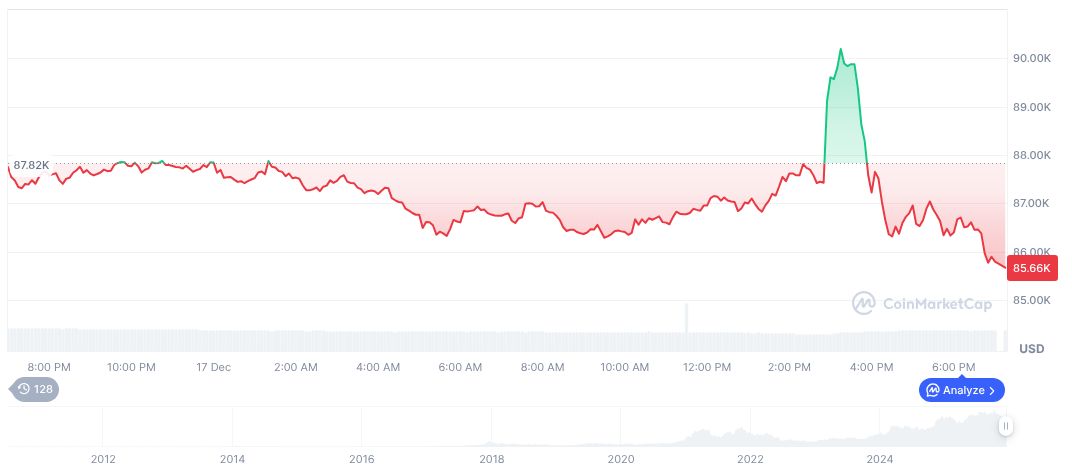
The Coincu Research Team foresees that if labor-related economic data continues to falter, it might compel further Federal Reserve interventions. The available data, in tandem with established historical trends, could lead to potential diversifying financial instruments or policies to tackle economic uncertainties.
| DISCLAIMER: The information on this website is provided as general market commentary and does not constitute investment advice. We encourage you to do your own research before investing. |

No tags available.


Other Posts









- Amplify 2024: Ohio’s Premier Blockchain Summit
- Polymarket Announces U.S. Beta Relaunch Amid Market Buzz
- China, US Conclude Trade Talks with Focus on Cooperation
- Crypto Weekly: NYSE Backs OKX, Kraken Gets Fed Access, BTC Sells
- CELO holds as Celo reviews Opera 160M token claim
- DeriW Launches Edge Hour Trading Competition Platform for Derivatives Traders
- Michael Saylor Denies Bitcoin Sell-Off Amid Large BTC Transfer
- Court Upholds Fed’s Rejection of Custodia Bank’s Request
- EU Opens Antitrust Probe Into Deutsche Boerse and Nasdaq Derivatives Dealings
- Kazakhstan Explores Crypto Reserves Backed by National Funds
- JPMorgan Increases Holdings in BlackRock’s Bitcoin ETF
- Nordea Bank Introduces Bitcoin ETP Trading for Nordic Customers
- XRP Spot ETF Launches on Nasdaq Amid Market Fluctuations
- JPMorgan Chase Launches 24/7 Digital Deposit Token for Clients
- Crypto Leaders Address Macro Volatility Amid Market Shifts
- Former CFO Convicted for $35M Fraudulent Crypto Investment
- Peter Schiff Challenges Michael Saylor on MSTR’s Business Model
- Thailand Orders Worldcoin to Delete 1.2 Million Biometric Records
- UK Proposes New DeFi Tax Framework to Ease User Burden
- U.S. Treasury Proposes New Tax Relief Regulations
- Amplify 2024: Ohio’s Premier Blockchain Summit
- Polymarket Announces U.S. Beta Relaunch Amid Market Buzz
- China, US Conclude Trade Talks with Focus on Cooperation
- Crypto Weekly: NYSE Backs OKX, Kraken Gets Fed Access, BTC Sells
- CELO holds as Celo reviews Opera 160M token claim
- DeriW Launches Edge Hour Trading Competition Platform for Derivatives Traders
- Michael Saylor Denies Bitcoin Sell-Off Amid Large BTC Transfer
- Court Upholds Fed’s Rejection of Custodia Bank’s Request
- EU Opens Antitrust Probe Into Deutsche Boerse and Nasdaq Derivatives Dealings
- Kazakhstan Explores Crypto Reserves Backed by National Funds
- JPMorgan Increases Holdings in BlackRock’s Bitcoin ETF
- Nordea Bank Introduces Bitcoin ETP Trading for Nordic Customers
- XRP Spot ETF Launches on Nasdaq Amid Market Fluctuations
- JPMorgan Chase Launches 24/7 Digital Deposit Token for Clients
- Crypto Leaders Address Macro Volatility Amid Market Shifts
- Former CFO Convicted for $35M Fraudulent Crypto Investment
- Peter Schiff Challenges Michael Saylor on MSTR’s Business Model
- Thailand Orders Worldcoin to Delete 1.2 Million Biometric Records
- UK Proposes New DeFi Tax Framework to Ease User Burden
- U.S. Treasury Proposes New Tax Relief Regulations
- Amplify 2024: Ohio’s Premier Blockchain Summit
- Polymarket Announces U.S. Beta Relaunch Amid Market Buzz
- China, US Conclude Trade Talks with Focus on Cooperation
- Crypto Weekly: NYSE Backs OKX, Kraken Gets Fed Access, BTC Sells
- CELO holds as Celo reviews Opera 160M token claim
- DeriW Launches Edge Hour Trading Competition Platform for Derivatives Traders
- Michael Saylor Denies Bitcoin Sell-Off Amid Large BTC Transfer
- Court Upholds Fed’s Rejection of Custodia Bank’s Request
- EU Opens Antitrust Probe Into Deutsche Boerse and Nasdaq Derivatives Dealings
- Kazakhstan Explores Crypto Reserves Backed by National Funds
- JPMorgan Increases Holdings in BlackRock’s Bitcoin ETF
- Nordea Bank Introduces Bitcoin ETP Trading for Nordic Customers
- XRP Spot ETF Launches on Nasdaq Amid Market Fluctuations
- JPMorgan Chase Launches 24/7 Digital Deposit Token for Clients
- Crypto Leaders Address Macro Volatility Amid Market Shifts
- Former CFO Convicted for $35M Fraudulent Crypto Investment
- Peter Schiff Challenges Michael Saylor on MSTR’s Business Model
- Thailand Orders Worldcoin to Delete 1.2 Million Biometric Records
- UK Proposes New DeFi Tax Framework to Ease User Burden
- U.S. Treasury Proposes New Tax Relief Regulations
Latest

Morph Stablecoin Report: $33T Annual Volume, 10% Cross-Border Payments by 2030

Bitcoin Whale Reopens $10.09M Short After Liquidation: On-Chain Signals to Watch

Pharos Network Raises $44M Series A With SNZ Holding Participation
Press Release

Wirex and Utorg Bring Seamless Crypto-to-Card Spending to 2M+ Users Worldwide

BC.GAME Launches BC Engine: Instant $BC, Auto-Staked and Paid Hourly in BCD
