- US CPI data shows inflation at 2.7%, surprising many.
- Market expected a 3.1% inflation rate.
- Tariff impact on inflation lower than expected.
The US Bureau of Labor Statistics reported an inflation rate of 2.7% for January 2026, significantly below market expectations of 3.1%, impacting market forecasts in the United States.
Lower-than-expected inflation could ease the Federal Reserve’s monetary policy, influencing risk assets, despite no direct reactions yet from the cryptocurrency market or key financial figures.
US CPI at 2.7% as Tariff Effects Fade
The US Bureau of Labor Statistics revealed a 2.7% rise in CPI for January, deviating from Wall Street’s anticipated 3.1%. Consumer Price Index overview from Bureau of Labor Statistics, tariff effects on inflation, expected to be strong, were found significantly limited, as discussed in San Francisco Fed studies.
The falling inflation might suggest potential monetary policy adjustments. Analysts find that the lower tariffs’ impact allows easing inflationary pressures, possibly affecting market attitudes towards risk assets. “It appears there are no relevant quotes or statements from key players, leadership figures, or KOLs in the cryptocurrency space in relation to the recent US CPI data release of approximately 2.7% YoY for the latest period.”
While there is minimal impact on cryptocurrencies like Bitcoin, FRED graph showing specific economic data trends, the financial community discusses the implications of potentially changed Federal Reserve stances. No major statements from crypto leaders have emerged on this topic.
Bitcoin’s Market Cap Hits $1.86 Trillion Amid CPI News
Did you know? In periods following unexpected CPI data releases, market corrections often shift investor strategies, reflecting in diversified portfolios.
As of January 6, 2026, Bitcoin is priced at $93,071.83, according to CoinMarketCap. Its market cap stands at $1.86 trillion with a dominance of 58.23%. Despite recent fluctuations, Bitcoin’s price has declined by 24.53% over the last 90 days, as discussed by Coincu research team.
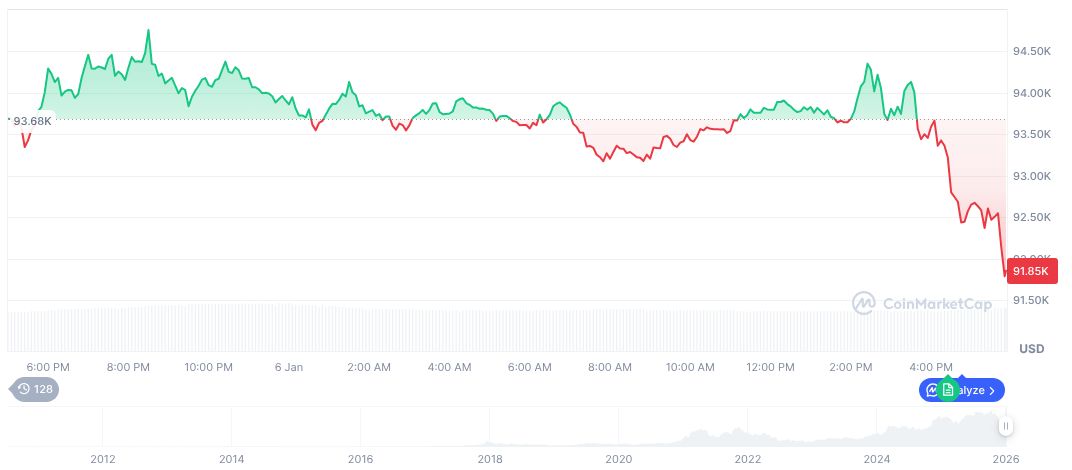
Insights from the Coincu research team indicate that the continued decline in tariff revenues may lead to fiscal reform pressures. Analysts believe that despite the potential for regulatory adjustments, technological decentralization in cryptocurrencies remains unaffected.
| DISCLAIMER: The information on this website is provided as general market commentary and does not constitute investment advice. We encourage you to do your own research before investing. |

No tags available.


Other Posts









- Amplify 2024: Ohio’s Premier Blockchain Summit
- Polymarket Announces U.S. Beta Relaunch Amid Market Buzz
- China, US Conclude Trade Talks with Focus on Cooperation
- Michael Saylor Denies Bitcoin Sell-Off Amid Large BTC Transfer
- Court Upholds Fed’s Rejection of Custodia Bank’s Request
- EU Opens Antitrust Probe Into Deutsche Boerse and Nasdaq Derivatives Dealings
- Kazakhstan Explores Crypto Reserves Backed by National Funds
- Nordea Bank Introduces Bitcoin ETP Trading for Nordic Customers
- JPMorgan Increases Holdings in BlackRock’s Bitcoin ETF
- XRP Spot ETF Launches on Nasdaq Amid Market Fluctuations
- JPMorgan Chase Launches 24/7 Digital Deposit Token for Clients
- Crypto Leaders Address Macro Volatility Amid Market Shifts
- Former CFO Convicted for $35M Fraudulent Crypto Investment
- Peter Schiff Challenges Michael Saylor on MSTR’s Business Model
- U.S. Treasury Proposes New Tax Relief Regulations
- Japan to Reduce Cryptocurrency Tax to 20%
- Radiant Capital Faces $50M Loss in Major Security Breach
- SEGG Media Unveils $300 Million Crypto Reserve Plan
- Amazon seeks to raise about $12 billion through a U.S. bond offering
- 21Shares Files S-1 With SEC to Launch Hyperliquid ($HYPE) ETF
- Amplify 2024: Ohio’s Premier Blockchain Summit
- Polymarket Announces U.S. Beta Relaunch Amid Market Buzz
- China, US Conclude Trade Talks with Focus on Cooperation
- Michael Saylor Denies Bitcoin Sell-Off Amid Large BTC Transfer
- Court Upholds Fed’s Rejection of Custodia Bank’s Request
- EU Opens Antitrust Probe Into Deutsche Boerse and Nasdaq Derivatives Dealings
- Kazakhstan Explores Crypto Reserves Backed by National Funds
- Nordea Bank Introduces Bitcoin ETP Trading for Nordic Customers
- JPMorgan Increases Holdings in BlackRock’s Bitcoin ETF
- XRP Spot ETF Launches on Nasdaq Amid Market Fluctuations
- JPMorgan Chase Launches 24/7 Digital Deposit Token for Clients
- Crypto Leaders Address Macro Volatility Amid Market Shifts
- Former CFO Convicted for $35M Fraudulent Crypto Investment
- Peter Schiff Challenges Michael Saylor on MSTR’s Business Model
- U.S. Treasury Proposes New Tax Relief Regulations
- Japan to Reduce Cryptocurrency Tax to 20%
- Radiant Capital Faces $50M Loss in Major Security Breach
- SEGG Media Unveils $300 Million Crypto Reserve Plan
- Amazon seeks to raise about $12 billion through a U.S. bond offering
- 21Shares Files S-1 With SEC to Launch Hyperliquid ($HYPE) ETF
- Amplify 2024: Ohio’s Premier Blockchain Summit
- Polymarket Announces U.S. Beta Relaunch Amid Market Buzz
- China, US Conclude Trade Talks with Focus on Cooperation
- Michael Saylor Denies Bitcoin Sell-Off Amid Large BTC Transfer
- Court Upholds Fed’s Rejection of Custodia Bank’s Request
- EU Opens Antitrust Probe Into Deutsche Boerse and Nasdaq Derivatives Dealings
- Kazakhstan Explores Crypto Reserves Backed by National Funds
- Nordea Bank Introduces Bitcoin ETP Trading for Nordic Customers
- JPMorgan Increases Holdings in BlackRock’s Bitcoin ETF
- XRP Spot ETF Launches on Nasdaq Amid Market Fluctuations
- JPMorgan Chase Launches 24/7 Digital Deposit Token for Clients
- Crypto Leaders Address Macro Volatility Amid Market Shifts
- Former CFO Convicted for $35M Fraudulent Crypto Investment
- Peter Schiff Challenges Michael Saylor on MSTR’s Business Model
- U.S. Treasury Proposes New Tax Relief Regulations
- Japan to Reduce Cryptocurrency Tax to 20%
- Radiant Capital Faces $50M Loss in Major Security Breach
- SEGG Media Unveils $300 Million Crypto Reserve Plan
- Amazon seeks to raise about $12 billion through a U.S. bond offering
- 21Shares Files S-1 With SEC to Launch Hyperliquid ($HYPE) ETF
Latest











Press Release

BingX Launches “Zero-Fee Carnival”, Expanding 0% Spot Trading Fees for Crypto and TradFi Assets
MEXC Records $175M Net Inflows in February, Ranking 4th Among Global CEXs