- U.S. stock market and futures trading close early for Christmas break.
- Federal agencies close for three days by Trump’s executive order.
- Effects on cryptocurrency markets remain uncertain, with no immediate impact noted.
The U.S. stock market will close early on December 24th, with a full closure on December 25th, impacting futures trading due to Christmas and an executive order by Trump.
These closures could amplify market volatility during the holiday season as trading activities in commodities like Brent crude oil and federal agencies pause operations.
U.S. Markets Adjust for Christmas Holiday
Futures markets’ operational changes are routine before holidays, aligning U.S. market schedules with international timing for a consistent holiday break. These adjustments reflect a predictable market cycle.
Market reactions have been muted, as the closures align with traditional holiday periods. The lack of immediate statements from major cryptocurrency figures indicates negligible industry-wide effects.
“The holiday closures could bring short-term volatility, but no strong regulatory or technological shifts are anticipated in the immediate future,” the Coincu research team suggests.
Bitcoin Maintains Stability Despite Reduced Trade Volume
Did you know? Adjusting trading schedules around Christmas in the U.S. has a longstanding precedent to balance international markets and accommodate global trading cycles.
Bitcoin’s value stands at $87,591.90, with a market cap of $1.75 trillion, reflecting its 59.18% market dominance (CoinMarketCap). The latest 24-hour volume saw a decline of 34.05% down to $28.24 billion. Prices adjusted slightly over 24-hours, with a 7-day increase of 2.25% but a downward trend since 90 days.
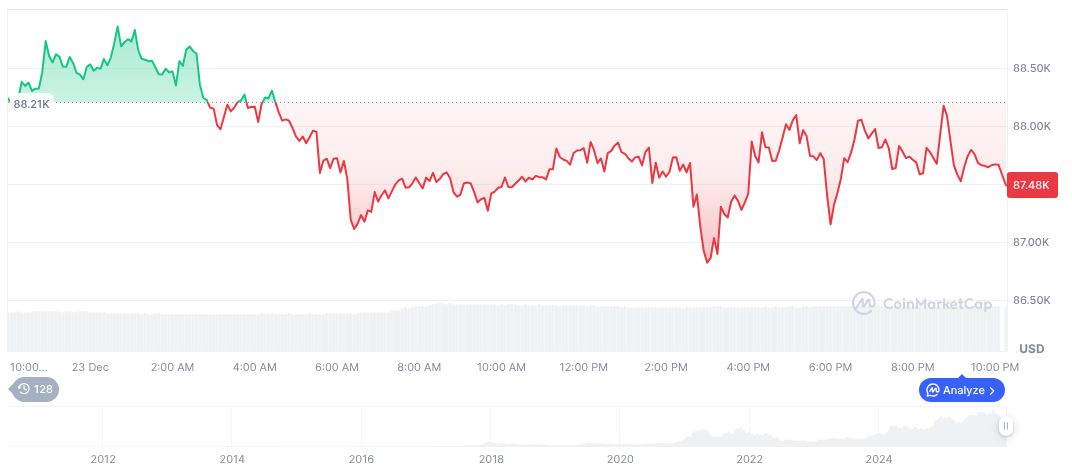
The Coincu research team suggests that holiday closures could bring short-term volatility, but no strong regulatory or technological shifts are anticipated in the immediate future. Past events support this stability, indicating fluctuations lack extended impact.
| DISCLAIMER: The information on this website is provided as general market commentary and does not constitute investment advice. We encourage you to do your own research before investing. |

No tags available.


Other Posts









- Amplify 2024: Ohio’s Premier Blockchain Summit
- Polymarket Announces U.S. Beta Relaunch Amid Market Buzz
- China, US Conclude Trade Talks with Focus on Cooperation
- Michael Saylor Denies Bitcoin Sell-Off Amid Large BTC Transfer
- Court Upholds Fed’s Rejection of Custodia Bank’s Request
- EU Opens Antitrust Probe Into Deutsche Boerse and Nasdaq Derivatives Dealings
- Kazakhstan Explores Crypto Reserves Backed by National Funds
- Nordea Bank Introduces Bitcoin ETP Trading for Nordic Customers
- JPMorgan Increases Holdings in BlackRock’s Bitcoin ETF
- JPMorgan Chase Launches 24/7 Digital Deposit Token for Clients
- Crypto Leaders Address Macro Volatility Amid Market Shifts
- XRP Spot ETF Launches on Nasdaq Amid Market Fluctuations
- Former CFO Convicted for $35M Fraudulent Crypto Investment
- U.S. Treasury Proposes New Tax Relief Regulations
- Radiant Capital Faces $50M Loss in Major Security Breach
- SEGG Media Unveils $300 Million Crypto Reserve Plan
- 21Shares Files S-1 With SEC to Launch Hyperliquid ($HYPE) ETF
- Peter Schiff Challenges Michael Saylor on MSTR’s Business Model
- Hong Kong Sentences Influencer for Unlicensed Investment Advice
- Franklin Templeton Signals TradFi and Crypto Integration
- Amplify 2024: Ohio’s Premier Blockchain Summit
- Polymarket Announces U.S. Beta Relaunch Amid Market Buzz
- China, US Conclude Trade Talks with Focus on Cooperation
- Michael Saylor Denies Bitcoin Sell-Off Amid Large BTC Transfer
- Court Upholds Fed’s Rejection of Custodia Bank’s Request
- EU Opens Antitrust Probe Into Deutsche Boerse and Nasdaq Derivatives Dealings
- Kazakhstan Explores Crypto Reserves Backed by National Funds
- Nordea Bank Introduces Bitcoin ETP Trading for Nordic Customers
- JPMorgan Increases Holdings in BlackRock’s Bitcoin ETF
- JPMorgan Chase Launches 24/7 Digital Deposit Token for Clients
- Crypto Leaders Address Macro Volatility Amid Market Shifts
- XRP Spot ETF Launches on Nasdaq Amid Market Fluctuations
- Former CFO Convicted for $35M Fraudulent Crypto Investment
- U.S. Treasury Proposes New Tax Relief Regulations
- Radiant Capital Faces $50M Loss in Major Security Breach
- SEGG Media Unveils $300 Million Crypto Reserve Plan
- 21Shares Files S-1 With SEC to Launch Hyperliquid ($HYPE) ETF
- Peter Schiff Challenges Michael Saylor on MSTR’s Business Model
- Hong Kong Sentences Influencer for Unlicensed Investment Advice
- Franklin Templeton Signals TradFi and Crypto Integration
- Amplify 2024: Ohio’s Premier Blockchain Summit
- Polymarket Announces U.S. Beta Relaunch Amid Market Buzz
- China, US Conclude Trade Talks with Focus on Cooperation
- Michael Saylor Denies Bitcoin Sell-Off Amid Large BTC Transfer
- Court Upholds Fed’s Rejection of Custodia Bank’s Request
- EU Opens Antitrust Probe Into Deutsche Boerse and Nasdaq Derivatives Dealings
- Kazakhstan Explores Crypto Reserves Backed by National Funds
- Nordea Bank Introduces Bitcoin ETP Trading for Nordic Customers
- JPMorgan Increases Holdings in BlackRock’s Bitcoin ETF
- JPMorgan Chase Launches 24/7 Digital Deposit Token for Clients
- Crypto Leaders Address Macro Volatility Amid Market Shifts
- XRP Spot ETF Launches on Nasdaq Amid Market Fluctuations
- Former CFO Convicted for $35M Fraudulent Crypto Investment
- U.S. Treasury Proposes New Tax Relief Regulations
- Radiant Capital Faces $50M Loss in Major Security Breach
- SEGG Media Unveils $300 Million Crypto Reserve Plan
- 21Shares Files S-1 With SEC to Launch Hyperliquid ($HYPE) ETF
- Peter Schiff Challenges Michael Saylor on MSTR’s Business Model
- Hong Kong Sentences Influencer for Unlicensed Investment Advice
- Franklin Templeton Signals TradFi and Crypto Integration
Latest


Crypto Weekly: NYSE Backs OKX, Kraken Gets Fed Access, BTC Sells









Press Release

Bybit and Tether Deepen Strategic Collaboration With “Golden Season,” Bringing Gold-Backed Stability to Crypto Investors
MEXC Launches Gold vs. Crypto Campaign: Zero-Fee Trading and $1M Prize Pool