- Ant Group, HSBC, and Swift test tokenized cross-border payments.
- Enables real-time fund management via blockchain technology.
- No cryptocurrencies affected; stablecoin alternative tested.
Ant Group, HSBC, and Swift successfully conducted cross-border transfers using tokenized deposits through the Swift network, marking a milestone in blockchain interoperability between Singapore and Hong Kong..
The integration demonstrates potential for real-time, efficient cross-border fund management, emphasizing regulated tokenized deposits as a stablecoin alternative without impacting public cryptocurrencies like ETH or BTC.
Ant Group and HSBC Connect Blockchain for Real-time Transfers
This trial demonstrates a significant shift in cross-border financial operations, leveraging the efficiency and speed of blockchain technology. Kelvin Li, General Manager of Platform Tech, Ant International, stated, “Our relationship has enabled us to work across different geographies and cover a wide range of global payment businesses. The Tokenised Deposit Service is one of the main means to enable us to do real-time payments globally and also enable us to achieve real-time treasury management on a global basis.” The compatibility with the ISO 20022 standard enhances the ability to manage cross-border funds in real-time, potentially marking a new era in regulated financial transactions, distinct from traditional cryptocurrencies.
Swift Network Pioneers Tokenized Deposits for Global Payments
This initiative has been met with positive remarks, particularly from Kelvin Li, who noted the technological advancement’s role in enabling real-time global treasury management. The absence of public cryptocurrency involvement highlights the focus on regulated tokenized deposits as a stablecoin alternative.
This marks the first time tokenized deposits have been utilized on Swift’s global network for cross-border payments, illustrating a novel approach in regulated financial services.
Historically, cross-border financial transactions have been constrained by time and cost inefficiencies. The incorporation of tokenized deposits represents an innovative departure from existing methods that may transform the landscape. By embracing a blockchain-based approach, there could be major regulatory implications as financial institutions further explore the utilization of digital tokens in regulated contexts. While public cryptocurrencies like ETH and BTC remain unaffected in this test, the implications of regulated token technologies could pave the way for broader adoption among traditional financial entities.
Overall, the use of blockchain technology in a regulated financial setting may signal a shift towards more efficient, secure, and transparent cross-border operations, potentially impacting a variety of financial and regulatory frameworks within the sector.
| DISCLAIMER: The information on this website is provided as general market commentary and does not constitute investment advice. We encourage you to do your own research before investing. |

No tags available.


Other Posts









- Amplify 2024: Ohio’s Premier Blockchain Summit
- Polymarket Announces U.S. Beta Relaunch Amid Market Buzz
- China, US Conclude Trade Talks with Focus on Cooperation
- Crypto Weekly: NYSE Backs OKX, Kraken Gets Fed Access, BTC Sells
- CELO holds as Celo reviews Opera 160M token claim
- Michael Saylor Denies Bitcoin Sell-Off Amid Large BTC Transfer
- Court Upholds Fed’s Rejection of Custodia Bank’s Request
- EU Opens Antitrust Probe Into Deutsche Boerse and Nasdaq Derivatives Dealings
- Kazakhstan Explores Crypto Reserves Backed by National Funds
- JPMorgan Increases Holdings in BlackRock’s Bitcoin ETF
- Nordea Bank Introduces Bitcoin ETP Trading for Nordic Customers
- XRP Spot ETF Launches on Nasdaq Amid Market Fluctuations
- JPMorgan Chase Launches 24/7 Digital Deposit Token for Clients
- Crypto Leaders Address Macro Volatility Amid Market Shifts
- Former CFO Convicted for $35M Fraudulent Crypto Investment
- Peter Schiff Challenges Michael Saylor on MSTR’s Business Model
- Thailand Orders Worldcoin to Delete 1.2 Million Biometric Records
- UK Proposes New DeFi Tax Framework to Ease User Burden
- U.S. Treasury Proposes New Tax Relief Regulations
- Uniswap’s UNIfication Proposal Gains Massive Preliminary Support
- Amplify 2024: Ohio’s Premier Blockchain Summit
- Polymarket Announces U.S. Beta Relaunch Amid Market Buzz
- China, US Conclude Trade Talks with Focus on Cooperation
- Crypto Weekly: NYSE Backs OKX, Kraken Gets Fed Access, BTC Sells
- CELO holds as Celo reviews Opera 160M token claim
- Michael Saylor Denies Bitcoin Sell-Off Amid Large BTC Transfer
- Court Upholds Fed’s Rejection of Custodia Bank’s Request
- EU Opens Antitrust Probe Into Deutsche Boerse and Nasdaq Derivatives Dealings
- Kazakhstan Explores Crypto Reserves Backed by National Funds
- JPMorgan Increases Holdings in BlackRock’s Bitcoin ETF
- Nordea Bank Introduces Bitcoin ETP Trading for Nordic Customers
- XRP Spot ETF Launches on Nasdaq Amid Market Fluctuations
- JPMorgan Chase Launches 24/7 Digital Deposit Token for Clients
- Crypto Leaders Address Macro Volatility Amid Market Shifts
- Former CFO Convicted for $35M Fraudulent Crypto Investment
- Peter Schiff Challenges Michael Saylor on MSTR’s Business Model
- Thailand Orders Worldcoin to Delete 1.2 Million Biometric Records
- UK Proposes New DeFi Tax Framework to Ease User Burden
- U.S. Treasury Proposes New Tax Relief Regulations
- Uniswap’s UNIfication Proposal Gains Massive Preliminary Support
- Amplify 2024: Ohio’s Premier Blockchain Summit
- Polymarket Announces U.S. Beta Relaunch Amid Market Buzz
- China, US Conclude Trade Talks with Focus on Cooperation
- Crypto Weekly: NYSE Backs OKX, Kraken Gets Fed Access, BTC Sells
- CELO holds as Celo reviews Opera 160M token claim
- Michael Saylor Denies Bitcoin Sell-Off Amid Large BTC Transfer
- Court Upholds Fed’s Rejection of Custodia Bank’s Request
- EU Opens Antitrust Probe Into Deutsche Boerse and Nasdaq Derivatives Dealings
- Kazakhstan Explores Crypto Reserves Backed by National Funds
- JPMorgan Increases Holdings in BlackRock’s Bitcoin ETF
- Nordea Bank Introduces Bitcoin ETP Trading for Nordic Customers
- XRP Spot ETF Launches on Nasdaq Amid Market Fluctuations
- JPMorgan Chase Launches 24/7 Digital Deposit Token for Clients
- Crypto Leaders Address Macro Volatility Amid Market Shifts
- Former CFO Convicted for $35M Fraudulent Crypto Investment
- Peter Schiff Challenges Michael Saylor on MSTR’s Business Model
- Thailand Orders Worldcoin to Delete 1.2 Million Biometric Records
- UK Proposes New DeFi Tax Framework to Ease User Burden
- U.S. Treasury Proposes New Tax Relief Regulations
- Uniswap’s UNIfication Proposal Gains Massive Preliminary Support
Latest

Digital Asset Investment Products See $414M Outflow — First in Five Weeks

USDD TVL Hits $1.93 Billion Record High — What’s Driving the Surge

US Non-Farm Payrolls March 2026: What Crypto Traders Need to Know This Week








Press Release
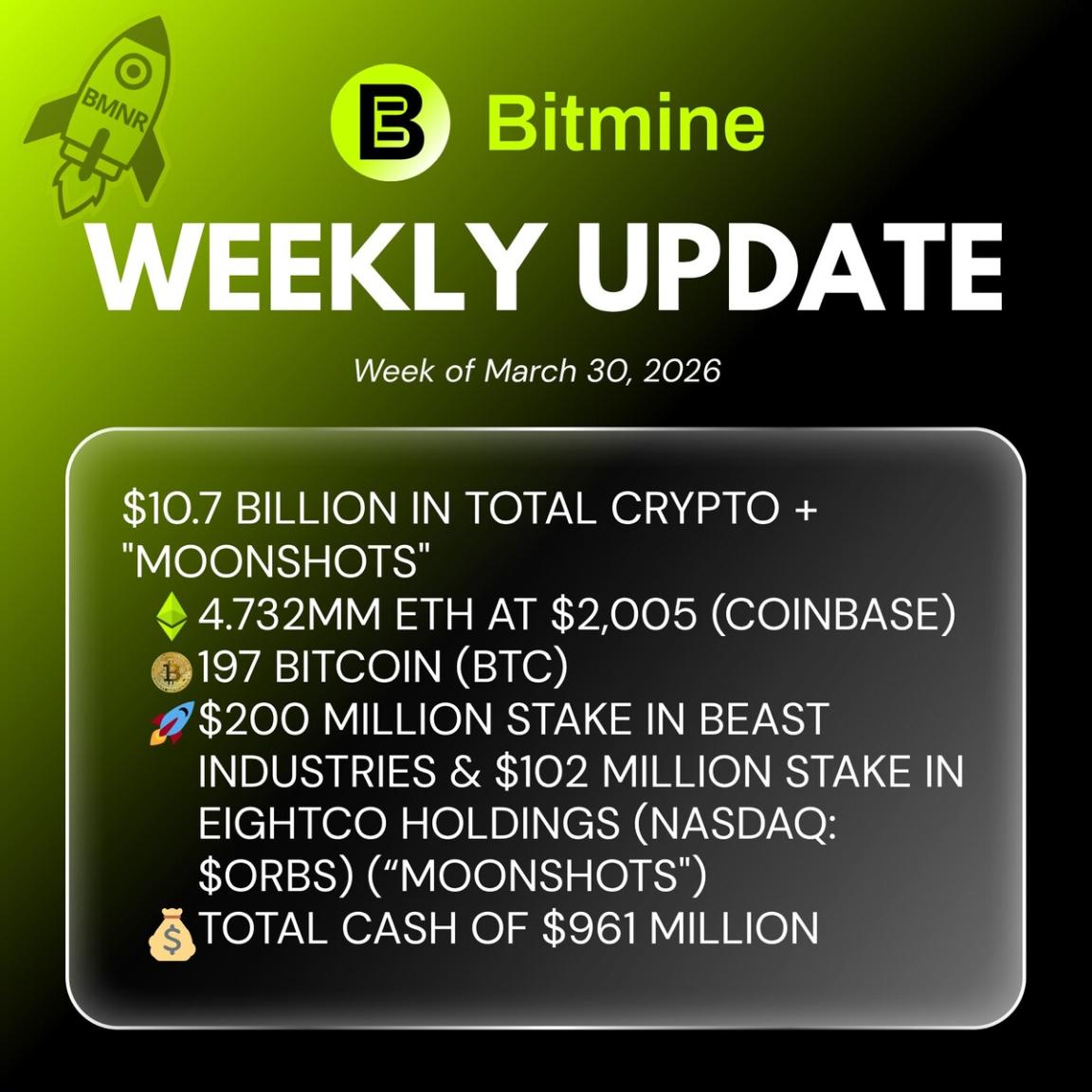
Bitmine Immersion Technologies (BMNR) Announces ETH Holdings Reach 4.732 Million Tokens, and Total Crypto and Total Cash Holdings of $10.7 Billion
TxFlow L1 Mainnet Launch Marks a New Phase for Multi-Application On-Chain Finance