








Judge Andrew L. Carter rejects Binance arbitration; pre–2019 claims proceed
U.S. District Judge Andrew L. Carter of the Southern District of New York denied Binance’s bid to force customer claims into arbitration. The court determined that certain legacy claims may proceed in court instead of private forums.
Claims arising before February 20, 2019, remain in litigation, and the dispute involves tokens including ELF, EOS, FUN, ICX, OMG, QSP, and TRX, according to AICoin. The ruling addresses alleged losses tied to unregistered token sales on the platform during that pre-2019 period.
Why the ruling matters for users and class actions
For affected users, the decision opens a path to pursue litigation in a public court rather than confidential arbitration, as reported by The Economic Times. That pathway can enable broader coordination among similarly situated investors through potential class certification.
Plaintiffs’ counsel characterized the decision as reaffirming that arbitration requires actual agreement and adequate notice. “Federal policy favoring arbitration does not override the basic requirement of contract; a party must manifest assent,” said Selendy Gay PLLC, counsel for the investor class.
Immediate case impact and next procedural steps
The case now advances on the covered pre–February 20, 2019 claims, with the court expected to manage pleadings, discovery, and any class-certification briefing limited to that time window. Remedies, liability, and damages remain unadjudicated.
Litigating in court typically entails greater disclosure obligations and longer timelines than private arbitration, as reported by Yahoo Finance. Cost, scope of discovery, and public docketing could all influence strategic choices by the parties as the record develops.
At the time of this writing, Binance Coin (BNB) traded around $627.61. This market context does not indicate liability or legal outcomes.
Key legal reasoning and scope of the ruling
Assent, constructive notice, and ambiguous class-action waiver
The court’s analysis turned on contractual assent and user notice. Users who agreed only to earlier terms lacked constructive notice of later-introduced arbitration language, so they could not be bound by it for the pre-2019 period.
The court also found the class-action waiver ambiguous. Under standard contract principles, ambiguity in a consumer-facing waiver weighs against enforcement, particularly where notice of material rights changes is unclear.
Claims covered: tokens involved and pre–Feb 20, 2019 period
The ruling permits litigation of pre–February 20, 2019 claims tied to trading in ELF, EOS, FUN, ICX, OMG, QSP, and TRX. Post–February 20, 2019 issues were not within the order’s stated scope.
FAQ about Binance arbitration request rejected
Which tokens and time period are affected by the decision (e.g., ELF, EOS, FUN, ICX, OMG, QSP, TRX; pre–Feb 20, 2019)?
Pre–February 20, 2019 claims tied to ELF, EOS, FUN, ICX, OMG, QSP, and TRX remain in court.
Why did the court reject Binance’s arbitration clause and find the class-action waiver unenforceable?
Users lacked constructive notice of the later arbitration terms, and the class-action waiver was ambiguous, so enforcement failed for the covered period.
| DISCLAIMER: The information on this website is provided as general market commentary and does not constitute investment advice. We encourage you to do your own research before investing. |


Other Posts









- Amplify 2024: Ohio’s Premier Blockchain Summit
- Polymarket Announces U.S. Beta Relaunch Amid Market Buzz
- China, US Conclude Trade Talks with Focus on Cooperation
- Crypto Weekly: NYSE Backs OKX, Kraken Gets Fed Access, BTC Sells
- Michael Saylor Denies Bitcoin Sell-Off Amid Large BTC Transfer
- Court Upholds Fed’s Rejection of Custodia Bank’s Request
- EU Opens Antitrust Probe Into Deutsche Boerse and Nasdaq Derivatives Dealings
- Kazakhstan Explores Crypto Reserves Backed by National Funds
- Nordea Bank Introduces Bitcoin ETP Trading for Nordic Customers
- JPMorgan Increases Holdings in BlackRock’s Bitcoin ETF
- XRP Spot ETF Launches on Nasdaq Amid Market Fluctuations
- JPMorgan Chase Launches 24/7 Digital Deposit Token for Clients
- Crypto Leaders Address Macro Volatility Amid Market Shifts
- Former CFO Convicted for $35M Fraudulent Crypto Investment
- Peter Schiff Challenges Michael Saylor on MSTR’s Business Model
- U.S. Treasury Proposes New Tax Relief Regulations
- WLFI Under Fire: Analyst Warns Hyperliquid Could Be Next
- SEC Scrutiny on ALT5 Sigma’s Leadership Disclosure Timing
- Japan to Reduce Cryptocurrency Tax to 20%
- Yala Injects $5.5 Million Amid Recovery Efforts
- Amplify 2024: Ohio’s Premier Blockchain Summit
- Polymarket Announces U.S. Beta Relaunch Amid Market Buzz
- China, US Conclude Trade Talks with Focus on Cooperation
- Crypto Weekly: NYSE Backs OKX, Kraken Gets Fed Access, BTC Sells
- Michael Saylor Denies Bitcoin Sell-Off Amid Large BTC Transfer
- Court Upholds Fed’s Rejection of Custodia Bank’s Request
- EU Opens Antitrust Probe Into Deutsche Boerse and Nasdaq Derivatives Dealings
- Kazakhstan Explores Crypto Reserves Backed by National Funds
- Nordea Bank Introduces Bitcoin ETP Trading for Nordic Customers
- JPMorgan Increases Holdings in BlackRock’s Bitcoin ETF
- XRP Spot ETF Launches on Nasdaq Amid Market Fluctuations
- JPMorgan Chase Launches 24/7 Digital Deposit Token for Clients
- Crypto Leaders Address Macro Volatility Amid Market Shifts
- Former CFO Convicted for $35M Fraudulent Crypto Investment
- Peter Schiff Challenges Michael Saylor on MSTR’s Business Model
- U.S. Treasury Proposes New Tax Relief Regulations
- WLFI Under Fire: Analyst Warns Hyperliquid Could Be Next
- SEC Scrutiny on ALT5 Sigma’s Leadership Disclosure Timing
- Japan to Reduce Cryptocurrency Tax to 20%
- Yala Injects $5.5 Million Amid Recovery Efforts
- Amplify 2024: Ohio’s Premier Blockchain Summit
- Polymarket Announces U.S. Beta Relaunch Amid Market Buzz
- China, US Conclude Trade Talks with Focus on Cooperation
- Crypto Weekly: NYSE Backs OKX, Kraken Gets Fed Access, BTC Sells
- Michael Saylor Denies Bitcoin Sell-Off Amid Large BTC Transfer
- Court Upholds Fed’s Rejection of Custodia Bank’s Request
- EU Opens Antitrust Probe Into Deutsche Boerse and Nasdaq Derivatives Dealings
- Kazakhstan Explores Crypto Reserves Backed by National Funds
- Nordea Bank Introduces Bitcoin ETP Trading for Nordic Customers
- JPMorgan Increases Holdings in BlackRock’s Bitcoin ETF
- XRP Spot ETF Launches on Nasdaq Amid Market Fluctuations
- JPMorgan Chase Launches 24/7 Digital Deposit Token for Clients
- Crypto Leaders Address Macro Volatility Amid Market Shifts
- Former CFO Convicted for $35M Fraudulent Crypto Investment
- Peter Schiff Challenges Michael Saylor on MSTR’s Business Model
- U.S. Treasury Proposes New Tax Relief Regulations
- WLFI Under Fire: Analyst Warns Hyperliquid Could Be Next
- SEC Scrutiny on ALT5 Sigma’s Leadership Disclosure Timing
- Japan to Reduce Cryptocurrency Tax to 20%
- Yala Injects $5.5 Million Amid Recovery Efforts
Latest











Press Release
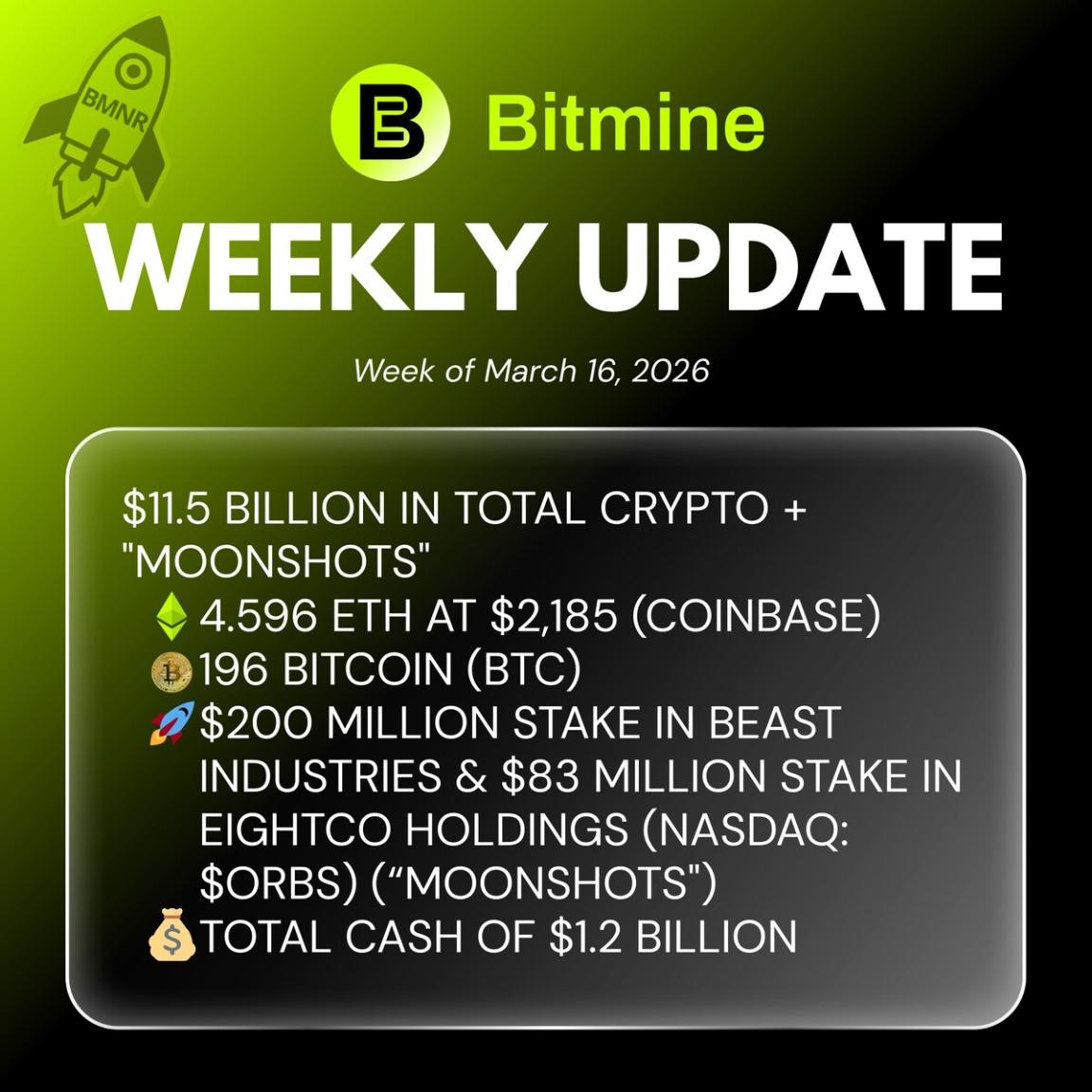
Bitmine Immersion Technologies (BMNR) Announces ETH Holdings Reach 4.596 Million Tokens, and Total Crypto and Total Cash Holdings of $11.5 Billion

Phemex Astral Trading League Launches $450,000 Pisces Season
